reflecting

I tried to add an archives page to the blog a couple days ago and the entire site collapsed with the message This Website Has Encountered A Fatal Error strewn across the bottom. I’m still trying to figure out what I did wrong. One of the hurdles I have is a lot has changed since I learned to code and build out WordPress themes back when it was still a new thing. Most now isn’t even code-based, and the parts that are require an industry-level knowledge base to understand.

Beyond just being an inconvenience to dig up pages that actually have the code and examples I’m looking for to build out pages with, it just kind of makes me feel bad about the internet. There used to be something incredibly fun and rewarding about spending an afternoon—because, really, that’s all it took in the days of simple HTML sites—making a personal web page.

Reflecting

Reflecting

These days, we live in the age where everything fails after a couple years. Smart phones, appliances, cars. Nothing is built to last. We can look at old furniture, hand-built by craftsmen, and admire its longevity and attention to detail. When I was growing up, I remember companies still offered lifetime guarantees on what they sold. Somewhere along the line, that all stopped. That’s kind of a parallel to what I imagine the not-too-distant future will be like for people online, surrounded by social media AI slop, where nothing is real and no voice is authentic, wondering what the early days of the internet were like.

There’s a purity and connection created between a person and an object when something is done by hand. It’s a kind of transference of humanity to an object. The combination of technology, capitalism, and trade expansion has always disrupted the processes of personalized building. From log cabins to the suburban sprawl, from loom-spun sweaters to fast fashion sweatshops, from painted portraits to the photograph to AI slop—we’re always in a state of ‘progress,’ yet simultaneously lamenting the fact the objects that inhabit our lives were always better back in the day.

Nothing is ever better because it becomes automated. It just becomes more convenient. It’s justified to the masses by way of ‘consumer savings,’ yet the harm comes in the form of disrupting community businesses with box stores, with individual creative designs replaced by templates, with personal interactions turning into people consulting AI bots about their lives. Industrialization has been a slow burn and the jump to what comes next has been a long time coming, but it’s almost here and I don’t think people are prepared for how this is going to alter the very nature of what it means to be human. It’s just so sad.

further divides

Speaking at the World Economic Forum, New York Times financial columnist Andrew Ross Sorkin imagined a future where only wealthy people would be able to travel and ‘those of lesser means’ would only be able to experience the world through a VR headset. He goes on to talk about how that might create a divide between rich and poor. Jesus Christ.

It’s quite obvious how the chess pieces of technology, corporations, capital, violence, and governance are being aligned right now to create a future where the majority are ruled with a generally automated iron fist by the few. It’s the plot of endless sci-fi stories, but what comes to mind is Elysium, where the rich build themselves a giant space station as the rest suffer on a burning Earth patrolled by robots. What’s also evident is that those who aren’t quite wealthy, but live comfortably above most, are generally in favor of this divide, even though it would likely see them stuck holding the short end of the stick with the rest (see: Ross Sorkin and the entire NYT op-ed section).

There’s a good chance it is too late to do anything about it. While groups of people who lean left politically exist in the United States, they’re predominantly in urban areas and proportionally tiny compared to the population at large—a population that believes capitalist neoliberalism is ‘left-wing.’ The type of change required to do anything about wealth disparity—via reform or revolution—is simply impossible. In turn, the country will be forced to look on as the people are robbed, their food supply poisoned (or, eventually, lost), and any reaction brutally policed by stalkers and thugs using AI surveillance. (Even at the local level, despite outrage from the people who elected them, city councils are voting in favor of building data centers everywhere.)

Meanwhile, the wealthy and their fans will go on to have discussions about how they’ll be perceived as all of this violence against humankind continues unpunished. The United States has probably passed any point of anyone in power having to deal with any kind of consequence for any action whatsoever. We can’t even properly handle cops standing around for hours during a mass school shooting, much less force the release of the Epstein Files. This country has volunteered itself into submission.

China might be able to reframe the balance of power in the world and possibly diminish the role of capitalism in the future, but the United States will surely burn itself to the ground—and as much of the world as possible—before that happens.

the death of thought

There’s all this talk about AI and Google Zero effectively ending the internet as it has been known—creating a sole point-of-contact online to be an all-encompassing AI bot. The people who will profit from this are, of course, touting the possible ‘benefits’ from such a thing, and there are plenty of users out there who can’t live without something like ChatGPT telling them how to raise their children. I am against all of this, but as an example I will use something from internet history I personally detested—the Mommy Blogger.

Mommy Bloggers consisted of predominantly affluent, lonely housewives who shared every minute of their existence on personal journals which revolved around motherhood, housekeeping, and marriage. It was the kind of societal trend that rose to enough prominence to merit its own plotline on House by 2010. I didn’t give it much attention because I was basically the opposite of its target audience.

Now this demographic has moved on to social media or podcasts, but I can’t help but feel something was lost when that happened. The format of the blogs they were writing inherently required a sense of creativity and a forthrightness that, while possibly creating controversy, garnered camaraderie among other mothers. While the results can be similar in the world of podcasts, the off-the-cuff nature of just chatting feels far less heartfelt and more gossip-oriented. The inherent nature of what is being communicated gets reduced from meaningfully inquisitive from an individual perspective to a bland riff.

That’s what the ‘new internet’ and AI truly deliver: less creativity, less meaning, less potential for individuals to discover relationships with themselves and others alike through actually thinking about things. Considering yourself and others can be paths to empathy, social bonds, and overall feeling less lonely in the world. Silicon Valley tech has not only frayed those ends but is promising a world with even less possibility for those things (at least online). The internet will be reduced from a once-mecca of individual expression to a recursive loop of slop. Getting rid of search functions where people can actually discover the independent side of the internet only accelerates all of this.

There are still Mom Blogs out there, and a search over at DuckDuckGo will show as much. Yet it’s only a matter of time before people become unaware that this, or any type of personal expression, ever existed online to begin with. (The great irony being all of this is what fueled the ‘knowledge’ of AI bots to begin with.) There are many, far greater, crimes that AI and its proponents commit, but these sort of existential losses of potential creative outlets feel particularly damning of the road humanity is headed down from a purely meaningful perspective.
barriers

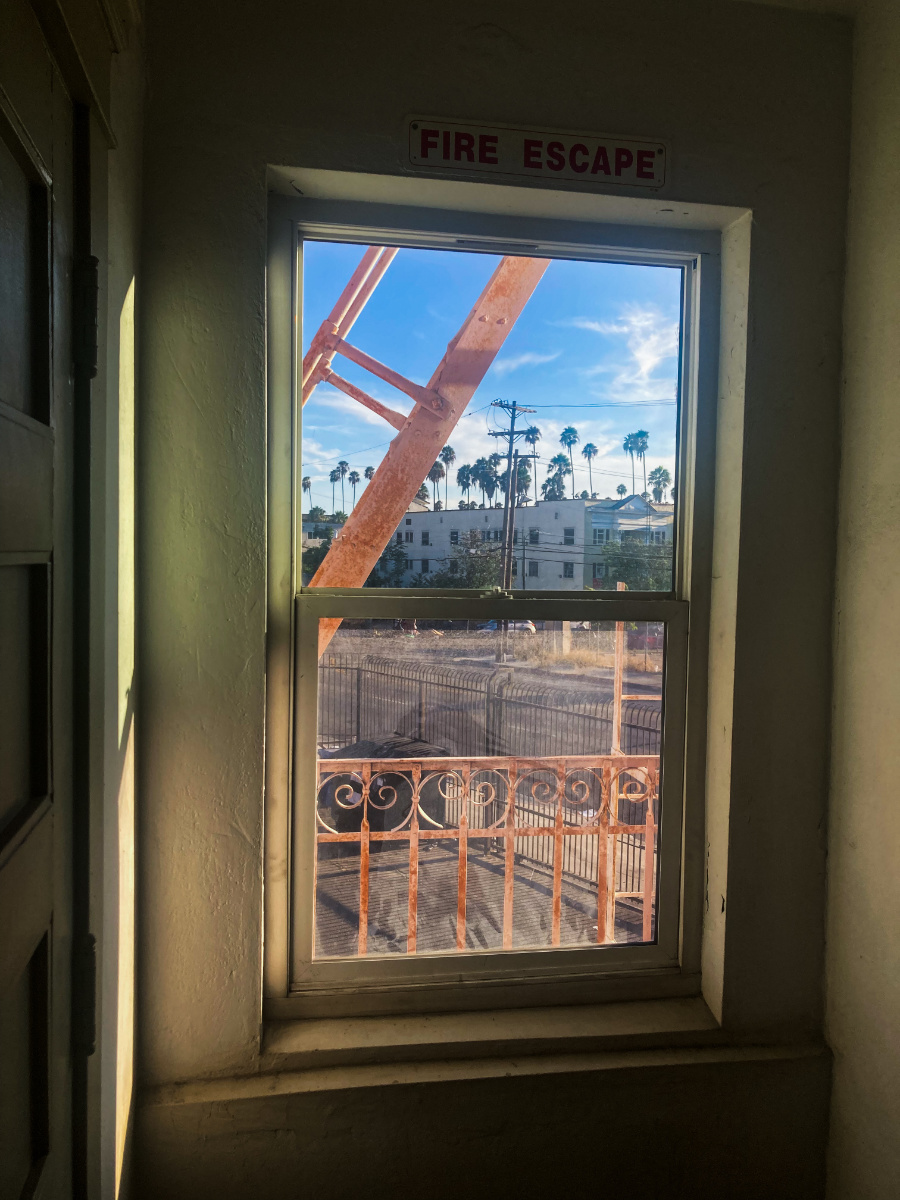
Escape

New Views (Hoover Street)

Sometimes I think poetry will be the only art form that resonates from this era, the only thing that lasts. When you have too much of something, it becomes less valuable—and right now, even if we were to exclude all the AI filling the internet with slop, the mere technology jump we’ve had over the last 30 years has created an excess of available art. When art was regional, restricted by geography and analog methods of reproduction, sharing it was an experience in and of itself that became an integral part of culture.

Now with billions of interconnected screens, experiencing something new, and possibly profound, isn’t so much a desire, opportunity, or possibility—but an expectation. (Even worse is that experience is now integrated directly into the mechanics of capitalism.) The part of us, as humans, that can be affected by the inspiration of another person (and therefore building a sense of connection at a deep, spiritual level) is being bulldozed by a grotesque combination of algorithms and advertisements.

No Entry

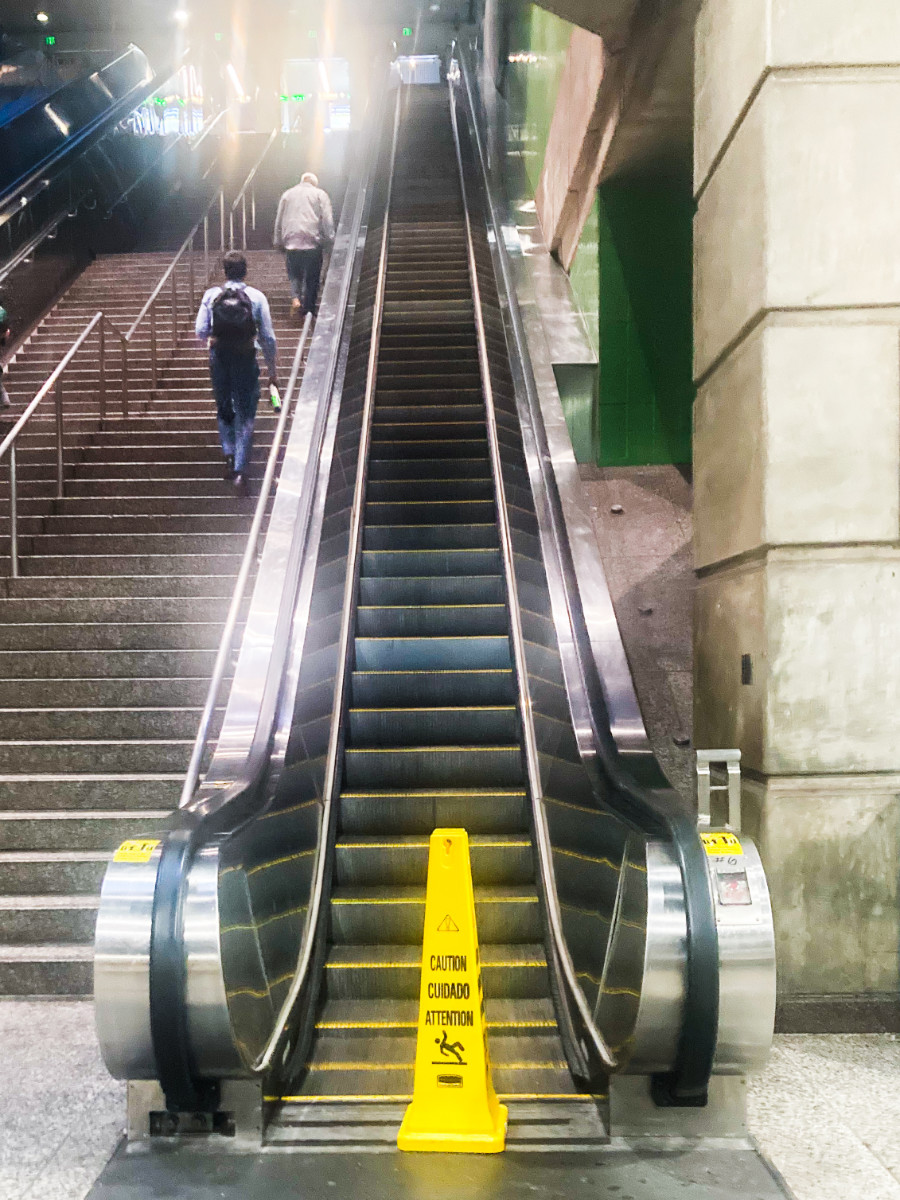
Thanks Metro (Wilshire / Vermont)

Thus, I think poetry probably matters most in this moment. The best poets are able to connect the dots of the human experience emotionally and physically with both the observable and ethereal aspects of reality that I don’t think any machine could ever reproduce. The one thing humanity will always have advantage of over any coded invention is a soul, and though all art forms can represent that depth of feeling alive, the best poems can touch the surface of what it means to be human, as opposed to what it feels like.

(Maybe I’ve just been putting off watching that Mary Oliver documentary for too long, a mistake I’ll rectify this week.)

It doesn’t have to be
the blue iris, it could be
weeds in a vacant lot, or a few
small stones; just
pay attention, then patch

a few words together and don’t try
to make them elaborate, this isn’t
a contest but the doorway

into thanks, and a silence in which
another voice may speak.

—Mary Oliver, “Praying”

not photography

Wilshire Wilton

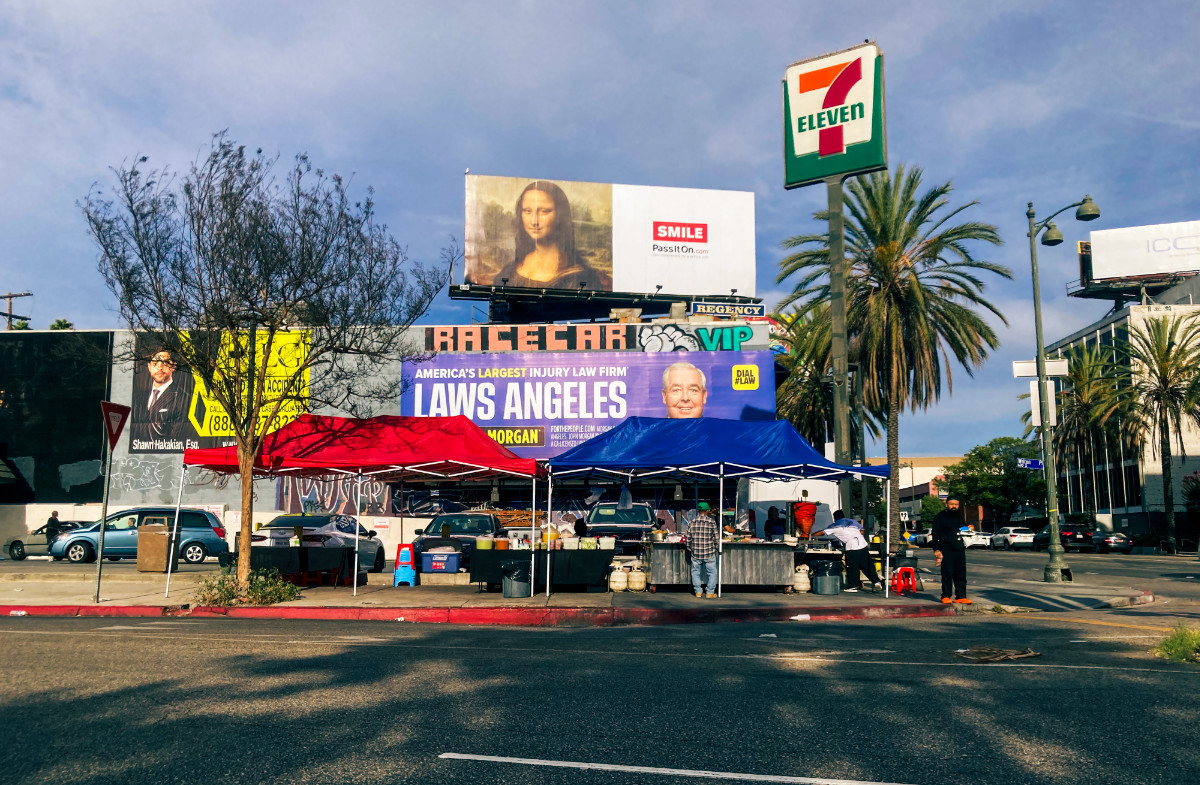
Wilton and Wilshire

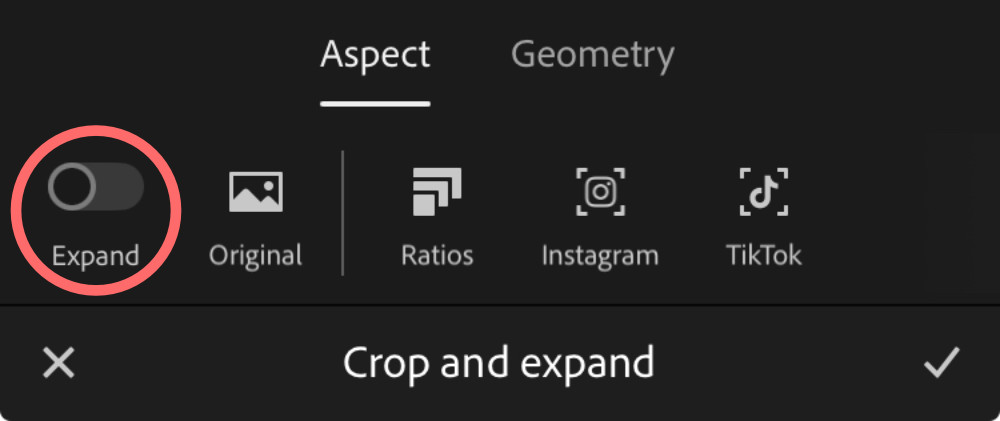
For some time now, I’ve used the Adobe Lightroom mobile app to edit photos I take on my phone, such as this one snapped today on my drive home. However, when I went to edit the photo upon getting home, Adobe had an update to promote to me:

On Lightroom Desktop and Mobile, the headline feature is Generative Expand, which Adobe first rolled out in Photoshop in mid-2023. The tool uses generative AI to extend a photo beyond its original borders, filling transparent areas created by perspective adjustments or making room for new aspect ratios without leaving blank edges

UI

The Generative UI in question

There’s plenty of debate about AI ‘art,’ even though most people who are pro-AI have little to no appreciation for creative process or results—however when it comes to photography, using Generative AI is somehow more offensive. Photography, by its fundamental nature, is documentation. Evidence. An account of reality, interpreted through a lens certainly, but otherwise, nothing that exists in a photograph was not in the scene that was shot.

To use Gen AI in any kind of photographic tool is to go against the very nature of photography. While the people who are shoving AI down our throats at every corner have absolutely no appreciation for the nature of the foundations of how we make things, they also disregard why we make them, or how significant these processes and results are to the relationship humanity has to itself and the world.

People promoting AI exist completely within the idea of technologically-driven bubbles that serve purposes of, well, I don’t even know, coordinating meetings better? Client pitches? Coding apps? A projected version of the world that doesn’t exist but serves the idea of selfish indulgence? Certainly nothing honest, nothing dignified, nothing human.

While there are likely ballistic wars coming over resources such as water, wealth, energy, and political domain, there’s this brewing existential, intangible conflict about the fundamental nature of how we relate to one another, how we share reality, how we celebrate it, and what it actually comprises that is becoming an increasingly depressing landscape.