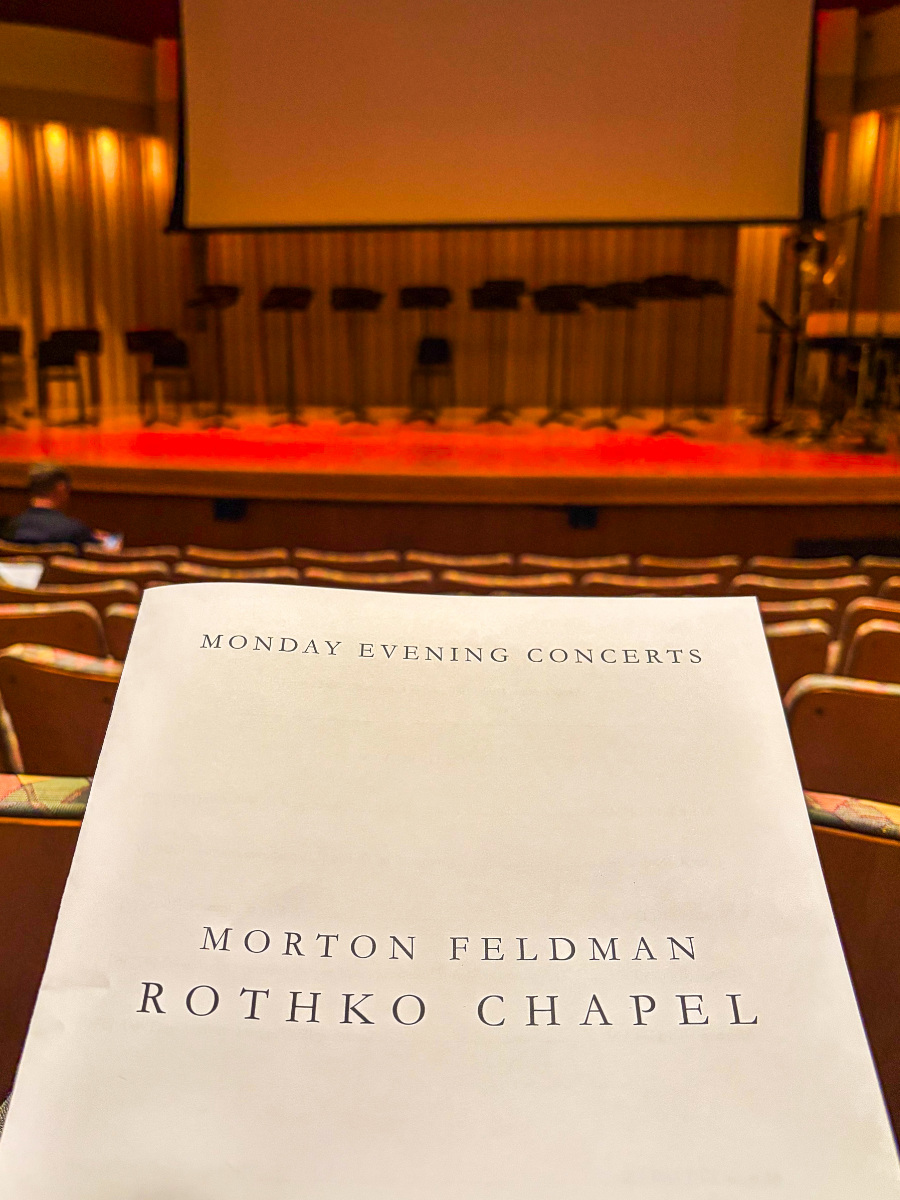
Morton Feldman Rothko Chapel program
Morton Feldman Rothko Chapel program
I was lucky enough to attend the sold-out performance of Rothko Chapel (among a few other, shorter works) that the Monday Evening Concert series put on tonight in honor of what would have been Morton Feldman’s 100th birthday (at least, earlier this year). It’s the second show celebrating Feldman I saw this week—last Friday, Oracle Egg had BlackBox Ensemble perform a similar event with different works.
Now, full disclosure, I knew nothing of Feldman before these concerts. While I listen to plenty of avant-garde music, it’s often in the shape of post-rock-adjacent bands or weird things I see at sparsely-attended local shows where someone has an array of objects they turn into something between a harmony and an unstructured wall of noise. The sort of high-brow, famous and studied crowd isn’t something I’m really familiar with.
That’s why I was particularly fond of hearing this performance tonight. I had no clue what to expect—it was honestly my love of Rothko more than anything that made me buy a ticket to begin with. But I left completely stirred by the music.
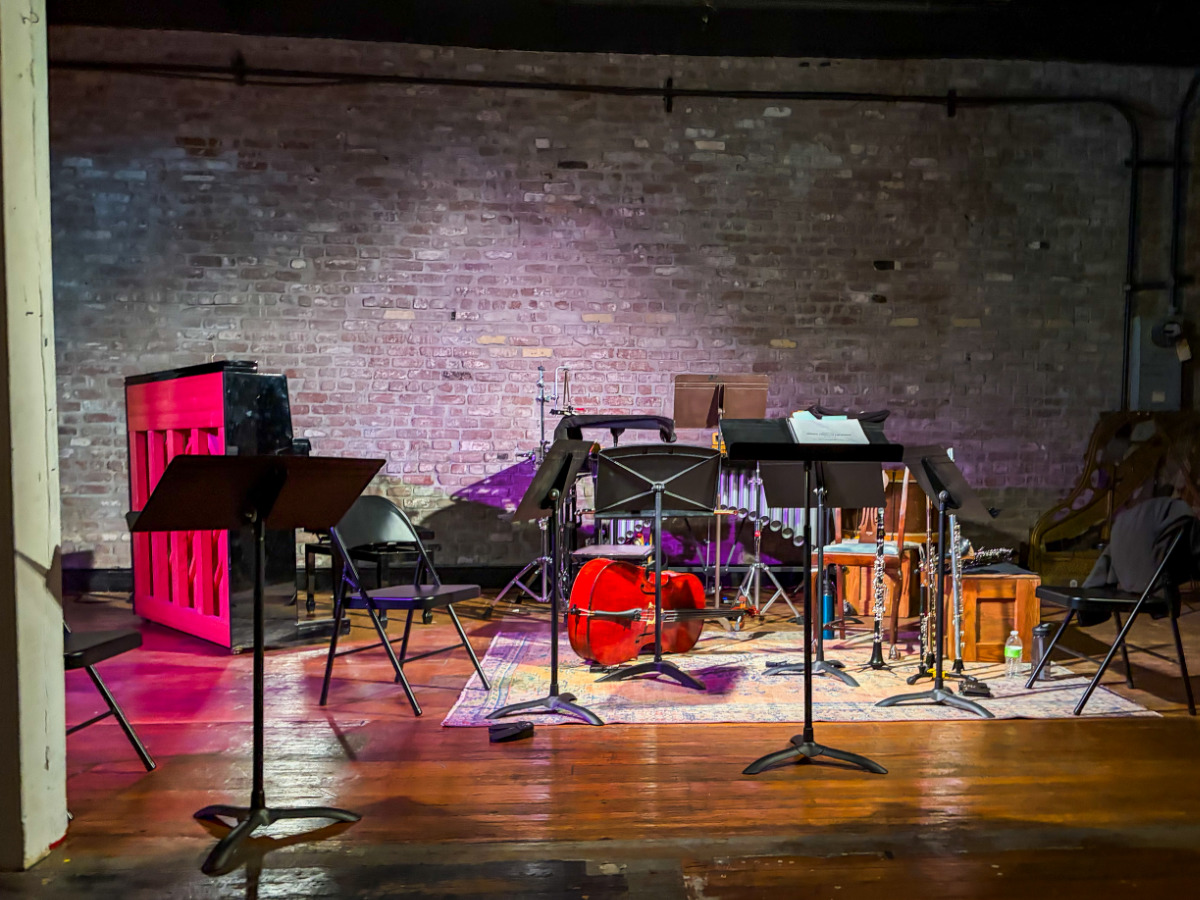
Performance set-up at Oracle Egg
This is the wonderful thing about experiencing art in general—there’s no telling how seeing Rothko Chapel will affect me or the work I make down the line, but it undoubtedly will, somehow, even if I am not fully aware of it. It feels almost stupid to write out—how taking in something creative can provoke inspiration—but we live in really stupid times when people are actively working against the idea that art made by humans has a place or purpose in life.
Beyond my ongoing laments about AI, though, seeing this made me both glad to be in Los Angeles but saddened by how capitalism all but ruins these types of performances for so many people by not allowing an avenue for them to be experienced at all. A ‘market’-based economy will always be cruel to the arts because it’s generally unpredictable what, if anything, will even break even with a financial investment (much less be any kind of success). Major cities generally have enough demand for a variety of cultural options that many forms of art can cultivate audiences; mid-sized cities are lucky to have one independent theater and a liberal arts college that offers annual concert series. Rural areas are basically fucked beyond anything that doesn’t play in a national, corporate movie theater chain.
Experiencing art helps develop abstract thought. When ten people see the same movie, even one that might be ‘philosophical’ in nature, they are all presented with the same basic concept in their heads because the plot of the film poses questions it seeks to answer. Perhaps it’ll make the people think about variations of that question, but all ten people will have fairly concentrated thought processes. Taking in an experimental concert, or looking at abstract paintings, makes the ten people come up with their own questions before trying to reach a conclusion. The experience itself provokes so much more than what entertainment provides for—it has the potential to spur on more conversations, develop greater ideas, and make people more open in general.
As ideas are being chiseled away at and culture that doesn’t embrace corporatism is stifled, it feels like we’re all losing out. Violence seems inevitable at this point, and I can’t help but think that’s partially due to the fact so much of what we see and hear and experience on screens of any sort keeps pointing in that direction. We all end up thinking in similar patterns of decay because that’s all we’re shown in the dominant forms of media. It’s all just so sad, and I guess the music was bringing all that up tonight.
It’s hard to write about the fraternity rape at Cornell. Not because the story is surprising by any stretch of the imagination, but because it isn’t.
Hope has felt like a lost cause lately. Even if the seven directly accused in this case all went to prison, it wouldn’t change frat culture nationwide (where I would imagine stories like this happen far more frequently than anyone wants to think about). This incident is a symptom, not the disease. And this disease in particular is just like, a variant of a larger, deadlier one rotting away at everything in this godforsaken country.
These days I’ve been thinking a lot about Confederate flags. There was this whole segment of the United States that had to be literally beaten into submission and practically burned completely to the ground due to an unflinching support of a great evil. And still today, people fly that flag with pride, hoping for a systemic resurrection.
All I know is that everything is cyclical. We are in a moment of opinion, and at some point, someone is going to say, “Talk is cheap,” and the first domino in what happens next will fall. Violent institutions and the systems that protect them inevitably create a violent response, and every day we’re getting new examples as to why it’s time to burn it down, flags and all.
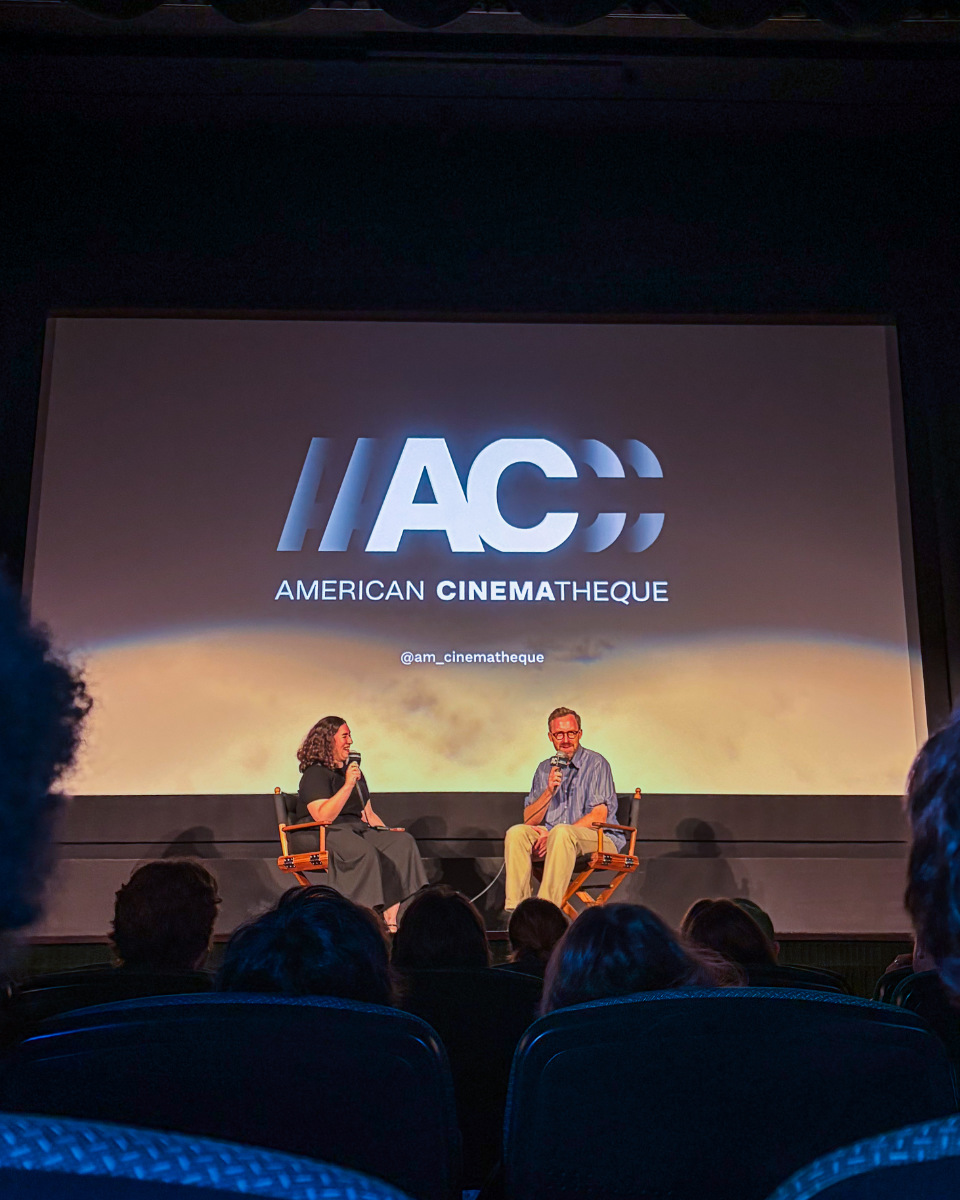
Q+A with John Wilson
Had the opportunity last night to see an advance screening of The History of Concrete featuring a brief Q&A session with John Wilson afterward. I’ve written before about what a joy theatrical experiences are in Los Angeles, and this certainly was no different. Waiting in line outside the theater beforehand, a guy drove by yelling, “Fuck yeah John Wilson!” out his window. A Gen-Z woman on the corner waiting for some tacos yelled toward us, “I’m jealous of every single person waiting in that line.” It was a good vibe.
Some would argue that the weather and the water are what makes living in LA worth the steep cost of living. Some might say that there’s a lot of opportunity. Some would say there’s just a lot going on. None would be wrong. It’s so expansive, both literally and metaphorically, that you can really just take what you want and leave the rest. While it’s probably nice to be a movie star and live in such a place without having to care about gas prices, the city offers up plenty for people who aren’t in the one percent. It’s still a good place to just be.
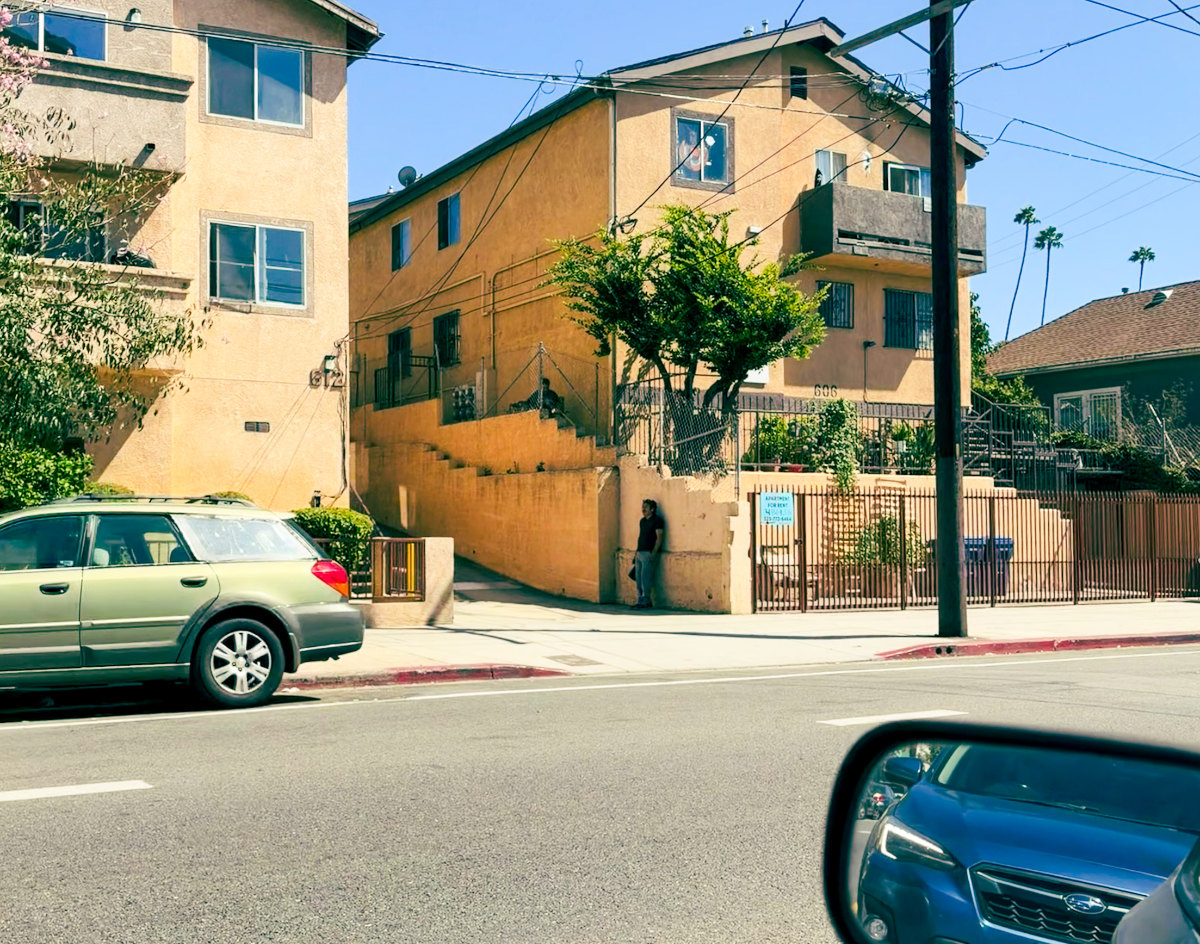
Alone in Virgil Village
Yet gas prices are a concern for many. There are more than a couple crises facing the city right now being debated in the lingering mayoral election (go Nithya). But the larger, national issues that a mayor has no power over are hitting hard here.
I was driving down Virgil and passed a Sinclair gas station with a line into the street of waiting cars because they were selling gas for $5.79 a gallon—which is the cheapest I’ve seen in the past few weeks. As the threads of the economy are being pulled apart by profiteers everywhere, I kind of wonder how this will play out in such a sprawling, only-kind-of-interconnected metropolis with an outsized police budget.
It does feel like we’re in the last moments of musical chairs, except there are like two chairs and three hundred people trying to grab a seat. There’s no telling what chaos will ensue when the dominoes start to fall at scale, and it’ll probably hit different everywhere. A city like San Francisco, condensed and contained by geography, will respond to public discontent with measures that won’t work in LA’s sprawl. That discontent will be difficult to measure as well, because class solidarity doesn’t really begin to take hold until a large majority of people can’t afford to just be where they’re at.
So I’m trying to enjoy these fun little movie screenings while I can, because it certainly feels like this is all going really bad and is going to get much worse in the not-too-distant future, and I have no clue what living in a city like Los Angeles is going to be like if gas hits ten bucks a gallon and all the restaurants shutter, but I can’t imagine it will be the fun kind of vibe I enjoyed last night.
I should preface this by saying, I’ve been finishing up a nine-song solo album that I’ve been working on for a few months now. There are a few loose ends to tie up, but for the most part, it’s done. Or it was.
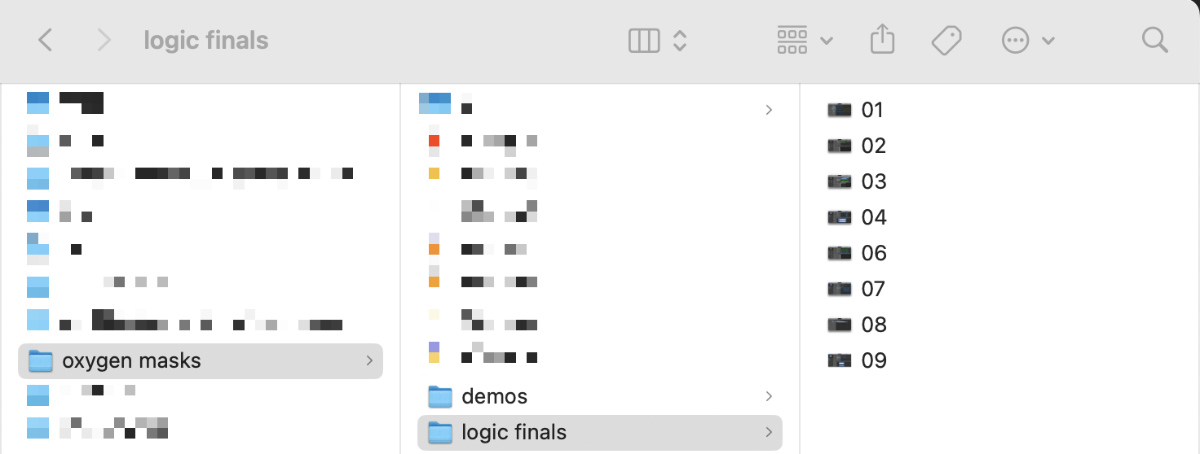
Oxygen Masks was ready to go
Last night completely by chance I saw Jean-Luc Godard’s 1987 film, King Lear. I had no clue what was in store for me. I won’t really try to describe the experience, partly because I can’t yet. But it was just one of those unexpected experiences with art that completely caught me off-guard.
About halfway through the film, which was just as much a pleasure to listen to as it was to watch, this album I’ve been working on sprang to mind and I thought, I need to deconstruct my process for making music and start this entire project over. And so I have.
To me, this is the function of great art. Great art can be subjective, as well—for me, it’s a Godard film, but for someone else it could be a Picasso painting or a Bad Religion song. Whatever it is, something about it rewires the way you think about things, about yourself, about the world. It makes you approach life differently.
Watching this film, I realized I’d been approaching music—in what I play, how I play it, how I write and record it—everything—in a way that I don’t really identify with anymore. It’s comfortable and unfamiliar at the same time. I haven’t been pushing myself, and the results are generally good enough—and what I realized last night, sitting in this theater, was that good enough is actually not that at all.
So I am starting from square one, unsure of how to move forward or what I’ll end up producing, but I know it just can’t be what I was going for. I hope it will be weird.
I tried to add an archives page to the blog a couple days ago and the entire site collapsed with the message This Website Has Encountered A Fatal Error strewn across the bottom. I’m still trying to figure out what I did wrong. One of the hurdles I have is a lot has changed since I learned to code and build out WordPress themes back when it was still a new thing. Most now isn’t even code-based, and the parts that are require an industry-level knowledge base to understand.
Beyond just being an inconvenience to dig up pages that actually have the code and examples I’m looking for to build out pages with, it just kind of makes me feel bad about the internet. There used to be something incredibly fun and rewarding about spending an afternoon—because, really, that’s all it took in the days of simple HTML sites—making a personal web page.
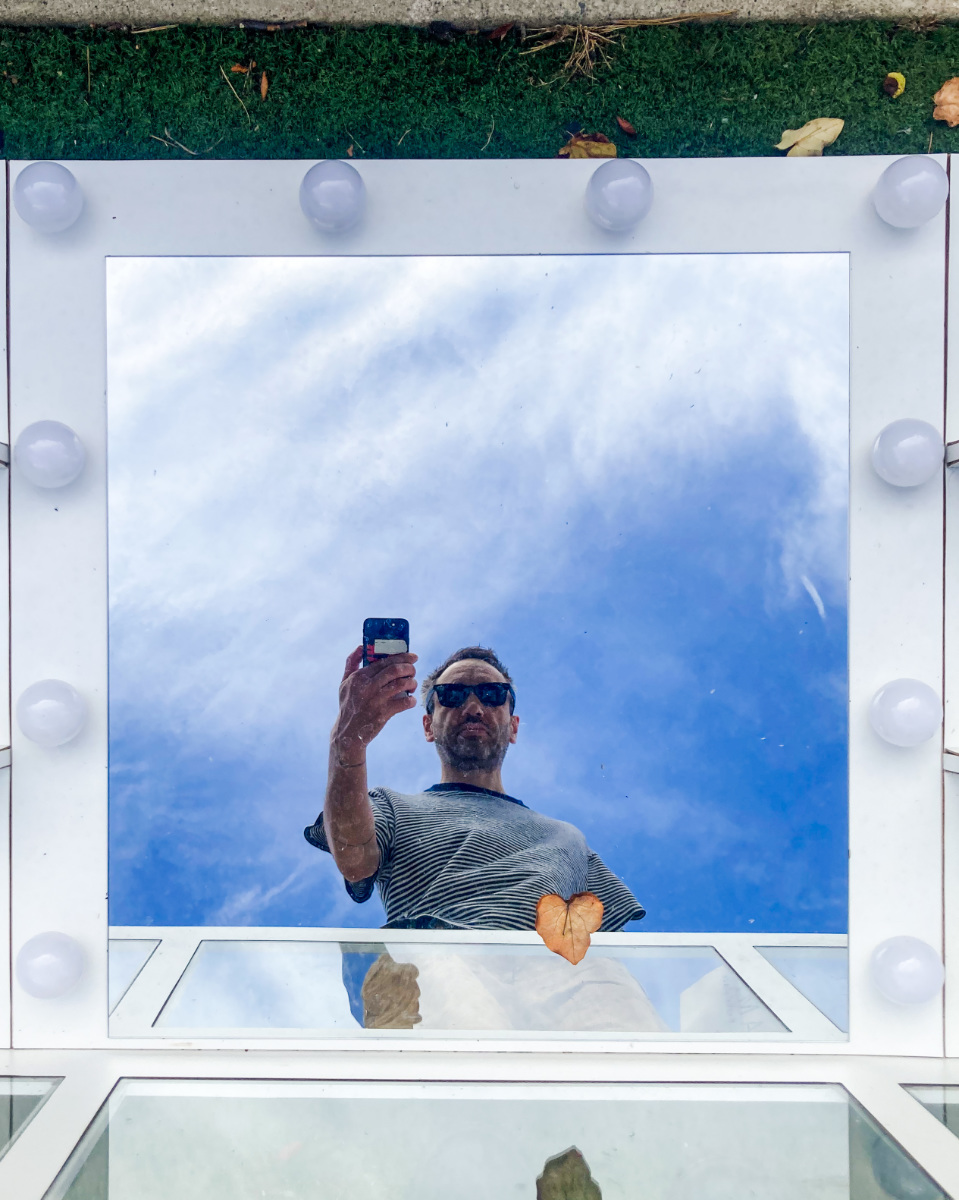
Reflecting
These days, we live in the age where everything fails after a couple years. Smart phones, appliances, cars. Nothing is built to last. We can look at old furniture, hand-built by craftsmen, and admire its longevity and attention to detail. When I was growing up, I remember companies still offered lifetime guarantees on what they sold. Somewhere along the line, that all stopped. That’s kind of a parallel to what I imagine the not-too-distant future will be like for people online, surrounded by social media AI slop, where nothing is real and no voice is authentic, wondering what the early days of the internet were like.
There’s a purity and connection created between a person and an object when something is done by hand. It’s a kind of transference of humanity to an object. The combination of technology, capitalism, and trade expansion has always disrupted the processes of personalized building. From log cabins to the suburban sprawl, from loom-spun sweaters to fast fashion sweatshops, from painted portraits to the photograph to AI slop—we’re always in a state of ‘progress,’ yet simultaneously lamenting the fact the objects that inhabit our lives were always better back in the day.
Nothing is ever better because it becomes automated. It just becomes more convenient. It’s justified to the masses by way of ‘consumer savings,’ yet the harm comes in the form of disrupting community businesses with box stores, with individual creative designs replaced by templates, with personal interactions turning into people consulting AI bots about their lives. Industrialization has been a slow burn and the jump to what comes next has been a long time coming, but it’s almost here and I don’t think people are prepared for how this is going to alter the very nature of what it means to be human. It’s just so sad.