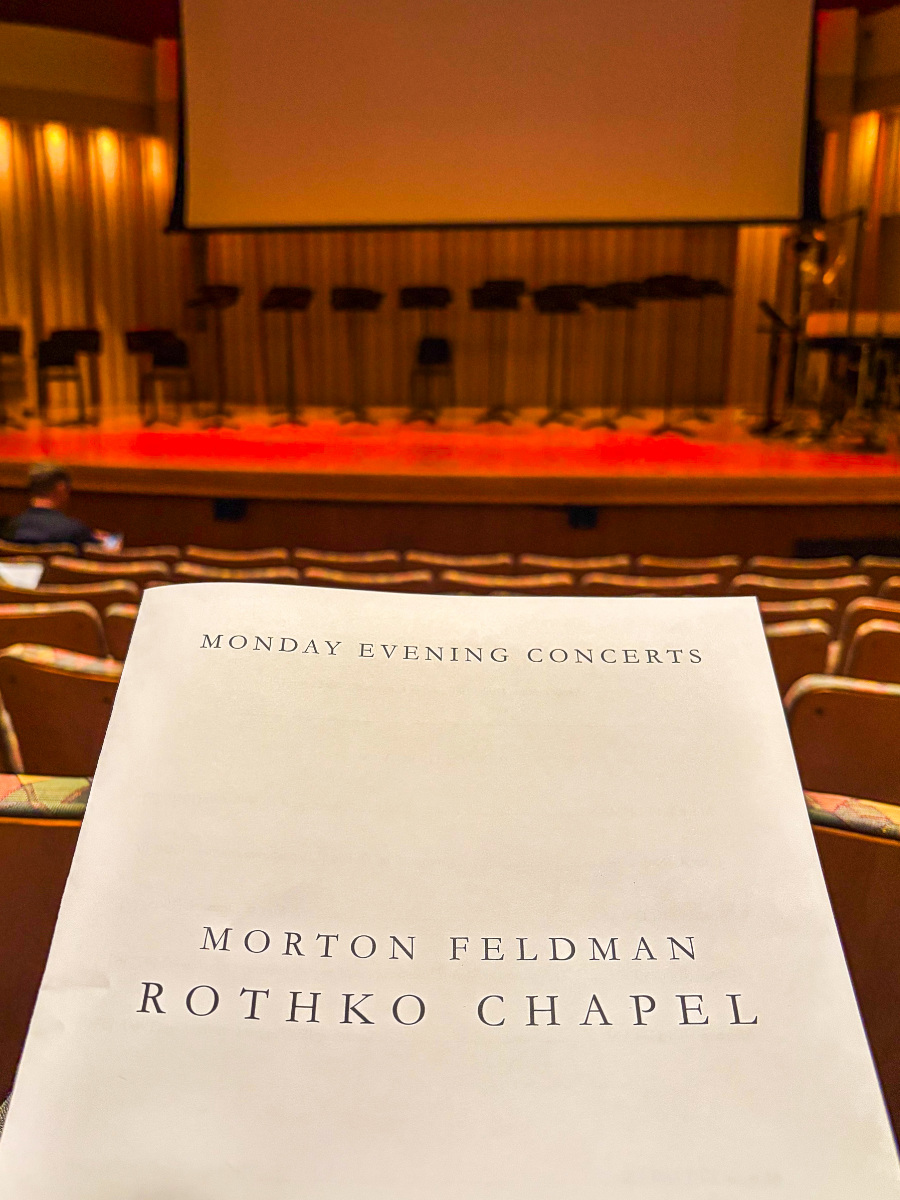
Morton Feldman Rothko Chapel program
Morton Feldman Rothko Chapel program
I was lucky enough to attend the sold-out performance of Rothko Chapel (among a few other, shorter works) that the Monday Evening Concert series put on tonight in honor of what would have been Morton Feldman’s 100th birthday (at least, earlier this year). It’s the second show celebrating Feldman I saw this week—last Friday, Oracle Egg had BlackBox Ensemble perform a similar event with different works.
Now, full disclosure, I knew nothing of Feldman before these concerts. While I listen to plenty of avant-garde music, it’s often in the shape of post-rock-adjacent bands or weird things I see at sparsely-attended local shows where someone has an array of objects they turn into something between a harmony and an unstructured wall of noise. The sort of high-brow, famous and studied crowd isn’t something I’m really familiar with.
That’s why I was particularly fond of hearing this performance tonight. I had no clue what to expect—it was honestly my love of Rothko more than anything that made me buy a ticket to begin with. But I left completely stirred by the music.
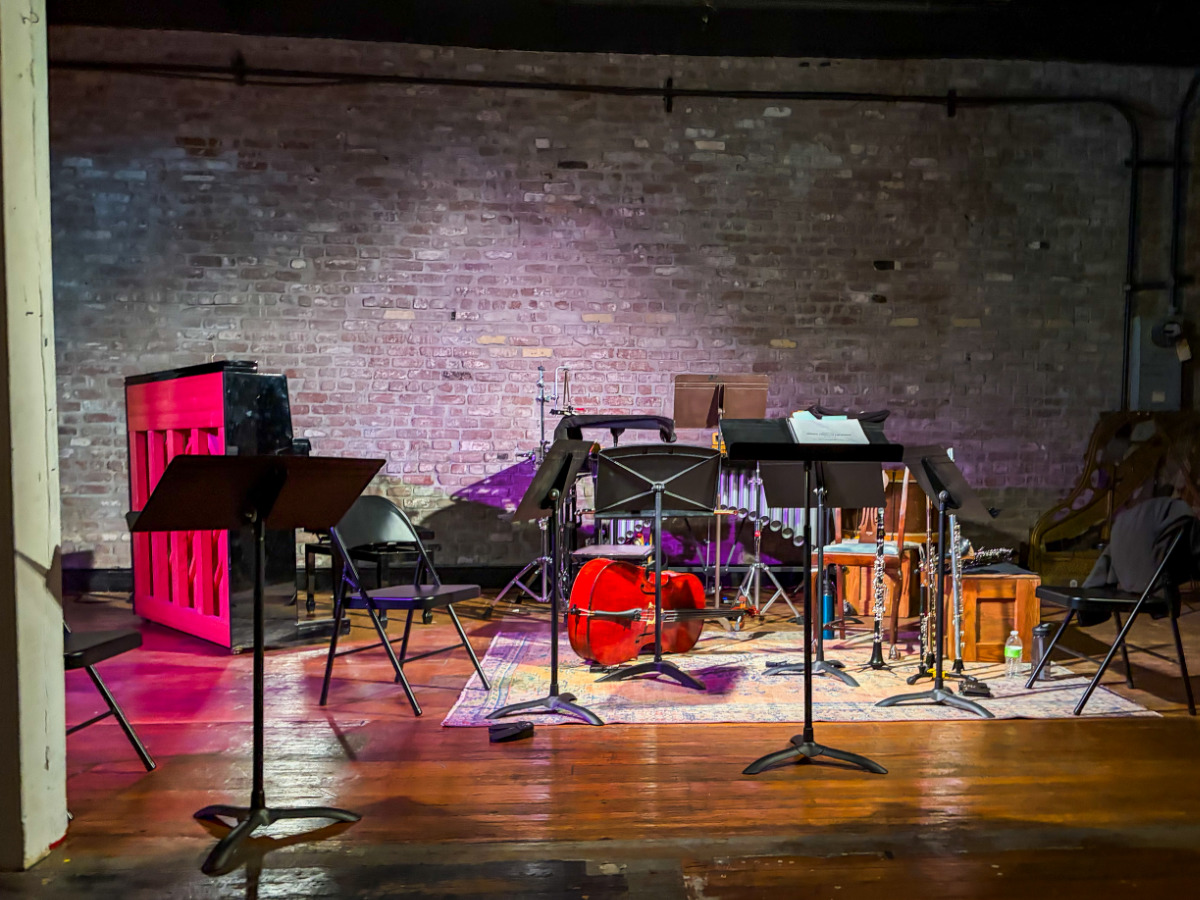
Performance set-up at Oracle Egg
This is the wonderful thing about experiencing art in general—there’s no telling how seeing Rothko Chapel will affect me or the work I make down the line, but it undoubtedly will, somehow, even if I am not fully aware of it. It feels almost stupid to write out—how taking in something creative can provoke inspiration—but we live in really stupid times when people are actively working against the idea that art made by humans has a place or purpose in life.
Beyond my ongoing laments about AI, though, seeing this made me both glad to be in Los Angeles but saddened by how capitalism all but ruins these types of performances for so many people by not allowing an avenue for them to be experienced at all. A ‘market’-based economy will always be cruel to the arts because it’s generally unpredictable what, if anything, will even break even with a financial investment (much less be any kind of success). Major cities generally have enough demand for a variety of cultural options that many forms of art can cultivate audiences; mid-sized cities are lucky to have one independent theater and a liberal arts college that offers annual concert series. Rural areas are basically fucked beyond anything that doesn’t play in a national, corporate movie theater chain.
Experiencing art helps develop abstract thought. When ten people see the same movie, even one that might be ‘philosophical’ in nature, they are all presented with the same basic concept in their heads because the plot of the film poses questions it seeks to answer. Perhaps it’ll make the people think about variations of that question, but all ten people will have fairly concentrated thought processes. Taking in an experimental concert, or looking at abstract paintings, makes the ten people come up with their own questions before trying to reach a conclusion. The experience itself provokes so much more than what entertainment provides for—it has the potential to spur on more conversations, develop greater ideas, and make people more open in general.
As ideas are being chiseled away at and culture that doesn’t embrace corporatism is stifled, it feels like we’re all losing out. Violence seems inevitable at this point, and I can’t help but think that’s partially due to the fact so much of what we see and hear and experience on screens of any sort keeps pointing in that direction. We all end up thinking in similar patterns of decay because that’s all we’re shown in the dominant forms of media. It’s all just so sad, and I guess the music was bringing all that up tonight.
I hate The Grove. It’s one of two gaudy, outdoor malls in Los Angeles by a billionaire who lost the race for mayor four years ago (the other being The Americana). In the past, I’ve found myself at the latter to catch a movie in the middle of the day because it’s down the street from my mechanic and I’d need to kill a couple hours while my car was in the shop. The Grove, though, I avoided at all costs.
Now, I can’t. At least not if I want to see a new movie.
Since theaters re-opened in 2021 or 2022, I’ve been using AMC’s A-List membership. I see a shit-ton of movies and the cost pays for itself if I go just twice a month. However, I’ve also lived in East Hollywood that whole time—just a 12-minute drive from the Burbank multiplex with its 30 screens and free parking.
A couple months ago, I moved into what is basically my dream place. There’s really nothing to complain about—except now that I’m in Westlake, Burbank is a much further drive and now the closest AMC theater is at The Grove, with its 14 screens and $6 parking.
An afternoon at The Grove
There are any number of reasons I hate this place. An outpost of capitalism, there’s a kind of faux classiness to it all. There are ‘luxury’ stores but the experience of being at one of these malls is anything but. It’s the shopping center version of pleather. (Kind of ironic given Rodeo Drive is just three miles west, down Third to Beverly Hills.)
One thing going to The Grove does for me though, is that it reminds me how different people can be. It’s a real removal from my comfort zone. I walk around completely confused as to how people of all ages go to this place willingly and un-ironically, just to like, hang out. It is mystifying.
Consumerism in America is so central to national identity that places like The Grove really make me think about how the notion of what you want at a material level seeps in to every aspect of life—how being presented with certain options is disguised as being catered to, and what that means for how we view our politics. These sorts of places use the model of collective gathering to spur on the notion of individualism, and I think that’s far more destructive to the human condition of living in the United States than the specific economic model of capitalism (though the two are inextricably linked).
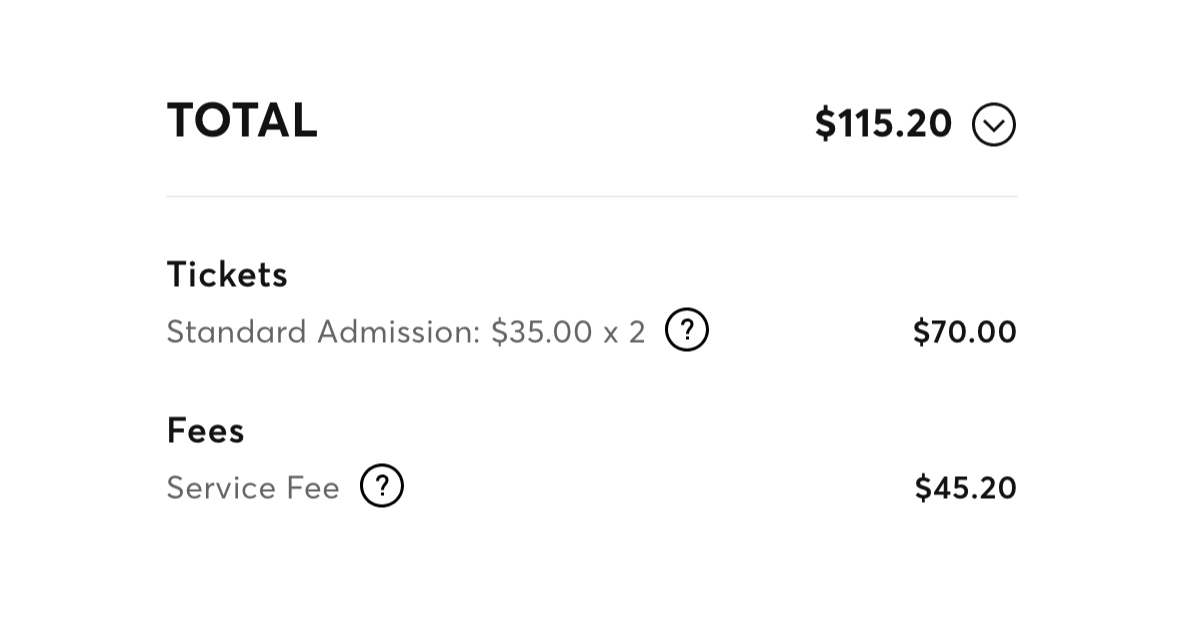
Why I don’t use Ticketmaster
I saw that tickets to the Chelsea Wolfe show at the Orpheum next month were pretty reasonably priced at $35, so I went to pick up a couple and was shocked—though, I guess I shouldn’t have been—to see a service charge per ticket at sixty-two percent of the face value. For what? To send me an e-mail? To make me download the shitty app on the day of the show so they can scan a QR code?
Given that the LiveNation executives brag about ‘robbing people blind,’ I guess stuff like this should come as no surprise. Still, it remains absolutely infuriating. I don’t think these companies should just be broken up—I think the executives should all be thrown in prison for years (and that, honestly, would be a kindness).
Q+A with John Wilson
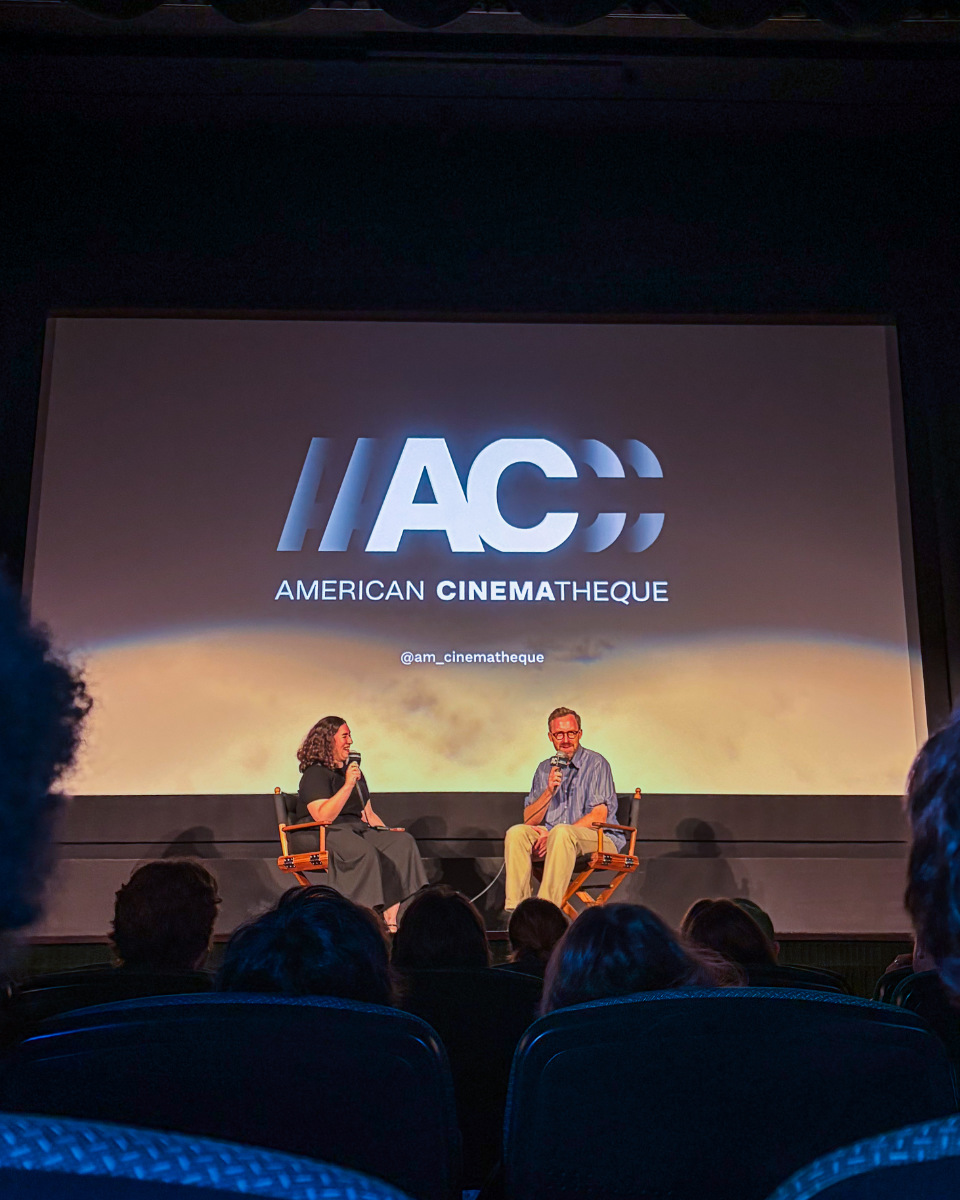
Had the opportunity last night to see an advance screening of The History of Concrete featuring a brief Q&A session with John Wilson afterward. I’ve written before about what a joy theatrical experiences are in Los Angeles, and this certainly was no different. Waiting in line outside the theater beforehand, a guy drove by yelling, “Fuck yeah John Wilson!” out his window. A Gen-Z woman on the corner waiting for some tacos yelled toward us, “I’m jealous of every single person waiting in that line.” It was a good vibe.
Some would argue that the weather and the water are what makes living in LA worth the steep cost of living. Some might say that there’s a lot of opportunity. Some would say there’s just a lot going on. None would be wrong. It’s so expansive, both literally and metaphorically, that you can really just take what you want and leave the rest. While it’s probably nice to be a movie star and live in such a place without having to care about gas prices, the city offers up plenty for people who aren’t in the one percent. It’s still a good place to just be.
Alone in Virgil Village
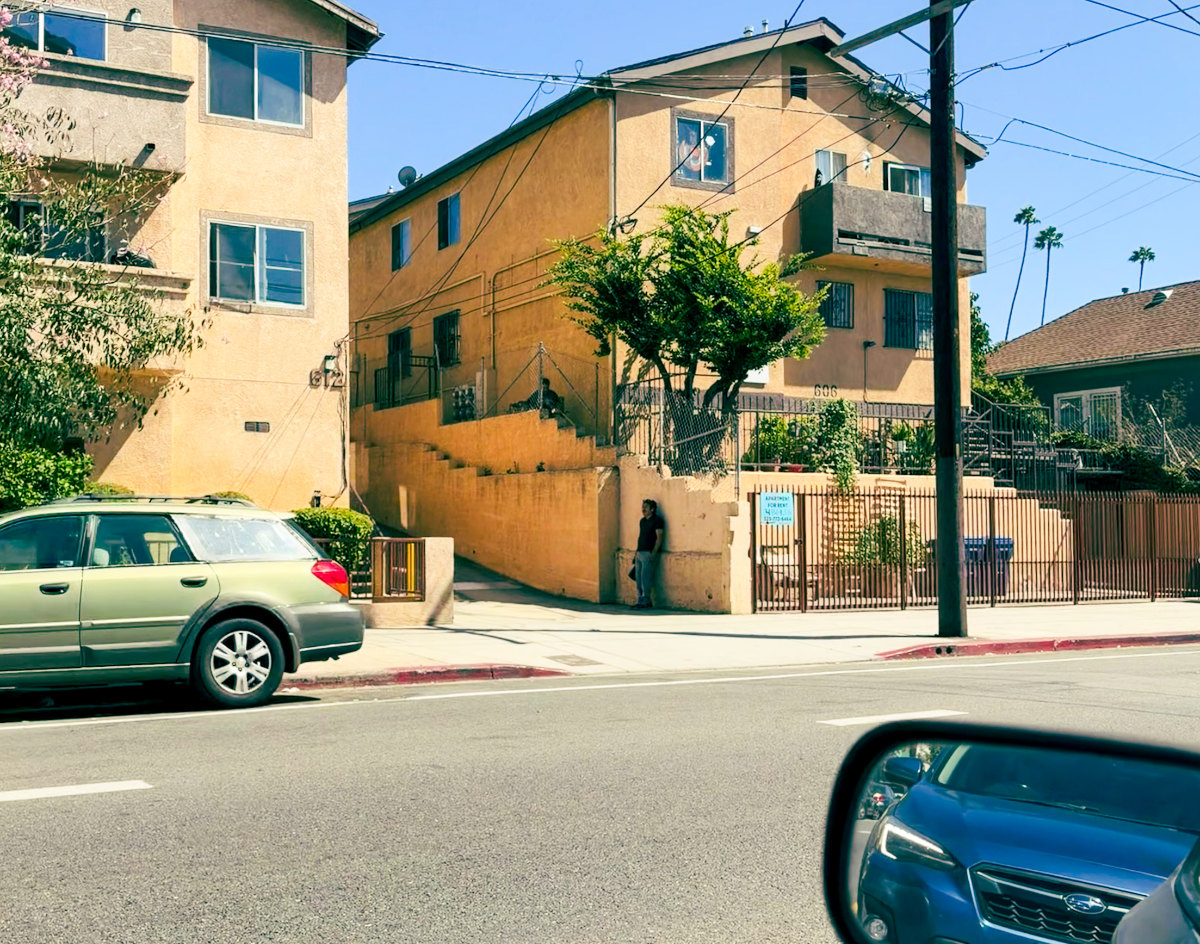
Yet gas prices are a concern for many. There are more than a couple crises facing the city right now being debated in the lingering mayoral election (go Nithya). But the larger, national issues that a mayor has no power over are hitting hard here.
I was driving down Virgil and passed a Sinclair gas station with a line into the street of waiting cars because they were selling gas for $5.79 a gallon—which is the cheapest I’ve seen in the past few weeks. As the threads of the economy are being pulled apart by profiteers everywhere, I kind of wonder how this will play out in such a sprawling, only-kind-of-interconnected metropolis with an outsized police budget.
It does feel like we’re in the last moments of musical chairs, except there are like two chairs and three hundred people trying to grab a seat. There’s no telling what chaos will ensue when the dominoes start to fall at scale, and it’ll probably hit different everywhere. A city like San Francisco, condensed and contained by geography, will respond to public discontent with measures that won’t work in LA’s sprawl. That discontent will be difficult to measure as well, because class solidarity doesn’t really begin to take hold until a large majority of people can’t afford to just be where they’re at.
So I’m trying to enjoy these fun little movie screenings while I can, because it certainly feels like this is all going really bad and is going to get much worse in the not-too-distant future, and I have no clue what living in a city like Los Angeles is going to be like if gas hits ten bucks a gallon and all the restaurants shutter, but I can’t imagine it will be the fun kind of vibe I enjoyed last night.
Watching Ed Sheeran’s career implode this week has been a delight. He dropped Macklemore from his tour due to pressure from known associate of Jeffery Epstein Robert Kraft regarding voicing support for Palestine on stage. The fallout from Sheeran’s spineless bending of the knee to billionaire Zionists has been wonderful. Everyone else performing (including his backing band) left the tour while Macklemore pledged $1 million of his earnings from the tour to Palestine Aid.
It’s unfortunate but the only way to really change things under capitalism is to fuck with Big Money. Though some some celebrity entertainers who remain ‘apolitical’ (Taylor Swift and Jay-Z come to mind) for the sake of their ticket sales are still kind of untouchable from public criticism, this fall-off for Sheeran suggests the protests against Israel have reached a new level in American discourse. The general public cares more about celebrities than most things, and this kind of attention will hopefully provoke those at the top to understand standing with Israel—or deciding to not comment on the matter and thus side with the genocide—could potentially lead to major losses in both income and legacy.
With the Trump administration agreeing to sell $2.8 billion in arms to Israel, Sheeran’s disaster is helping to increase the scope of debate about the United States’ position in funding genocide and protecting an apartheid state—and what it means to say, No Comment.
At this point I will not even speak to someone who supports Israel (except maybe to tell them to get fucked). There is no excuse for ‘not picking a side’ regarding (much less openly supporting) a genocidal apocalypse state that protects pedophiles while targeting children in Gaza. Over fifty percent of the population supports killing every Palestinian, while eighty-two percent support expelling them from Gaza using force. It is a depraved horror show of a country that should be dissolved immediately and left to the history books in a chapter titled Great Mistakes of International Governance.
I hope Ed Sheeran learns some kind of lesson from this and I hope every PR agency is in a state of panic as to how to handle their clients with this increasing public discontent for the wealthy supporting mass murder. Mostly, I hope this becomes the type of protest that begins to really interfere with the finances of people who only care about money and are OK with disregarding human life. They are the rot of humankind and the only reason I hope there’s a heaven is because that means there is a hell that they will all burn in for eternity.