industrial revolutions

I’ve been thinking a lot about industrialization and how some of the modern arguments regarding AI and our current generation of change in technology amount to, Humanity has always adjusted to change. I feel like that’s a really stupid line to draw in the sand.

Yes, we’ve always ‘adapted’ and not all change is bad. The development of sewage systems, improvements in architectural engineering, the moon landing. There are so many examples in history of how innovation has spurred the next phase of civilization. But not all of it is great, and our adaptations can also distort our relationships to ourselves, to others, and to the earth.

Sometimes it’s about what we do with invention—and in the United States this is broadly affected by capitalism. Was the invention of the motor vehicle a bad thing? Absolutely not. But the national push for car culture, through the suburban sprawl and dismantling of public transit, sells more automobiles and is not publicly funded (yet it can be publicly bailed out). Cars put us in our own world while a subway brings people together, even if they’re all just reading. Car culture divides people, but it can sell a lot of units.

(This doesn’t even cover the power of the fossil fuel industries and how we’re actively destroying the planet for their economic benefit alone, and how completely fucking insane that is at a fundamental level.)

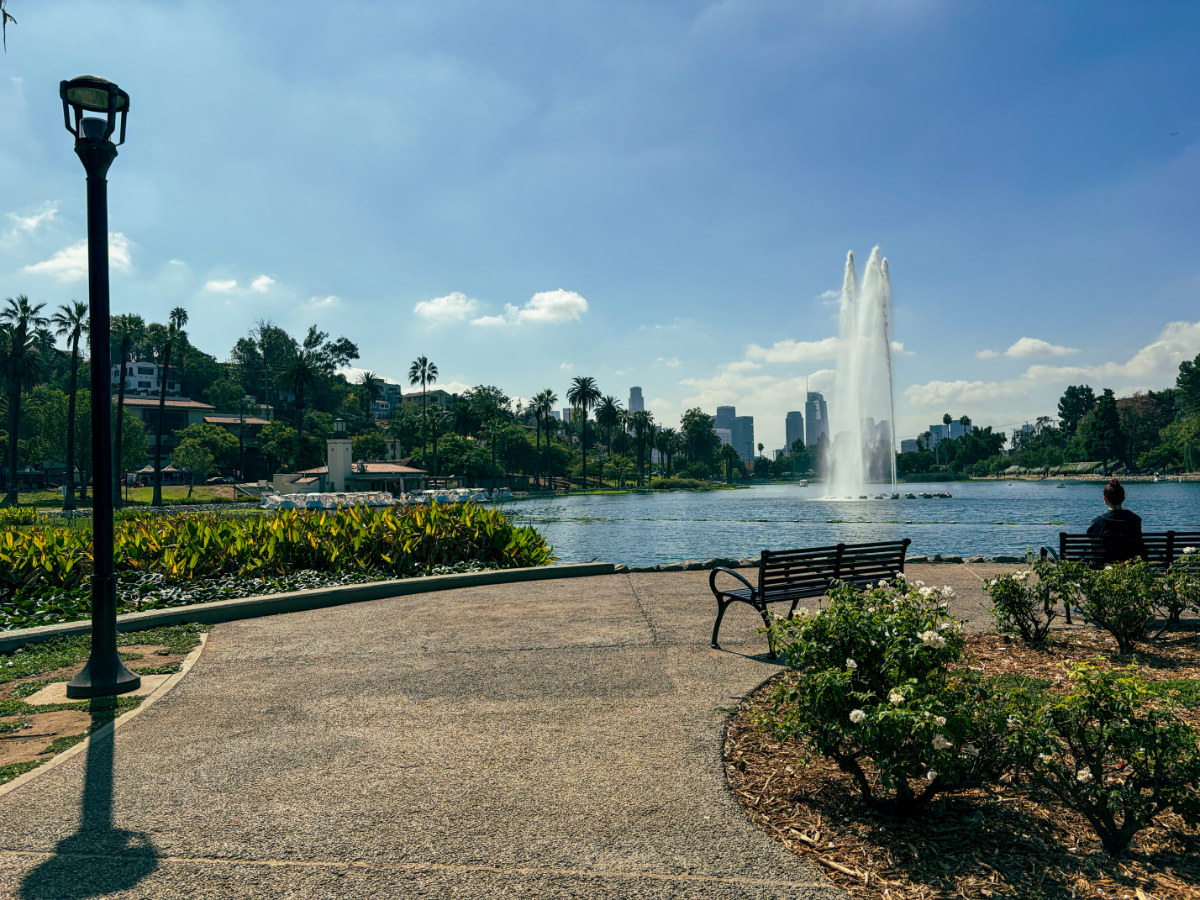
Echo Park

Thinking at Echo Park

Then there’s the sensory side of things. Take the evolution of how we listen to music—from vinyl records to cassette tapes to CDs to MP3s to streaming services. We lose something with each change. When cassettes hit the market, people could fast-forward through songs, although it was a bit of a pain in the ass. The arrival of the CD made it simple. Once music hit the computer, the idea of collecting albums faded. With streaming services, the idea of listening to music has completely changed since its analog beginnings.

That same ‘progress’ can be traced back with most mediums that now exist mostly on a screen, and with each we’re losing connection to the worlds of creativity, sentiment, and inspiration—and, to a degree, individual thought. Our experiences with the world are predominantly visual now—with people, places, and things. Our fundamental sensory experiences are imbalanced and so our relationship with the world is skewed. You hear it every time a friend gets back from a trip and says something like, You have to go, it’s not what you’d expect at all. Yeah, because just seeing a photograph of something tells you barely anything about it.

I really like writing letters to friends, and it’s such a meaningful act to both send and receive something made by hand. The experience is an understanding that someone took time to do something, and that creates meaning. These digital interactions have no correlation with time, and therefore we lose the sentimental relationship that underlies how people connect to one another through acts of making something.

Innovation and development are part of how we grow as a species. Humanity separated itself from the rest of the natural world with its ability to build tools. Yet for every invention we’ve used for good, there are like ten examples of profiteers pushing a harmful agenda for the sake of their bank accounts. A gun is useful if you’re hunting for food, but what have we brought upon ourselves because of it otherwise? How much have firearms been used to ruin or end lives throughout history just so a couple people could be rich?

This is why I don’t trust anyone who supports AI in the least. Could it help us cure diseases faster? Maybe. But the internet had potential to revolutionize how we run the world and instead a few psychotic narcissistic capitalists turned it into a mall of hate for their individual benefit. All of these Silicon Valley types are the same, and there’s absolutely no reason to believe that this level of development won’t be used against the people more than for them.
at the movies

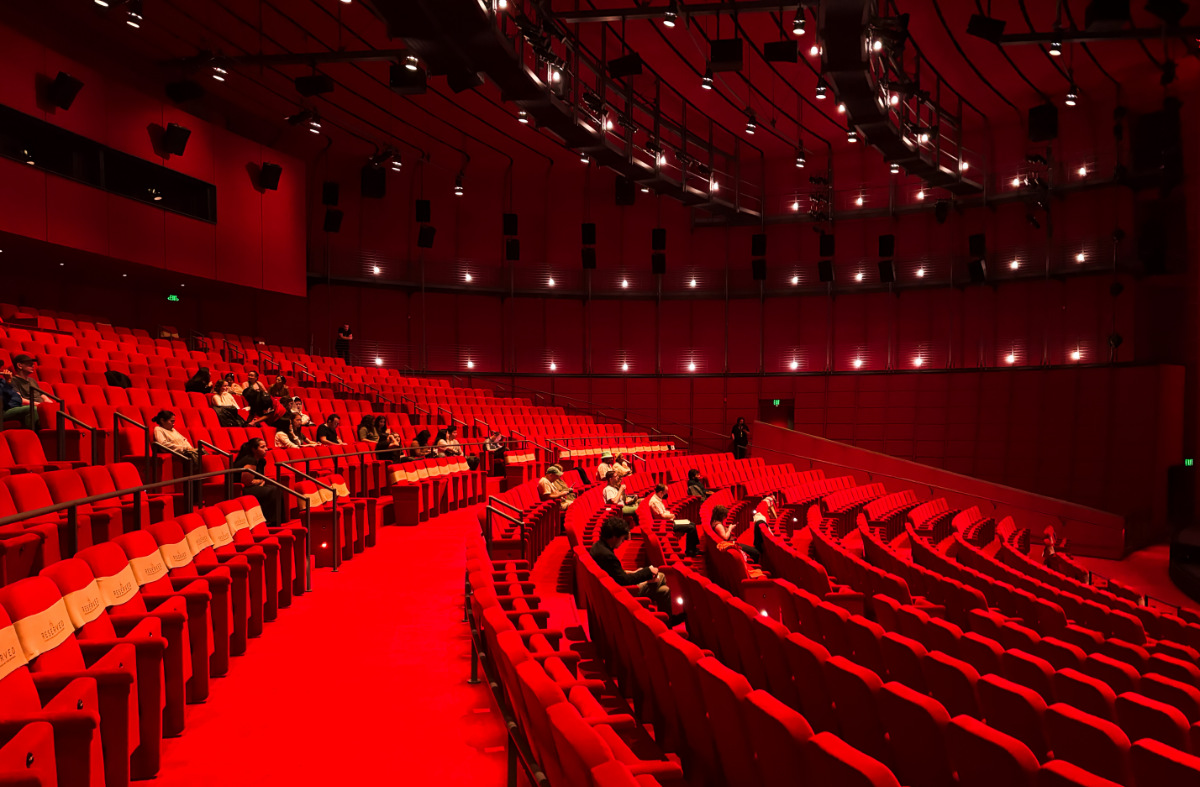
I finally saw Portrait of a Lady on Fire—one of my favorites—on the big screen tonight at the Academy Museum’s remarkable David Geffen Theater. It’s incredible how much the theatrical experience made a difference in a film I already loved. The low-light scenes felt intimate and the French coastline was glorious. What changed the most was the sound; I was actually pissed during the first scene because I thought someone nearby was talking, when it was actually from the film itself, a voice passing by in a hallway off-screen. There was the subtle crackle of the bonfire and the brilliant a cappella singing that brought many to tears. Then, of course, there’s the famous Vivaldi scene at the end that hit like ten tons of brick.

Though I’m not there as often as you’d catch me at an American Cinematheque screening at the Los Feliz 3 or Egyptian, I do love going because it’s one of the best theaters in Los Angeles from a purely technical perspective. The sound is impeccable and the red-carpet maximalism really works for it aesthetically. I can even forgive the fact they don’t allow food. What matters most, obviously, is the programming.

Geffen Theater

Entering the Geffen Theater

Until I moved to Los Angeles, I never really lived anywhere that featured repertory cinema. There were certainly independent theaters, but they’d be showing current films with limited distribution or were festival-circuit type movies. In LA there’s a handful of theaters dedicated to screening films from yesteryear that maybe people haven’t had the chance to see on the big screen or just want to see again. There’s an entire website here dedicated to keeping track of all the films showing across the city. It’s how I watch about 80% of the movies I see these days.

It’s a wonderful thing for many reasons. A few weeks ago I went to a screening of Out of Sight. It was the first time I’d seen it since my dad took me to see it during its initial theatrical run in the summer of 1998. Being able to associate with those memories again, something I otherwise probably wouldn’t think of, is a great thing.

Other times it’s really nice to be in an audience of people who are intentionally seeing a specific movie and are dedicated to a good experience (such as not taking out your phone or talking during a film). People laugh together (or, such as tonight, they cry together). Film is a special form of art that allows for these collective experiences while still being a very individual activity. I love going to the movies alone, because it’s the film that is bonding everyone in the cinema together.

So tonight I got to check another film off a list of something I’ve waited for a long time to see on a giant screen, and it was 100% worth it. There are many things I enjoy about living in LA, and shit like this has to be near the top.

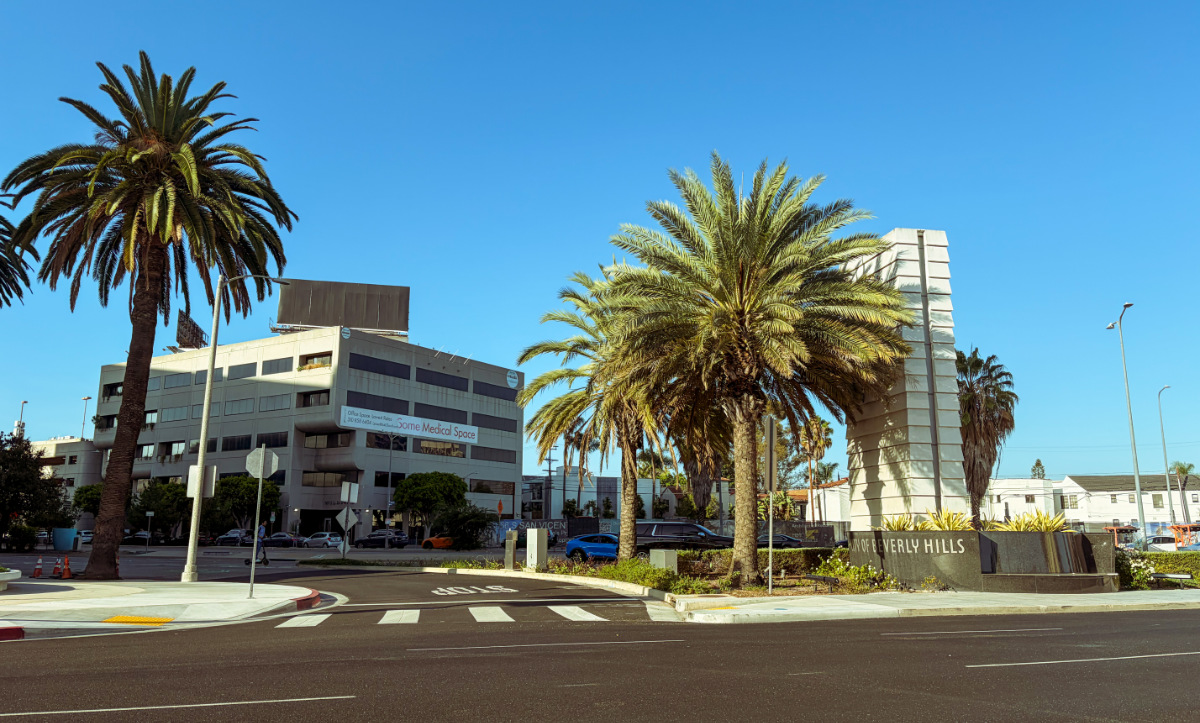
Beverly Hills

Wilshire and San Vicente

I had to get a new phone today. After years and years with my old iPhone SE, the screen cracked for the first time after I dropped it on Tuesday. The phone is so old that the repair shop didn’t have any screens in stock that would fit it. For some time now, it’s been slowly dying due to the increasing size of iOS and mobile apps, and so I took this as the final sign it was time to finally upgrade.

So I bought a new phone this afternoon. Afterward I had to go to Beverly Hills for a medical appointment, and I found myself sitting in the waiting room with some time to kill. Fiddling with this new iPhone, trying to figure out why Apple has made iOS so ugly over the past few years, I was struggling. Holding the phone along the base as I am used to, my thumb couldn’t reach the navigation buttons at the top of the screen—an action that was pretty simple on the SE. This seems like a flaw in basic functionality from a product design point of view, as my hands are a pretty decent size and should have no trouble reaching across a screen.

It felt really appropriate I was discovering this new inconvenience in Beverly Hills.

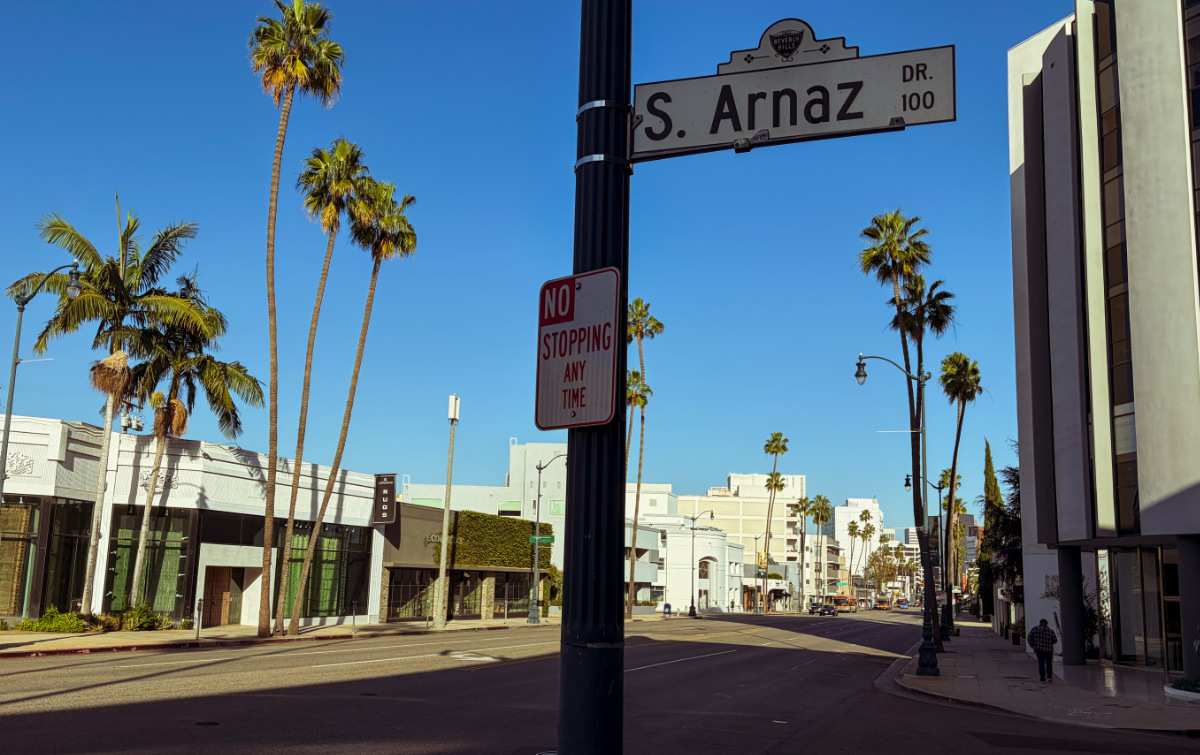
Beverly Hills

South Arnaz and Wilshire

Ten years ago, the iPhone was a perfectly fine device that was well-designed and comfortable. Somewhere along the line, though, that American idea of Bigger is Better seemed to take hold and the phones became more like mini-tablets. (I held on to my old phone for so long because it was the same size as an iPhone 6, which was nearly perfect.)

But in America, we take what we can get even—and especially—when we don’t need it. Beverly Hills is the type of city that exemplifies this idea. The palm trees, taller than most in the rest of LA, soar above Wilshire Boulevard. The showrooms for supercars that couldn’t be driven on a majority of the pothole-laden streets of Los Angeles appear sandwiched between realty estate agencies and hot yoga studios. The ostentatious houses that could reasonably house six families have two luxury cars in the driveway.

This sickening need for excess factors in at scale, from the obscene lifestyle indulgences of Beverly Hills down to the fact the smallest phones on the market are too big to fit comfortably in the hands of a grown man. The fundamentals of design are based around function, and we’ve warped that under capitalism to prioritize form, often to the detriment of everything else. Be they systems of urban infrastructure and city planning to products being of lower quality while getting more expensive, the language of constructing our physical reality has been upended by the profit motive.

God I hate going to Beverly Hills.

reflecting

I tried to add an archives page to the blog a couple days ago and the entire site collapsed with the message This Website Has Encountered A Fatal Error strewn across the bottom. I’m still trying to figure out what I did wrong. One of the hurdles I have is a lot has changed since I learned to code and build out WordPress themes back when it was still a new thing. Most now isn’t even code-based, and the parts that are require an industry-level knowledge base to understand.

Beyond just being an inconvenience to dig up pages that actually have the code and examples I’m looking for to build out pages with, it just kind of makes me feel bad about the internet. There used to be something incredibly fun and rewarding about spending an afternoon—because, really, that’s all it took in the days of simple HTML sites—making a personal web page.

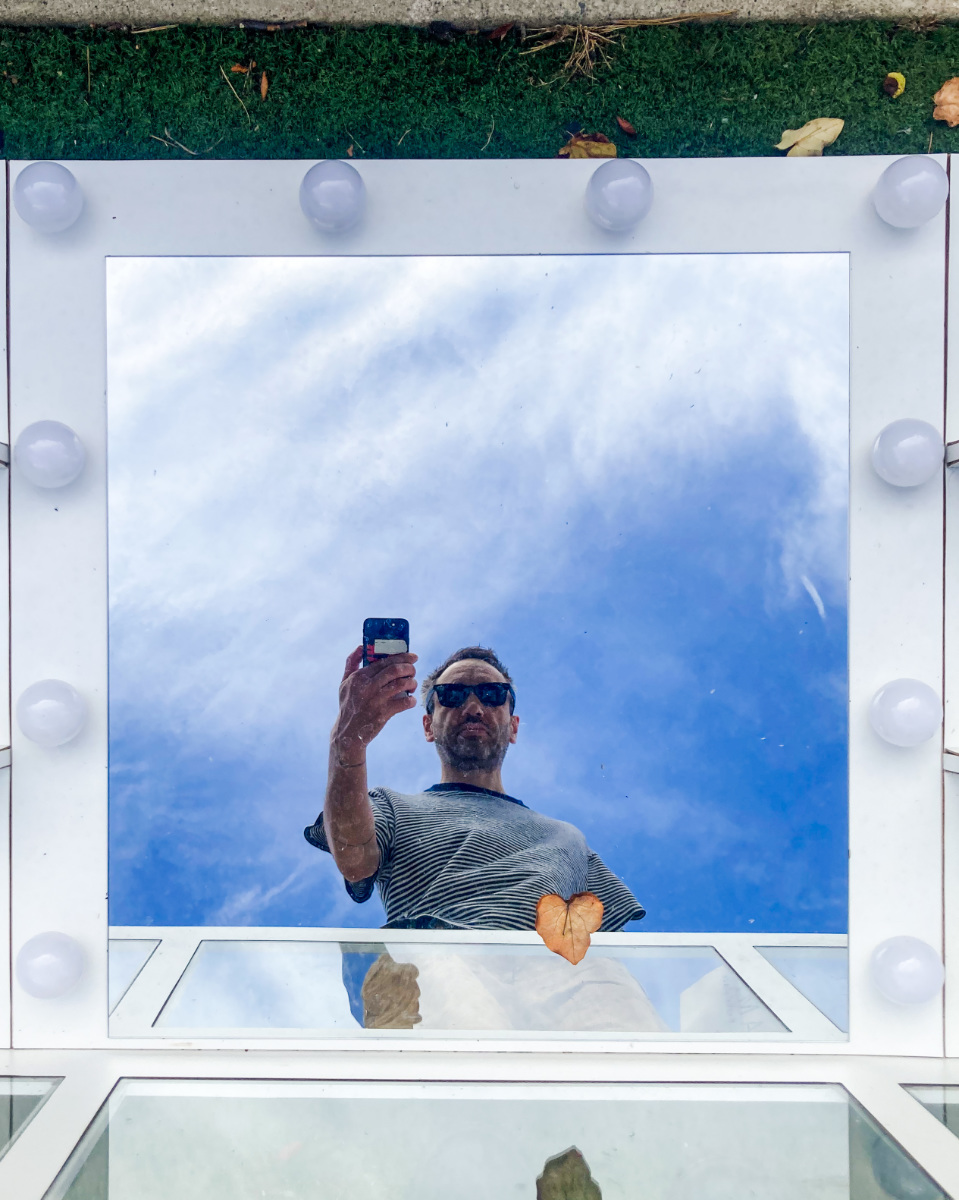
Reflecting

Reflecting

These days, we live in the age where everything fails after a couple years. Smart phones, appliances, cars. Nothing is built to last. We can look at old furniture, hand-built by craftsmen, and admire its longevity and attention to detail. When I was growing up, I remember companies still offered lifetime guarantees on what they sold. Somewhere along the line, that all stopped. That’s kind of a parallel to what I imagine the not-too-distant future will be like for people online, surrounded by social media AI slop, where nothing is real and no voice is authentic, wondering what the early days of the internet were like.

There’s a purity and connection created between a person and an object when something is done by hand. It’s a kind of transference of humanity to an object. The combination of technology, capitalism, and trade expansion has always disrupted the processes of personalized building. From log cabins to the suburban sprawl, from loom-spun sweaters to fast fashion sweatshops, from painted portraits to the photograph to AI slop—we’re always in a state of ‘progress,’ yet simultaneously lamenting the fact the objects that inhabit our lives were always better back in the day.

Nothing is ever better because it becomes automated. It just becomes more convenient. It’s justified to the masses by way of ‘consumer savings,’ yet the harm comes in the form of disrupting community businesses with box stores, with individual creative designs replaced by templates, with personal interactions turning into people consulting AI bots about their lives. Industrialization has been a slow burn and the jump to what comes next has been a long time coming, but it’s almost here and I don’t think people are prepared for how this is going to alter the very nature of what it means to be human. It’s just so sad.

trapped in four walls, passing time

As a follow-up on some of my hospital thoughts, another part of my experience was actually leaving the place. I arrived around 10:00 pm on a Tuesday and left about 40 hours later. All things considered, that’s not an overly-long stay. However, as I left the parking lot and drove toward the 110—as merging on to a freeway is the most LA way to be reminded you’re back in the real world—I felt incredibly disoriented.

It’s not just that time seems to stand still, but because of the sterile and ubiquitous nature of hospital rooms, I could have been anywhere. Returning to Los Angeles felt like I’d warped into another world after spending nearly two days staring at the same off-white walls, watching repeats of Law and Order: SVU and listening to my roommate repeat the same Christian affirmations on his phone for hours on end.

There have certainly been two-day stretches where I haven’t left my apartment before, but I’m always reminded of where I am by the helicopters overhead, the cars honking from the intersection, the customers of the plumbing store loading materials into trucks in the parking lot outside my window. I can haul my laundry upstairs and have a pretty decent vantage point of Koreatown from the top. I could lie in bed for days on end and still know I’m in LA.

In the hospital, it’s different. All I hear are asynchronous beeps, all I can see out the window—if there is one—is a concrete parking garage. The news on TV reminds me that LA is out there, somewhere, having car chases and traffic jams, but from my vantage point it might as well be Mars. I didn’t realize it until I left, but I was slowly going crazy while I was stuck there.

It makes me think of everyone who has extended stays in these places, or the elderly living out their terms in the death-care equivalent. People who have no connection to the world outside of four, unchanging walls, stuck in the places the rest of us don’t have to be reminded they exist in. We have such a deformed view of what care entails in this country, and I doubt it’s going to get any better anytime soon.