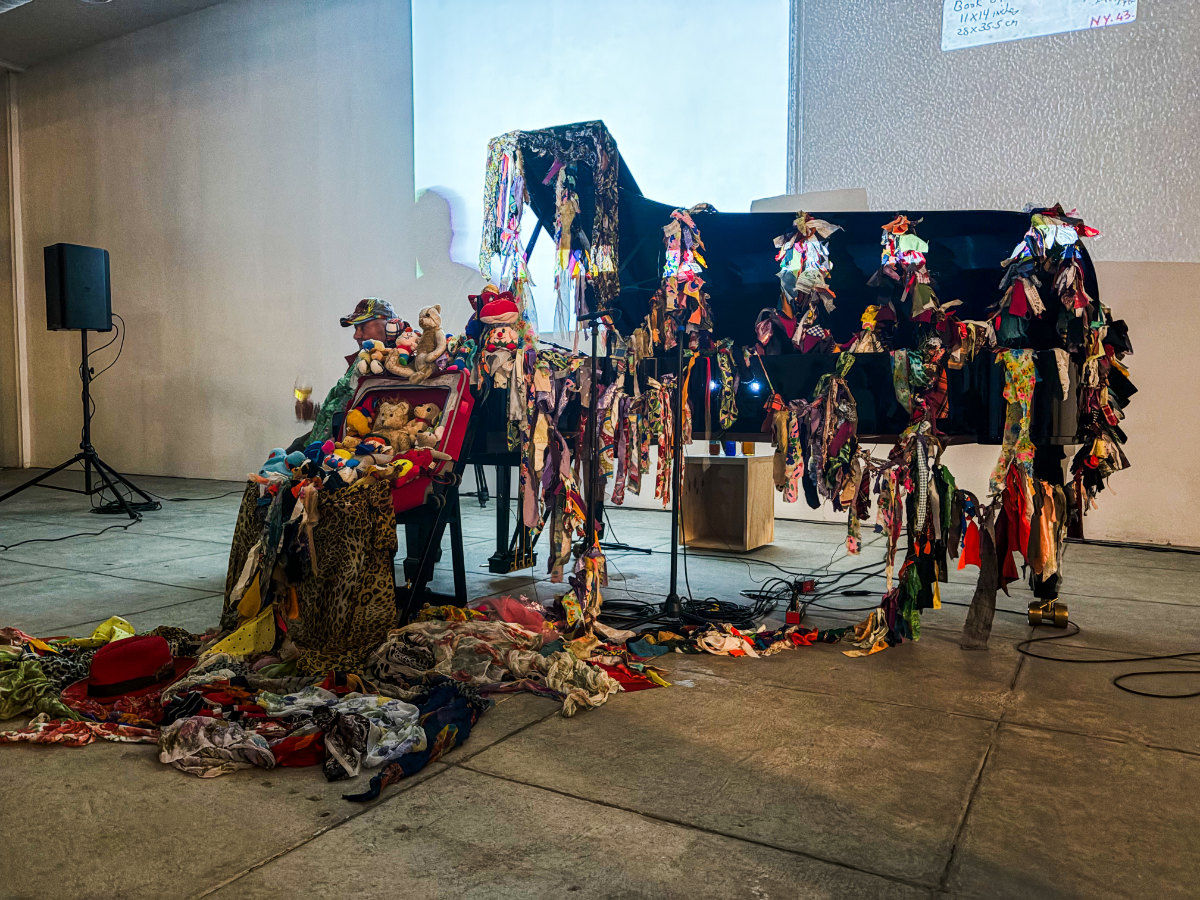
Charlamagne Palestine at The Brick Annex
Charlamagne Palestine at The Brick Annex
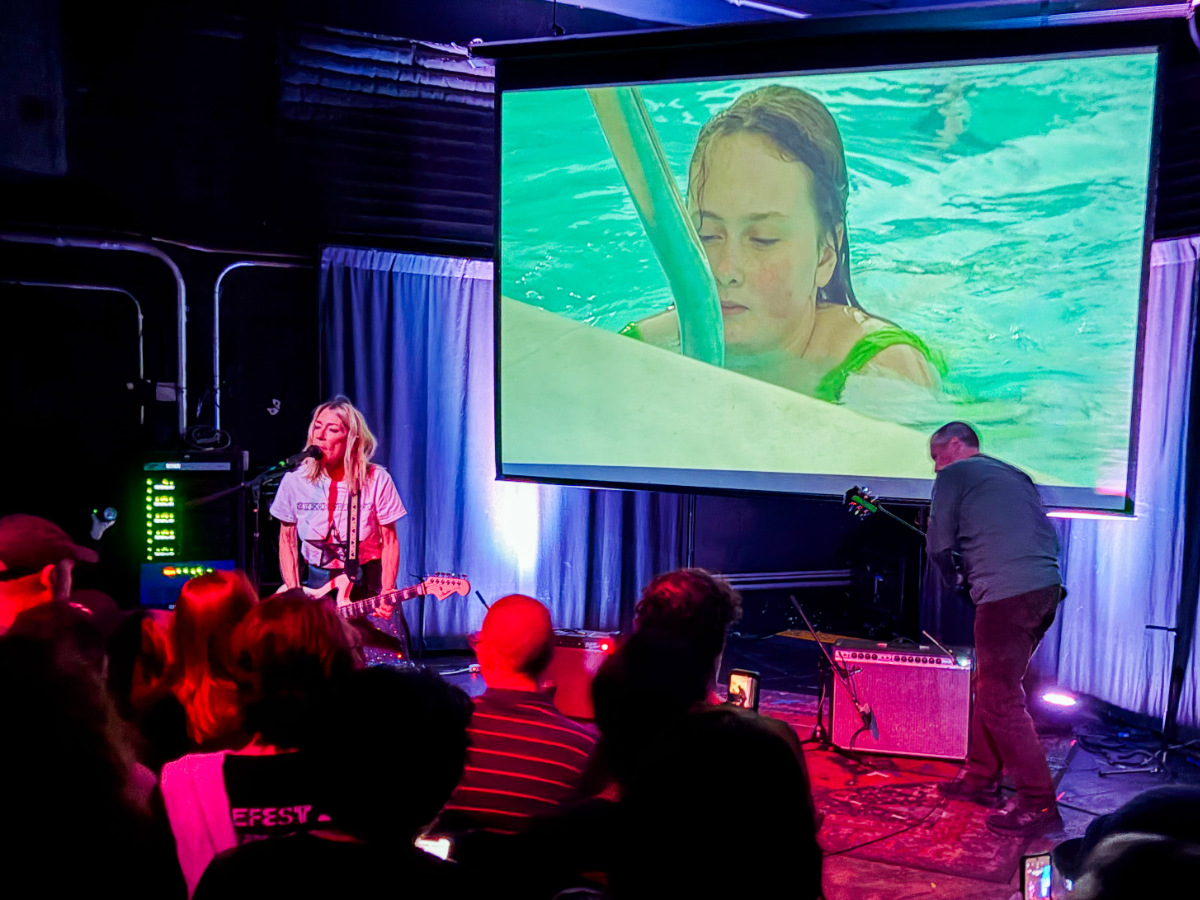
Body/Head at Zebulon
I’ve seen a couple avant-garde musical acts in the past couple days that, while sonically couldn’t be more different, seemed keyed in to the same door of utilizing sound to connect to something greater in the universe. Charlamagne Palestine used intense repetition and tonal improvisation on the piano while Body/Head was a nonstop barrage of distorted guitar with various effects layering a collage of pummeling sound.
The similarities between the two acts was striking, however. They both used long-form, anti-format performances to keep the music in the moment. Seeing your regular band at a show becomes predictable if you’re familiar with their songs—you know what parts are coming up, and they might have a slight variation, but for the most part, you’re getting a louder version of an album cut. These works were very much like, This is how the room feels right now, and there’s something inherently special about that.
It seemed very telling that the two were also helmed by musicians in their 70s. Charlamagne couldn’t even remember the year he was born when giving a brief introduction to his work. Kim Gordon is 73, although you wouldn’t know it from the noise she makes (as well as how generally youthful she appeared on stage). They are both obvious masters of their craft and respective instruments and, while giving into the moment, always seemed to have almost complete control over what was happening with the sound in the room.
Being able to walk that kind of tightrope in the arts is the type of great mastery we can all only aspire to. It’s also why, when AI executives claim making music is not enjoyable or some other bullshit, they obviously have no clue what they are talking about. These sounds were extensions of the human experience, reaching beyond what our physical bodies can feel and sense, into a place that requires a guide to go. That’s what great art is, and what the best technology will never be able to replicate.
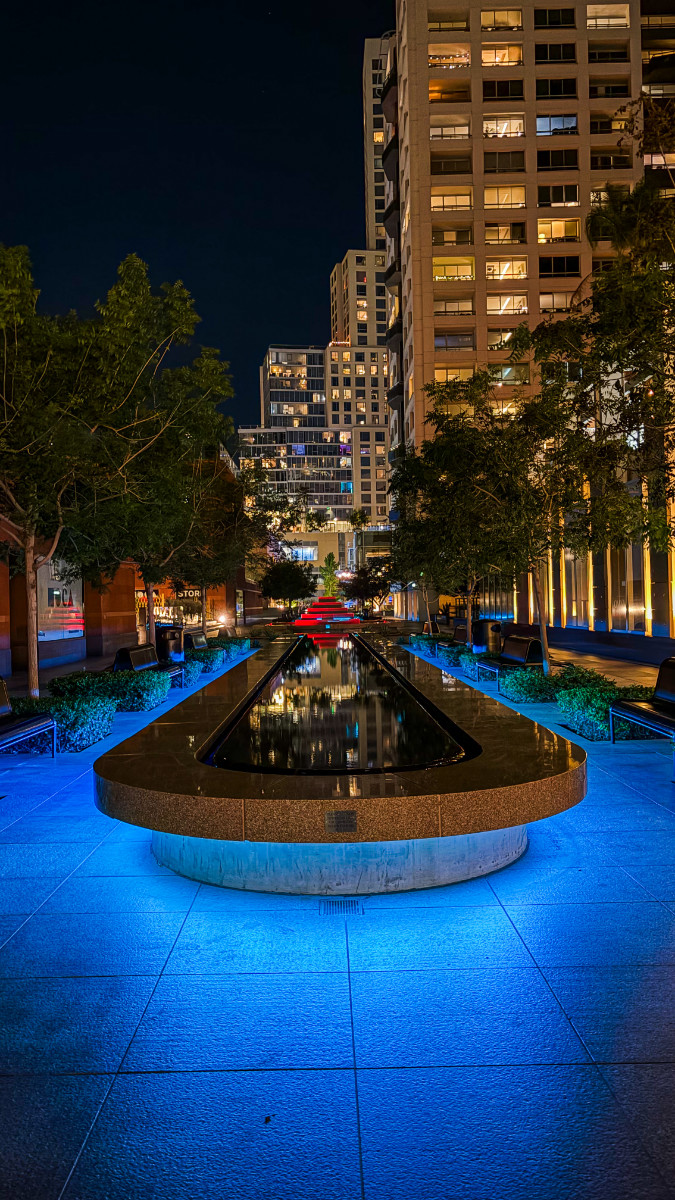
Behind MOCA
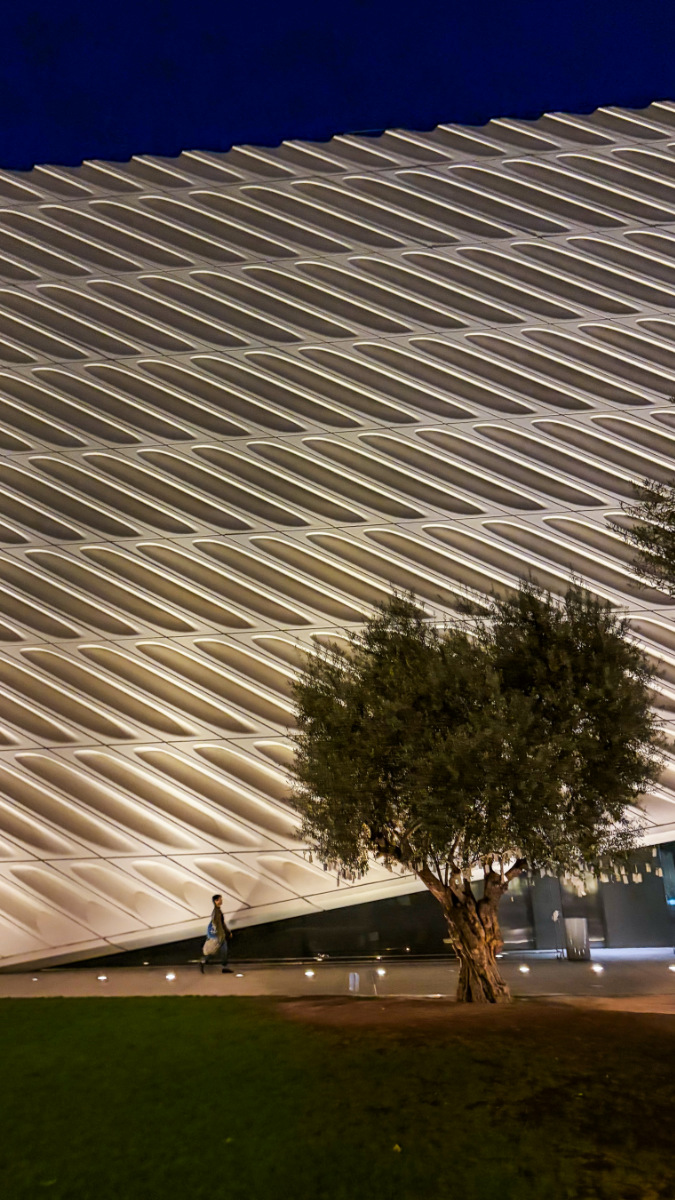
The Broad
Downtown LA is the strangest metropolitan center I’ve ever seen. During the day there are cars everywhere. The freeways surrounding the area are packed, someone is always honking at a stoplight, the busses maneuver around cyclists. But the people? Almost the opposite. A few areas, like the 7th street Metro station or Little Tokyo, have a fair amount of foot traffic but a substantial amount of the city is proportionally sparse compared to New York (or even a smaller city like Boston or San Francisco).
At night, it’s even emptier. I was early for a concert Monday night so I walked around for half an hour or so and saw maybe a total of ten people, most of whom were walking their dog. Granted, I was up by the museums where there aren’t really any restaurants open but it’s a pretty common sight all over—unless you’re on a block where there’s a venue with a performance scheduled, you’d probably be able to count the amount of people you see on one hand.
I’ve heard downtown wasn’t like this before the pandemic but I don’t have a reference for that. Maybe it’s because this is such a car-centric city, you don’t have people generally walking from subway stations to a destination in any given neighborhood, and the closest most people come to public interaction is seeing someone through the window of a car. But it’s still very strange and emphasizes a certain loneliness one can feel in LA. You understand there are four million people in within a 15-mile radius, but you wouldn’t know it to look around.
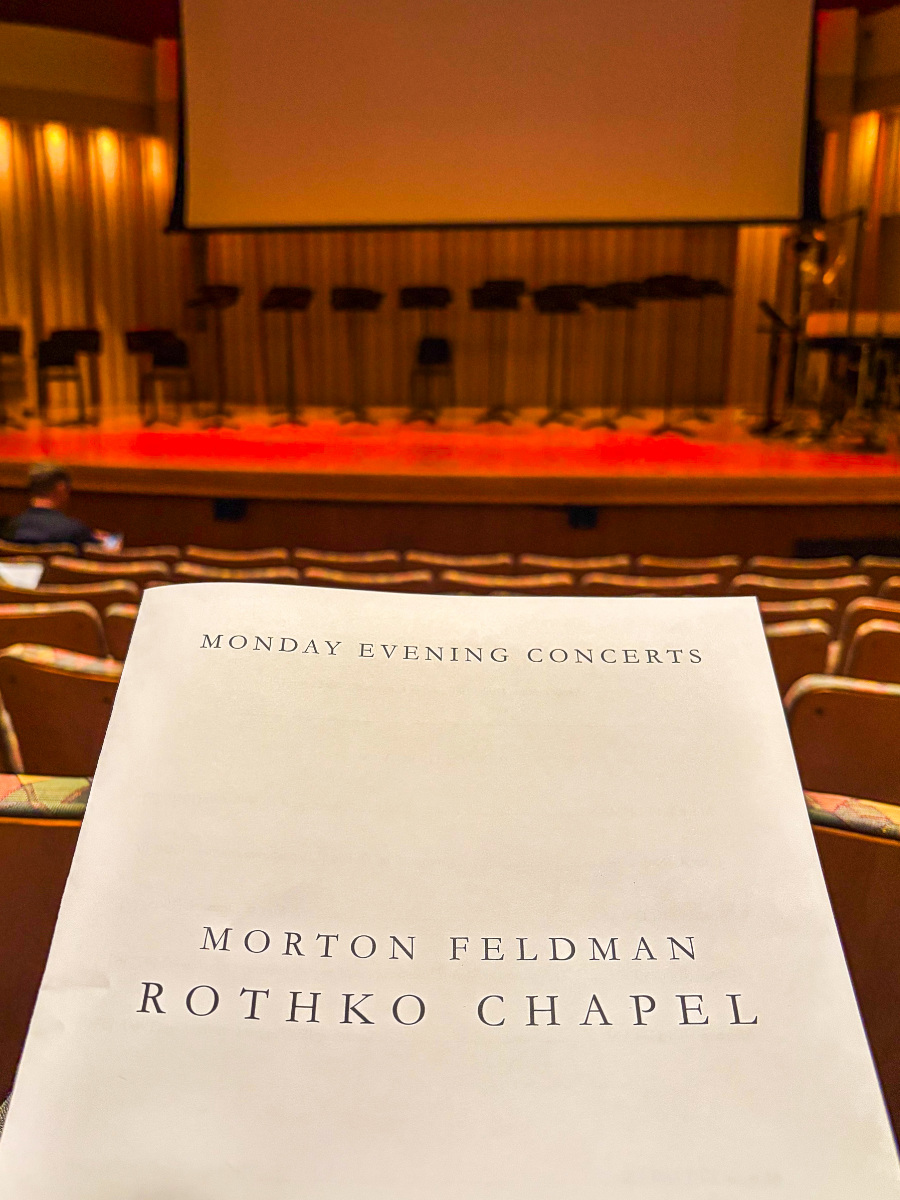
Morton Feldman Rothko Chapel program
I was lucky enough to attend the sold-out performance of Rothko Chapel (among a few other, shorter works) that the Monday Evening Concert series put on tonight in honor of what would have been Morton Feldman’s 100th birthday (at least, earlier this year). It’s the second show celebrating Feldman I saw this week—last Friday, Oracle Egg had BlackBox Ensemble perform a similar event with different works.
Now, full disclosure, I knew nothing of Feldman before these concerts. While I listen to plenty of avant-garde music, it’s often in the shape of post-rock-adjacent bands or weird things I see at sparsely-attended local shows where someone has an array of objects they turn into something between a harmony and an unstructured wall of noise. The sort of high-brow, famous and studied crowd isn’t something I’m really familiar with.
That’s why I was particularly fond of hearing this performance tonight. I had no clue what to expect—it was honestly my love of Rothko more than anything that made me buy a ticket to begin with. But I left completely stirred by the music.
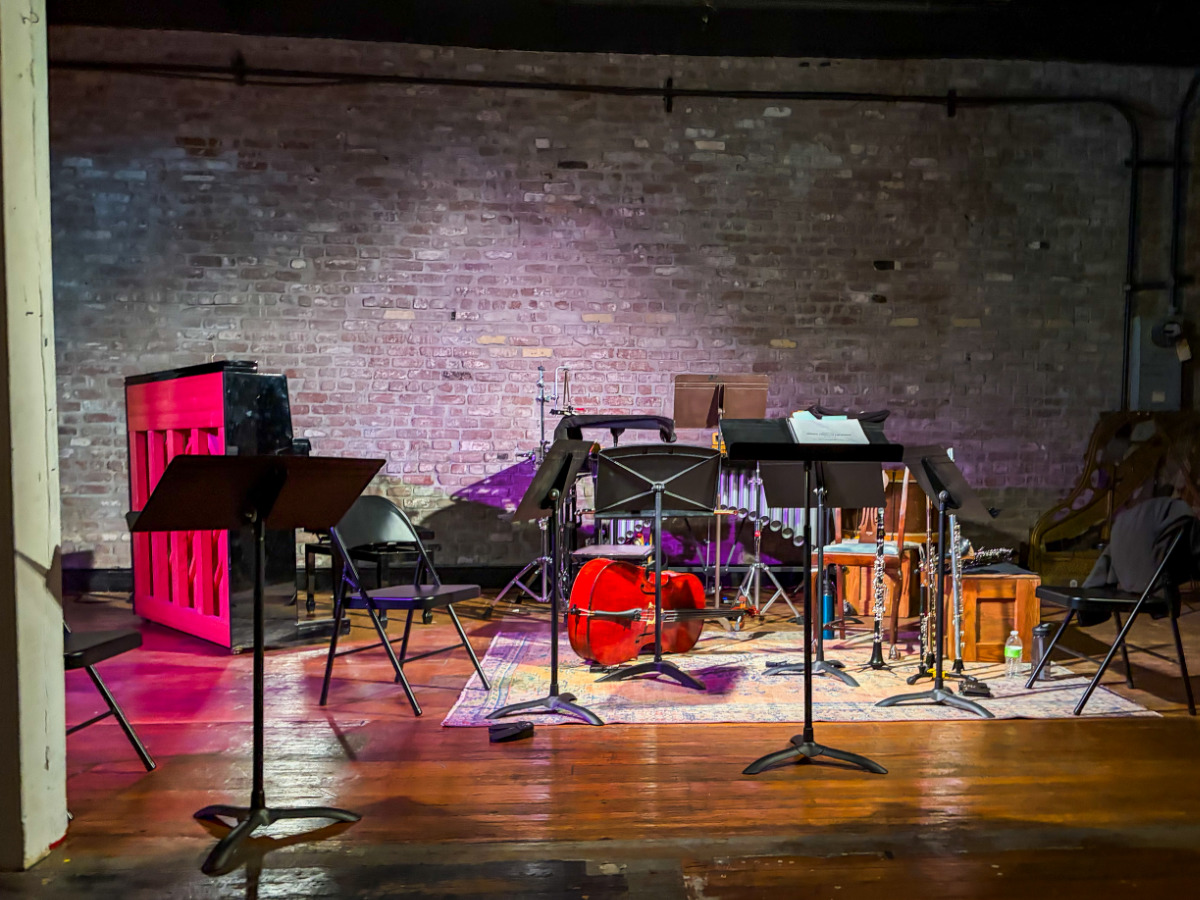
Performance set-up at Oracle Egg
This is the wonderful thing about experiencing art in general—there’s no telling how seeing Rothko Chapel will affect me or the work I make down the line, but it undoubtedly will, somehow, even if I am not fully aware of it. It feels almost stupid to write out—how taking in something creative can provoke inspiration—but we live in really stupid times when people are actively working against the idea that art made by humans has a place or purpose in life.
Beyond my ongoing laments about AI, though, seeing this made me both glad to be in Los Angeles but saddened by how capitalism all but ruins these types of performances for so many people by not allowing an avenue for them to be experienced at all. A ‘market’-based economy will always be cruel to the arts because it’s generally unpredictable what, if anything, will even break even with a financial investment (much less be any kind of success). Major cities generally have enough demand for a variety of cultural options that many forms of art can cultivate audiences; mid-sized cities are lucky to have one independent theater and a liberal arts college that offers annual concert series. Rural areas are basically fucked beyond anything that doesn’t play in a national, corporate movie theater chain.
Experiencing art helps develop abstract thought. When ten people see the same movie, even one that might be ‘philosophical’ in nature, they are all presented with the same basic concept in their heads because the plot of the film poses questions it seeks to answer. Perhaps it’ll make the people think about variations of that question, but all ten people will have fairly concentrated thought processes. Taking in an experimental concert, or looking at abstract paintings, makes the ten people come up with their own questions before trying to reach a conclusion. The experience itself provokes so much more than what entertainment provides for—it has the potential to spur on more conversations, develop greater ideas, and make people more open in general.
As ideas are being chiseled away at and culture that doesn’t embrace corporatism is stifled, it feels like we’re all losing out. Violence seems inevitable at this point, and I can’t help but think that’s partially due to the fact so much of what we see and hear and experience on screens of any sort keeps pointing in that direction. We all end up thinking in similar patterns of decay because that’s all we’re shown in the dominant forms of media. It’s all just so sad, and I guess the music was bringing all that up tonight.
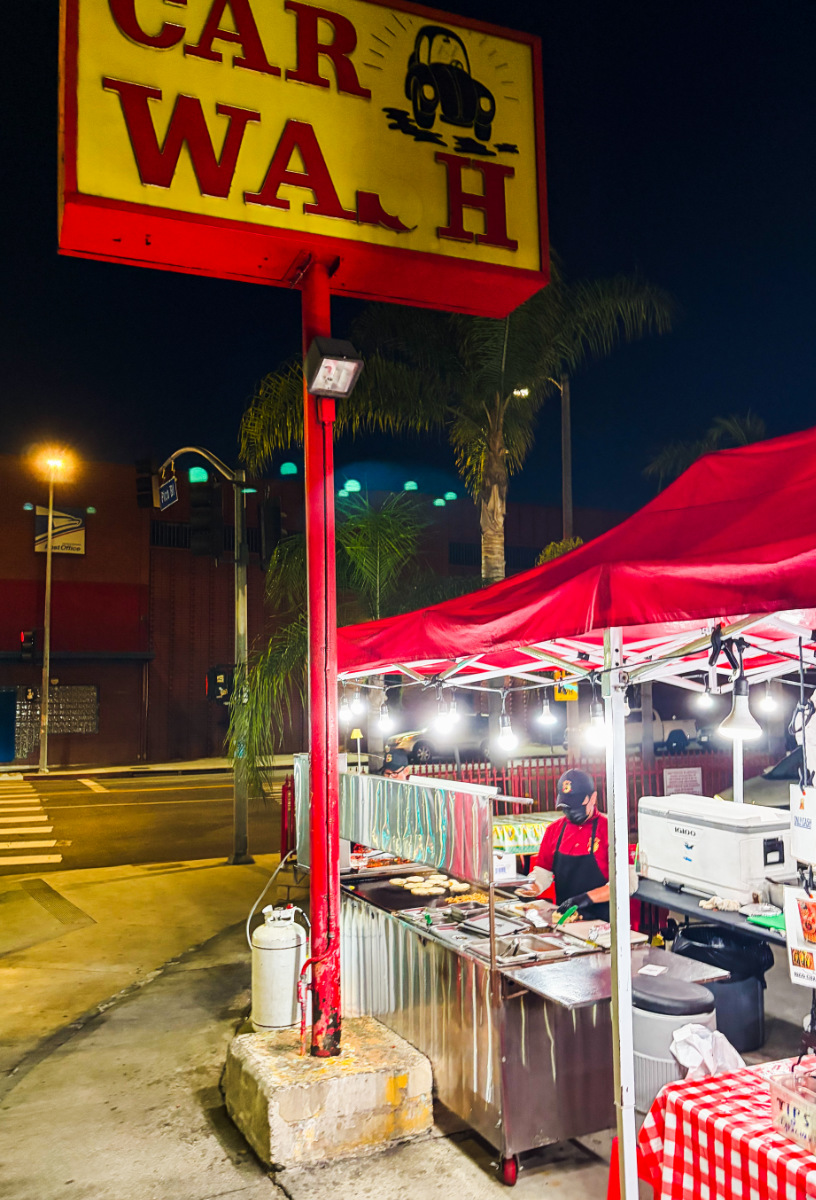
Leo’s on Pico
Picking up al pastor tacos from Leo’s has been a long-standing late-night lifesaver for me when I forget to go to the grocery store on any given day. Needed such a thing today and found out there’s a location not ten blocks from my new digs. Getting delicious tacos from the parking lot of a car wash while a few college kids smoke a joint and clean an old Hyundai Elantra a couple bays up is certainly a vibe.
Reflecting
There’s this really famous scene from the first season of The West Wing where, after an episode of built-up debate surrounding funding for public education, Rob Lowe makes this speech about how, “Education is the silver bullet.” It’s been on my mind today.
This liberal-minded idea that if we were all just smarter everything would be magically fixed about society is pretty insane. Every election it’s a manufactured debate—how did the college-educated vote against the non-college-educated? It becomes a whole discourse, another thing that keeps us divided.
But those Cornell rapists? Well, they’re going to Cornell. Aren’t they educated? George W Bush, Dick Cheney, the Clintons, and JD Vance all went to Yale. Benjamin Netanyahu graduated from MIT while taking classes at Harvard. Richard Nixon went to Duke. I’m pretty sure it’s a requirement to go to Oxford to be Prime Minister in England. Half of the psychopath tech guys in Silicon Valley attended Stanford.
I do believe that all education should be free and excellent, but these ideas that cross into areas of discrimination and bias about intellect and aptitude and leadership can really irk me. The people who have done the most harm to the world are the ones who come from the best schools. An education happens in many ways outside of reading pages from a book and it doesn’t take much time to see in the news what these men are really learning in American schools.