social contracts

I spent some time last week at LACMA with Christian Marclay’s The Clock—which I’ll write more about after tonight when I spend as much time as possible at the 24-hour screening—and was consistently annoyed by how many people felt perfectly fine to maintain ongoing conversations or take their phones out to text someone in the theater. But, much like most third spaces these days, art museums are not immune to the degrading notion of the social contract.

Since movie theaters re-opened after Covid-19 restrictions were lifted, I’d say about one-third of the films I see have had someone take out a phone for one reason or another during the show. (I will say most of these happen at AMC chain theaters.) This ranges from taking a photo of the screen (mostly the title card) to texting to scrolling a dating app or Instagram. I’ll always react in some ways—a glance to asking politely to saying, Turn your phone off aloud. The responses I get have varied from being ignored to having people tell me to fuck off.

(I was at the AMC Burbank 16 for a movie once and the guy next to me asked a woman in front of him who had been texting for five minutes straight to please put her phone away and she turned around and replied, “You talked all during the previews so why don’t you kiss my ass.” Absolutely bonkers response.)

These aren’t limited to corporate screenings, though. While it’s far less frequent than what happens at a chain like AMC, I’ve seen phones out at screenings for American Cinematheque or even Tarantino’s notoriously anti-phone theaters (the New Beverly and Vista). These people risk being kicked out, or even banned, from theaters just to check their Twitter feed.

Now, part of this could be just screen addiction and the fact humanity seems to have been consumed by an inability to leave the digital world for any meaningful amount of time. But I think one of the consequences of how Covid was both handled and politicized is that the country became divided on whether or not it really gave a shit about anyone else at an individual level. (We know now that any excuses about masks were bullshit as we see ICE agents and cops masked up all the time for their thuggish actions and that the entire conservative and fascist side of the population doesn’t have any central ideology other than to ‘win’ at whatever talking points are dominating the news at any given time.)

The increasing individualism that has been chipping away at how we treat others in social spaces, whatever the root causes may be, are reflective of a growing resentment toward one another while the country we share continues to decay in a storm of corruption, greed, and outright lies by those in positions of power. This is all by design, and sometimes I just want to escape the madness by going to the movies, and now there’s a constant reminder of what is happening in society as a whole.

the fight of our lives

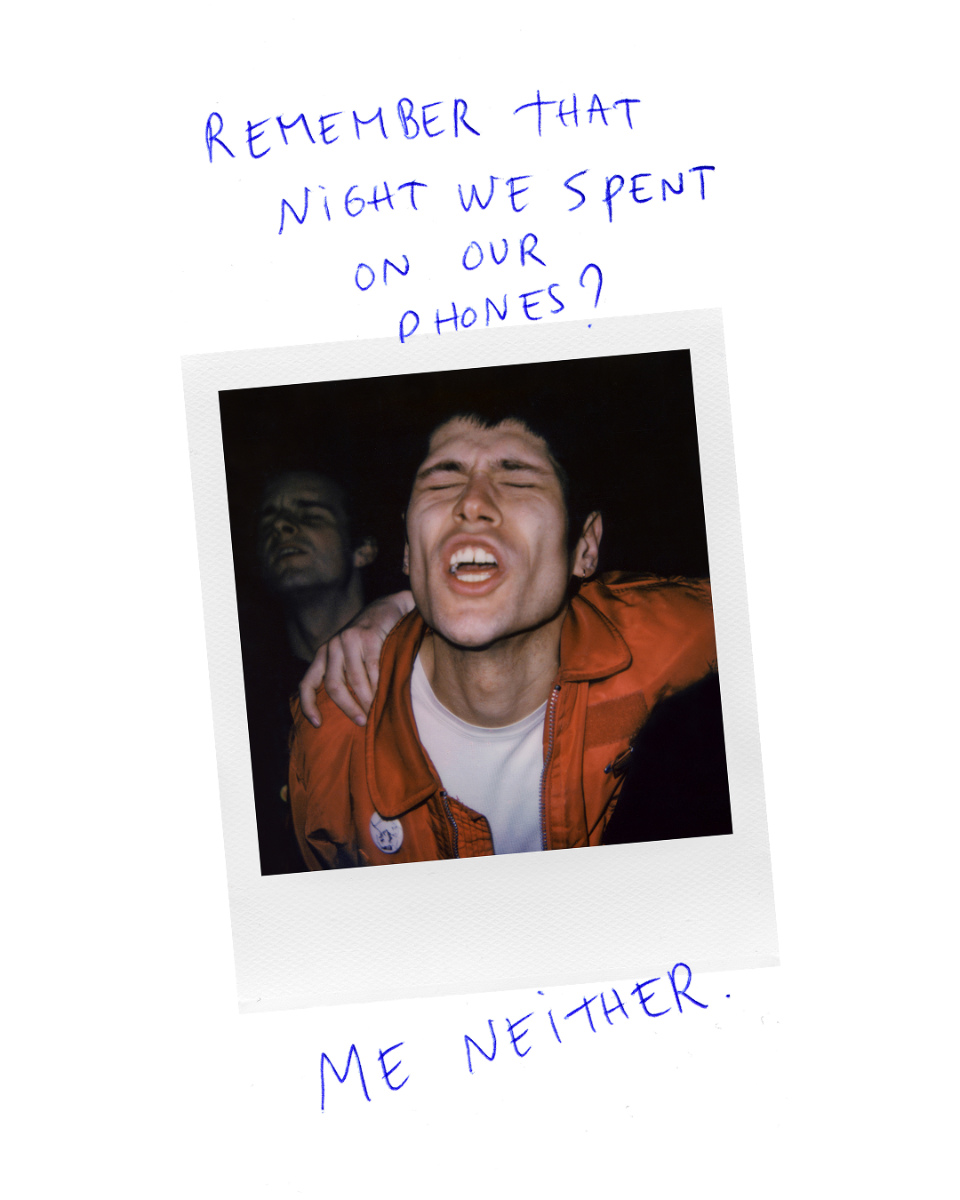
The new Polaroid anti-AI, pro-real-life-interactions ad campaign is pretty great. While advertising in general is a menace of a media system, any dialogue we’re having in public about AI—or digital addictions in general—is important to keep front-and-center, as we seem too eager to stray from the idea of our basic humanity being at stake. (It is interesting how some responses to the campaign discuss the ‘low-hanging fruit’ of data centers and how any corporate dialogue against AI is hypocritical, which is understandable but I feel on the wrong side of the subject.)

Polaroid

Polaroid ad campaign samples

Polaroid

The AI debate as a whole kind of annoys me, but I do find value in dialogues centered around our collective humanity and what that means, because I think it should be the central focus of all this. The potential impact of AI (or advanced LLMs, whatever you want to call them) could touch on just about every aspect of modern civilization—but there’s no way I’m gonna trust those who could profit from this saying it’ll all be, ‘for the better.’

On the industrial side, it’s not that automation is usually a bad thing in regards to pushing civilization forward, but when it comes to economics, it can create turmoil if the system society exists within doesn’t look out for its people. If computers run the show and we still live under a capitalist system, how do the economics work out as jobs could disappear from media to healthcare to shipping? Silicon Valley openly jokes about a permanent underclass, but that’s a very real possibility if the current economic model remains as all resources are funneled into technological development as opposed to human services.

Creatively speaking the whole thing is a fucking joke. The outright theft of the collective cultural history of humanity in order to create heartless visuals and sounds is criminal—both in the law of the land and the law of nature. Anthropic destroying rare books because it’s the easiest way to scan them to train AI models is so on-the-nose evil it wouldn’t make the script of a blockbuster movie. The things that make us human—the tangled relationships between ideas, labor, production, and objects—are being completely disregarded for this idea of creating a future that embraces a new era of subjugation and control instead of growing into a state of egalitarianism.

I think that’s the most enraging part of all of this. Regardless of what part of the AI debate is being scrutinized, the human benefits are largely abstracted and obfuscated—there are quips about the end of money or a complete reformation on how we work, but no dialogue about how those processes might actually work to benefit people. No one can convince me that those who are fully invested in AI as the future aren’t some of the most evil people to have ever lived, looking out only for their own stake in a hyper-violent, automated future and willing to dispose of not only everything we’ve collectively created since the dawn of time but also a majority of the lives on earth for the sake of a few dollars.