violence against violence

It’s hard to write about the fraternity rape at Cornell. Not because the story is surprising by any stretch of the imagination, but because it isn’t.

Hope has felt like a lost cause lately. Even if the seven directly accused in this case all went to prison, it wouldn’t change frat culture nationwide (where I would imagine stories like this happen far more frequently than anyone wants to think about). This incident is a symptom, not the disease. And this disease in particular is just like, a variant of a larger, deadlier one rotting away at everything in this godforsaken country.

These days I’ve been thinking a lot about Confederate flags. There was this whole segment of the United States that had to be literally beaten into submission and practically burned completely to the ground due to an unflinching support of a great evil. And still today, people fly that flag with pride, hoping for a systemic resurrection.

All I know is that everything is cyclical. We are in a moment of opinion, and at some point, someone is going to say, “Talk is cheap,” and the first domino in what happens next will fall. Violent institutions and the systems that protect them inevitably create a violent response, and every day we’re getting new examples as to why it’s time to burn it down, flags and all.
further divides

Speaking at the World Economic Forum, New York Times financial columnist Andrew Ross Sorkin imagined a future where only wealthy people would be able to travel and ‘those of lesser means’ would only be able to experience the world through a VR headset. He goes on to talk about how that might create a divide between rich and poor. Jesus Christ.

It’s quite obvious how the chess pieces of technology, corporations, capital, violence, and governance are being aligned right now to create a future where the majority are ruled with a generally automated iron fist by the few. It’s the plot of endless sci-fi stories, but what comes to mind is Elysium, where the rich build themselves a giant space station as the rest suffer on a burning Earth patrolled by robots. What’s also evident is that those who aren’t quite wealthy, but live comfortably above most, are generally in favor of this divide, even though it would likely see them stuck holding the short end of the stick with the rest (see: Ross Sorkin and the entire NYT op-ed section).

There’s a good chance it is too late to do anything about it. While groups of people who lean left politically exist in the United States, they’re predominantly in urban areas and proportionally tiny compared to the population at large—a population that believes capitalist neoliberalism is ‘left-wing.’ The type of change required to do anything about wealth disparity—via reform or revolution—is simply impossible. In turn, the country will be forced to look on as the people are robbed, their food supply poisoned (or, eventually, lost), and any reaction brutally policed by stalkers and thugs using AI surveillance. (Even at the local level, despite outrage from the people who elected them, city councils are voting in favor of building data centers everywhere.)

Meanwhile, the wealthy and their fans will go on to have discussions about how they’ll be perceived as all of this violence against humankind continues unpunished. The United States has probably passed any point of anyone in power having to deal with any kind of consequence for any action whatsoever. We can’t even properly handle cops standing around for hours during a mass school shooting, much less force the release of the Epstein Files. This country has volunteered itself into submission.

China might be able to reframe the balance of power in the world and possibly diminish the role of capitalism in the future, but the United States will surely burn itself to the ground—and as much of the world as possible—before that happens.

just say no to liberalism

Never trust a liberal. The whole Vote Blue No Matter Who schtick has always been a joke, as the DNC has always had more interest in keeping leftist interests at bay than actually defeating anyone on the right. As The New York Times outlines:

“We are preparing for the next war that is coming,” said Jonathan Cowan, the president of Third Way, a leading centrist Democratic group, revealing to The New York Times a new $15 million effort between now and 2028 to discredit democratic socialism.

Politics have been relatively mask-off since the second Trump election, even though the Democrats aligned in both 2016 and 2020 to stifle the campaigns of Bernie Sanders—those were never really discussed. Now, at least, they admit they fully consider anything to the left of market-based neoliberalism as big of a threat as the far-right.

Though this has been pretty common knowledge for anyone left of fascism for some time, I’m glad democrats are now openly admitting this type of political alignment so I can scoff at anyone who tells me that not voting for one of them in any future election is a wasted vote. Liberalism has always enabled this country’s drift into what it is now and there’s no way to have a conscience and support it any longer.

the snake eats itself

Oil companies pocketed $93 billion while the government is repaying hundreds of billions in tariffs deemed to be illegal by the Supreme Court—mostly to corporations, even though it was consumers who paid the bill.

The United States is a business, it’s completely profit-driven, and until the people are willing to utilize economic strikes to keep from being completely swindled by literally anyone in power—be it the state or private corporation—we’re just totally fucked, transferring money from employers to landlords and businesses.

Chris Hedges said it best:

The final stages of capitalism, Karl Marx wrote, will be marked by developments that are intimately familiar. Unable to expand and generate profits at past levels, the capitalist system will begin to consume the structures that sustain it. It will prey upon, in the name of austerity and government efficiency, the working class and the poor, driving them ever deeper into debt and poverty and diminishing the capacity of the state to serve the needs of ordinary citizens.

As time marches forward, we’ll see less and less of a government and more and more subscription-based business models with tech companies intervening into increasingly necessary, and formerly public, services. Just a couple years ago here in LA during the wildfires, billionaire developer Rick Caruso hired private firefighters to protect his home and his mall. Meanwhile, the entire Pacific Palisades burned around these structures. This is the future we can expect, especially with the climate crisis fast approaching.

expansions

LACMA

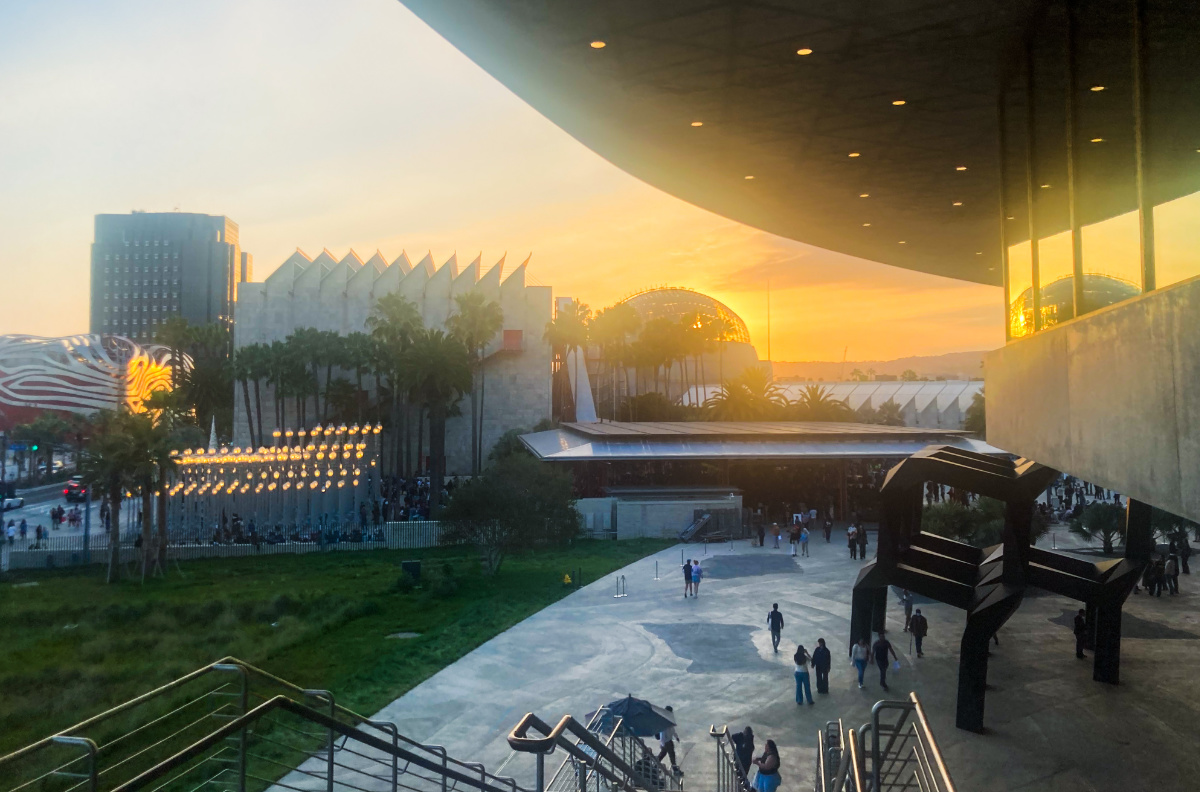
The view from the new David Geffen Galleries

I’ve been spending some time at LACMA since the opening of the David Geffen Galleries earlier this summer. It’s nothing short of remarkable and easily has inserted itself into the conversation of not only the best art museum in Los Angeles, but possibly the entire west coast. (SFMOMA might still be on top and remains the only good thing about San Francisco—although the museum’s recent use of AI in a Google-sponsored exhibit certainly works against it.)

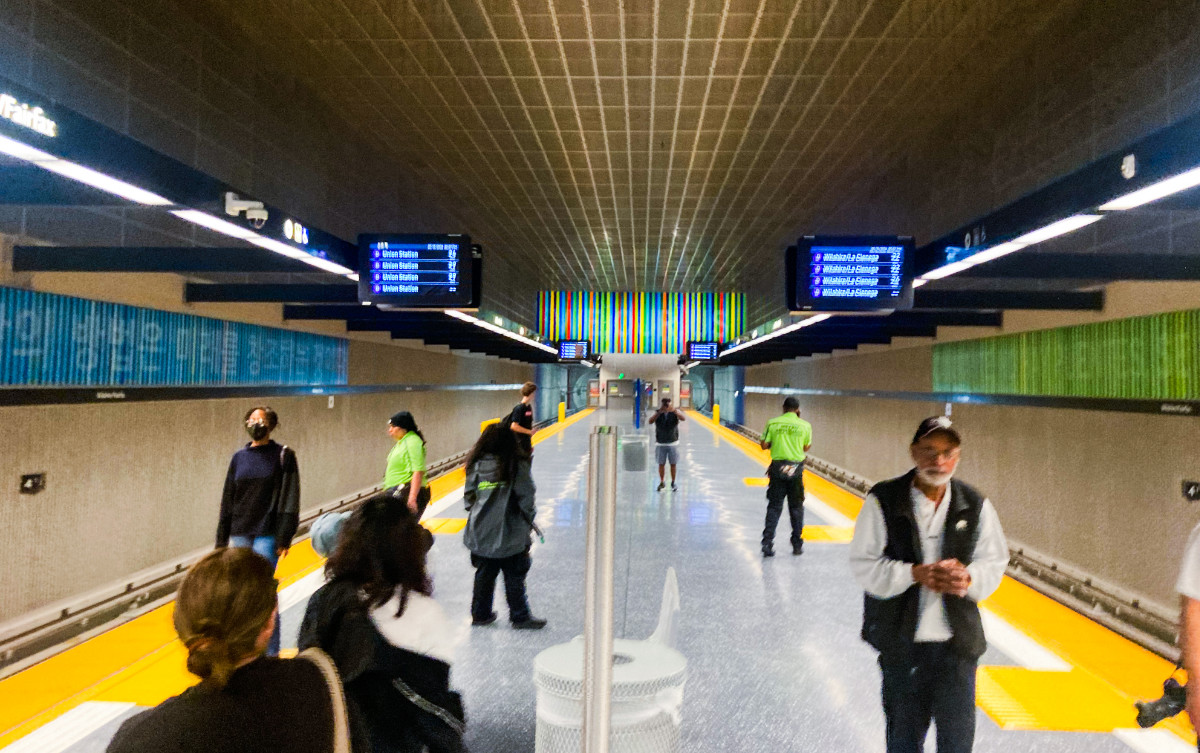
Conveniently enough, LA Metro debuted the D-Line expansion around the same time as the new galleries opened, making it even easier to get to mid-city. Returning home one night from the museum on the train, a guy in the group of friends next to me exclaimed, “I can’t believe we just got from La Brea to K-Town in two minutes. That’s insane.” (This is a trip that would take at least 15 minutes driving traffic-free.)

Wilshire Farifax Metro

The new Metro station at Wilshire / Fairfax

These two expansions are probably the best thing to happen to LA since I moved here in 2020 and are desperate reminders how the places we live in the United States are sorely lacking for growth, be it in infrastructure, housing, or third spaces. The LACMA opening weekend brought in 60,000 visitors while the new Metro line lead to the highest ridership in six years.

It’s tough to watch countries like China undertake drastic urban development while the city council and mayor of Los Angeles worked to block new housing just last year. Politicians in the United States aren’t exactly known for getting things done, but it seems these days most are actively working against doing things for the people who elect them.

It’s just disheartening to see such positive response to a couple local changes to culture and public transit while so much of our city budget goes to the LAPD and our federal dollars to war and genocide and more cops. It isn’t difficult to imagine how much better life could be, but living in America, it just feels so out of reach.