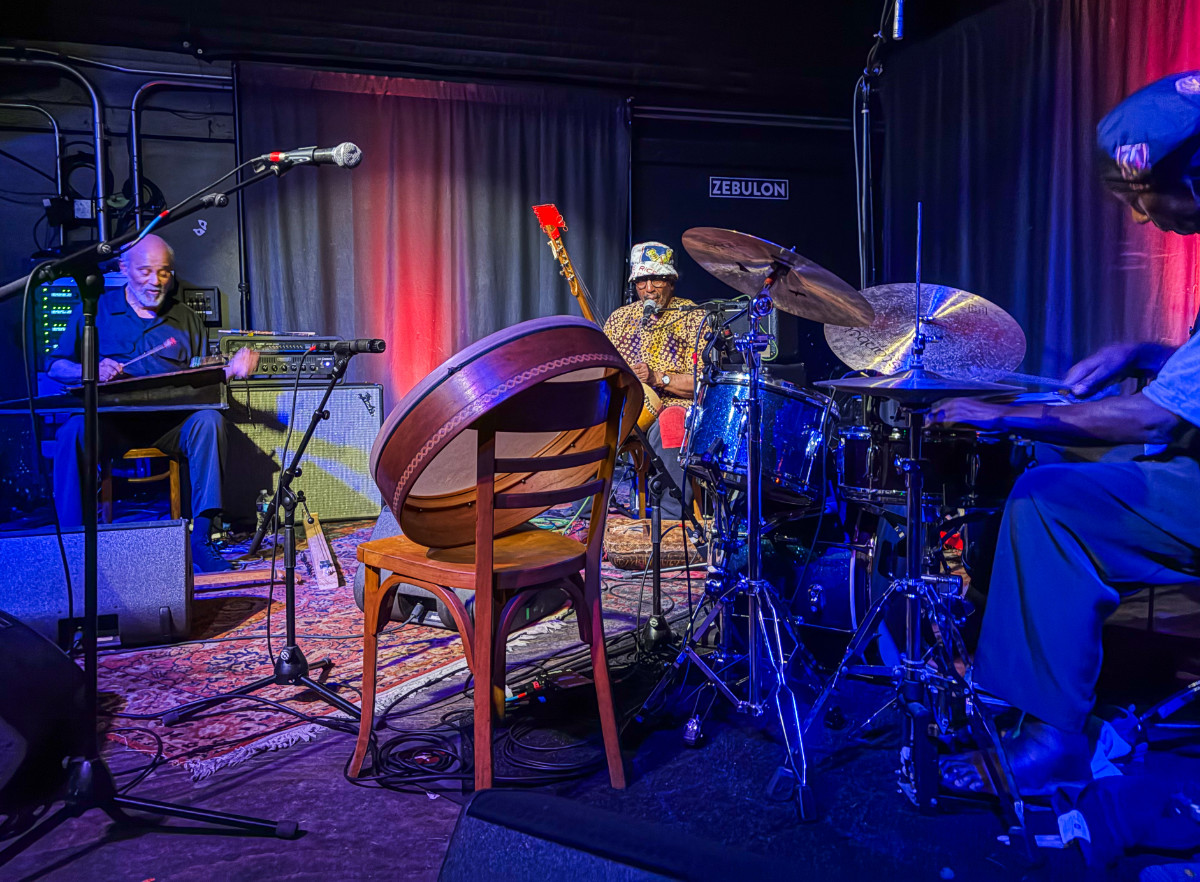
HEART Trio tonight at Zebulon
HEART Trio tonight at Zebulon
Saw the HEART Trio of William Parker, Cooper-Moore, and Hamid Drake tonight and it’s one of those performances that can’t be put into words. At one point Cooper brought out what looked like a two-by-four with a string lined between two blocks of wood and hit a bass tone so deep that it shook us in the front row. I mean the guy was playing hand-made, one-of-a-kind instruments that looked like they’d been assembled from things found on the side of the road (and some of them were), but damn if these guys couldn’t play.
The show wasn’t sold out, so that means under 300 people in a city of eight million saw this incredible performance. Which is fine, different strokes for different folks. But it’s such a cool thing to live in a place where on any given night I can go to a club and sit in the front row as some jazz legends blow my fucking hair back with some improvisational music that has no counter.
After the show ended the guys talked about the instruments they played and how they related to the history of music and really brought their performance full circle into shifting from hearing those relationships in sound to comprehending them through language. This was music that seemed to transcend the bullshit of the world and tap into something pure. Absolutely wonderful.
I finally saw Portrait of a Lady on Fire—one of my favorites—on the big screen tonight at the Academy Museum’s remarkable David Geffen Theater. It’s incredible how much the theatrical experience made a difference in a film I already loved. The low-light scenes felt intimate and the French coastline was glorious. What changed the most was the sound; I was actually pissed during the first scene because I thought someone nearby was talking, when it was actually from the film itself, a voice passing by in a hallway off-screen. There was the subtle crackle of the bonfire and the brilliant a cappella singing that brought many to tears. Then, of course, there’s the famous Vivaldi scene at the end that hit like ten tons of brick.
Though I’m not there as often as you’d catch me at an American Cinematheque screening at the Los Feliz 3 or Egyptian, I do love going because it’s one of the best theaters in Los Angeles from a purely technical perspective. The sound is impeccable and the red-carpet maximalism really works for it aesthetically. I can even forgive the fact they don’t allow food. What matters most, obviously, is the programming.
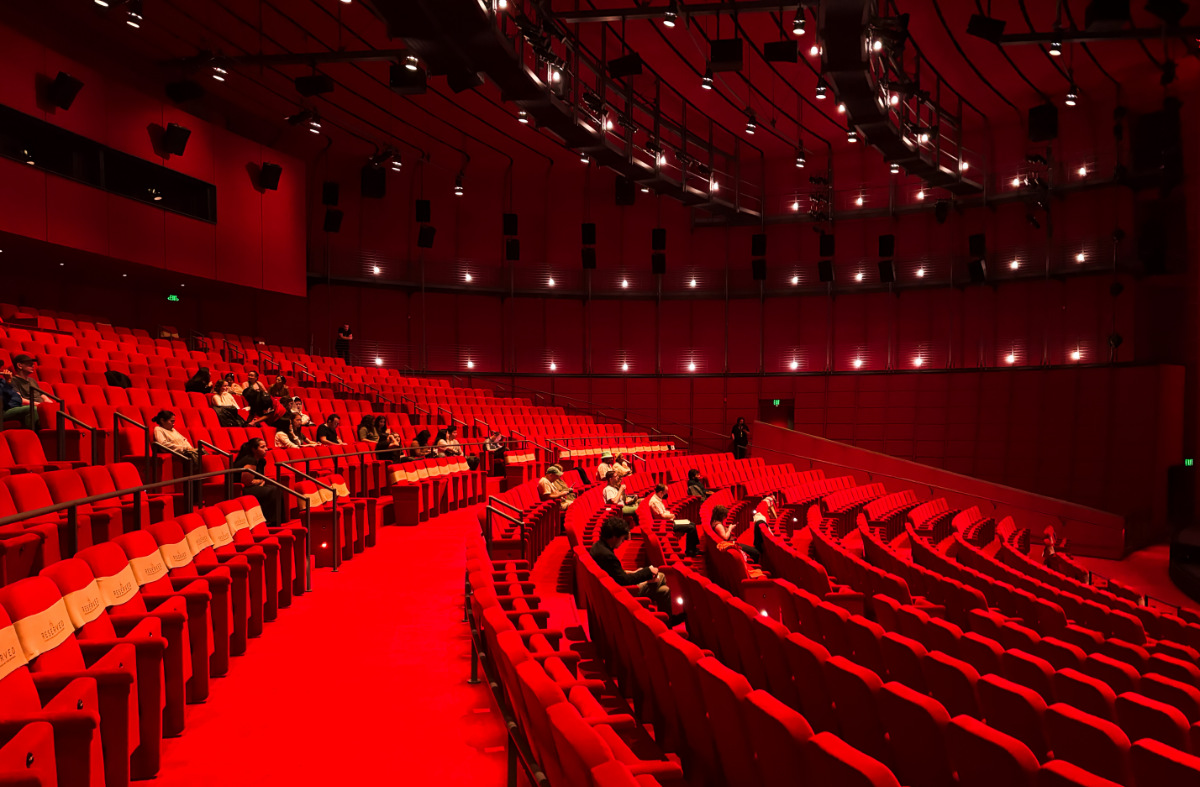
Entering the Geffen Theater
Until I moved to Los Angeles, I never really lived anywhere that featured repertory cinema. There were certainly independent theaters, but they’d be showing current films with limited distribution or were festival-circuit type movies. In LA there’s a handful of theaters dedicated to screening films from yesteryear that maybe people haven’t had the chance to see on the big screen or just want to see again. There’s an entire website here dedicated to keeping track of all the films showing across the city. It’s how I watch about 80% of the movies I see these days.
It’s a wonderful thing for many reasons. A few weeks ago I went to a screening of Out of Sight. It was the first time I’d seen it since my dad took me to see it during its initial theatrical run in the summer of 1998. Being able to associate with those memories again, something I otherwise probably wouldn’t think of, is a great thing.
Other times it’s really nice to be in an audience of people who are intentionally seeing a specific movie and are dedicated to a good experience (such as not taking out your phone or talking during a film). People laugh together (or, such as tonight, they cry together). Film is a special form of art that allows for these collective experiences while still being a very individual activity. I love going to the movies alone, because it’s the film that is bonding everyone in the cinema together.
So tonight I got to check another film off a list of something I’ve waited for a long time to see on a giant screen, and it was 100% worth it. There are many things I enjoy about living in LA, and shit like this has to be near the top.
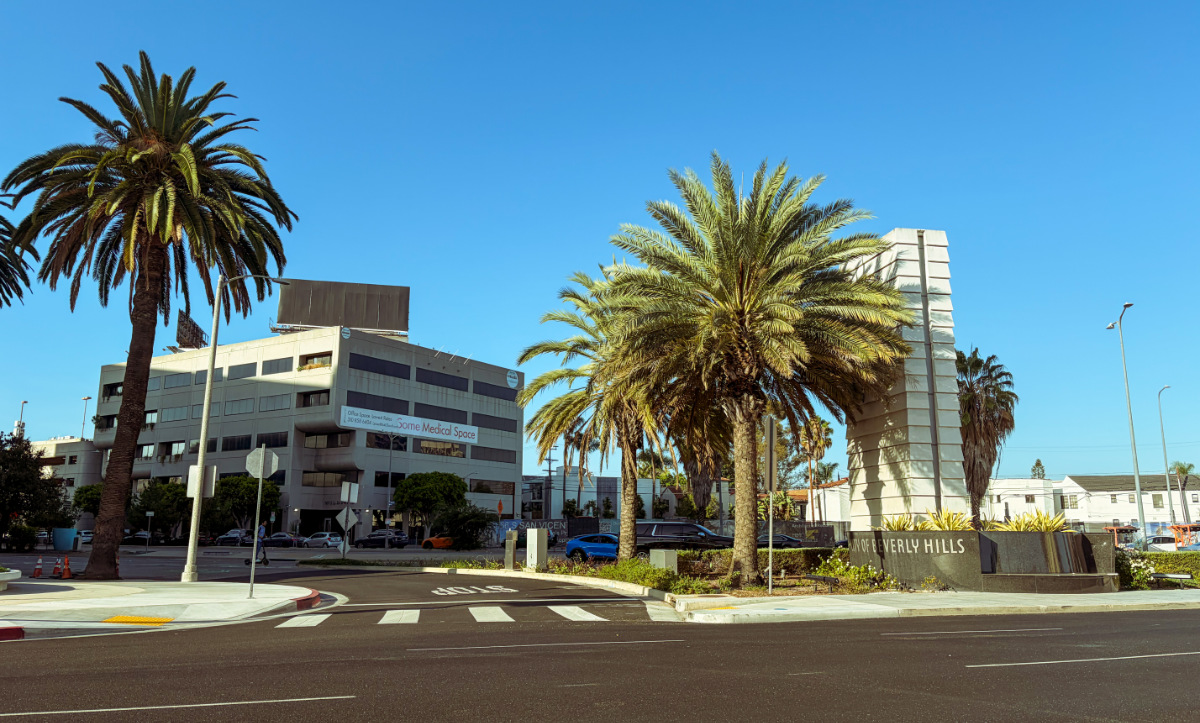
Wilshire and San Vicente
I had to get a new phone today. After years and years with my old iPhone SE, the screen cracked for the first time after I dropped it on Tuesday. The phone is so old that the repair shop didn’t have any screens in stock that would fit it. For some time now, it’s been slowly dying due to the increasing size of iOS and mobile apps, and so I took this as the final sign it was time to finally upgrade.
So I bought a new phone this afternoon. Afterward I had to go to Beverly Hills for a medical appointment, and I found myself sitting in the waiting room with some time to kill. Fiddling with this new iPhone, trying to figure out why Apple has made iOS so ugly over the past few years, I was struggling. Holding the phone along the base as I am used to, my thumb couldn’t reach the navigation buttons at the top of the screen—an action that was pretty simple on the SE. This seems like a flaw in basic functionality from a product design point of view, as my hands are a pretty decent size and should have no trouble reaching across a screen.
It felt really appropriate I was discovering this new inconvenience in Beverly Hills.
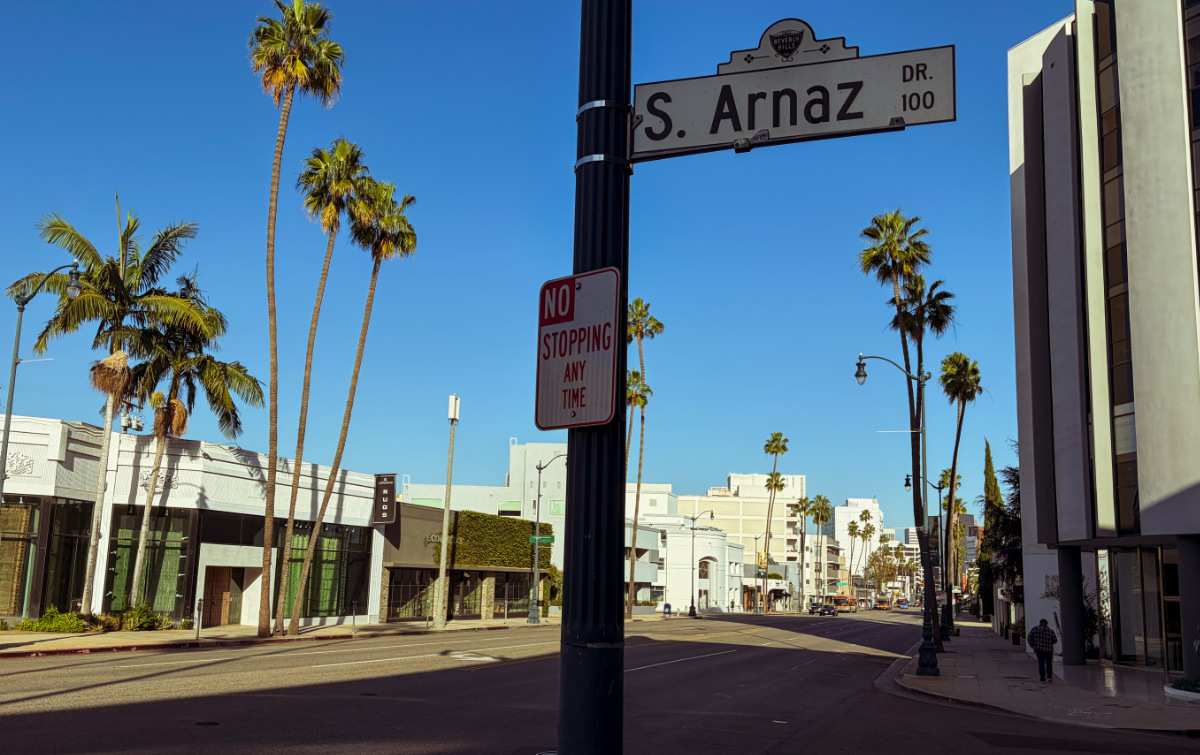
South Arnaz and Wilshire
Ten years ago, the iPhone was a perfectly fine device that was well-designed and comfortable. Somewhere along the line, though, that American idea of Bigger is Better seemed to take hold and the phones became more like mini-tablets. (I held on to my old phone for so long because it was the same size as an iPhone 6, which was nearly perfect.)
But in America, we take what we can get even—and especially—when we don’t need it. Beverly Hills is the type of city that exemplifies this idea. The palm trees, taller than most in the rest of LA, soar above Wilshire Boulevard. The showrooms for supercars that couldn’t be driven on a majority of the pothole-laden streets of Los Angeles appear sandwiched between realty estate agencies and hot yoga studios. The ostentatious houses that could reasonably house six families have two luxury cars in the driveway.
This sickening need for excess factors in at scale, from the obscene lifestyle indulgences of Beverly Hills down to the fact the smallest phones on the market are too big to fit comfortably in the hands of a grown man. The fundamentals of design are based around function, and we’ve warped that under capitalism to prioritize form, often to the detriment of everything else. Be they systems of urban infrastructure and city planning to products being of lower quality while getting more expensive, the language of constructing our physical reality has been upended by the profit motive.
God I hate going to Beverly Hills.
As a follow-up on some of my hospital thoughts, another part of my experience was actually leaving the place. I arrived around 10:00 pm on a Tuesday and left about 40 hours later. All things considered, that’s not an overly-long stay. However, as I left the parking lot and drove toward the 110—as merging on to a freeway is the most LA way to be reminded you’re back in the real world—I felt incredibly disoriented.
It’s not just that time seems to stand still, but because of the sterile and ubiquitous nature of hospital rooms, I could have been anywhere. Returning to Los Angeles felt like I’d warped into another world after spending nearly two days staring at the same off-white walls, watching repeats of Law and Order: SVU and listening to my roommate repeat the same Christian affirmations on his phone for hours on end.
There have certainly been two-day stretches where I haven’t left my apartment before, but I’m always reminded of where I am by the helicopters overhead, the cars honking from the intersection, the customers of the plumbing store loading materials into trucks in the parking lot outside my window. I can haul my laundry upstairs and have a pretty decent vantage point of Koreatown from the top. I could lie in bed for days on end and still know I’m in LA.
In the hospital, it’s different. All I hear are asynchronous beeps, all I can see out the window—if there is one—is a concrete parking garage. The news on TV reminds me that LA is out there, somewhere, having car chases and traffic jams, but from my vantage point it might as well be Mars. I didn’t realize it until I left, but I was slowly going crazy while I was stuck there.
It makes me think of everyone who has extended stays in these places, or the elderly living out their terms in the death-care equivalent. People who have no connection to the world outside of four, unchanging walls, stuck in the places the rest of us don’t have to be reminded they exist in. We have such a deformed view of what care entails in this country, and I doubt it’s going to get any better anytime soon.
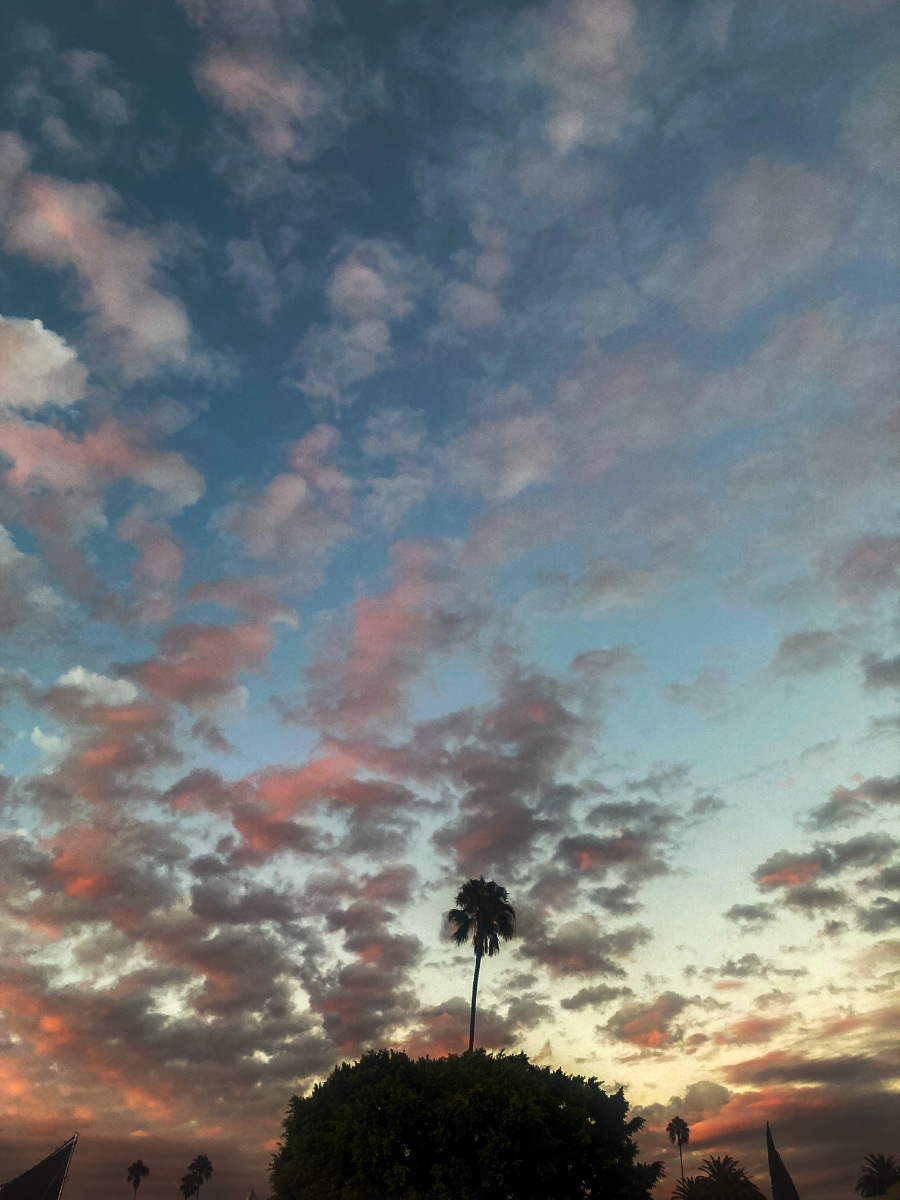
Hollywood Forever Cemetery
There are a variety of things to do in Los Angeles that feel just very unique to the city. Going to a show at the Hollywood Bowl might be one. Sitting next to Bob Odenkirk at a lunch in Larchmont might be another. Watching Dudamel conduct at the Walt Disney Hall or going to any number of the world-class, completely-free art museums downtown is up there. (Ironically, leaving the city to go out and camp at Joshua Tree would be another.) And this is just the shit that like, the average person can afford and experience. I’m sure spending some time at the Chateau Marmont would be the first on my list if I ever won the lottery.
Then, of course, there’s the movies. There are a ton of art-house, independent theaters showing films from all eras of Hollywood history, often with special guests including actors, writers, directors, and producers. A couple highlights for me—just in the past six months—have been Elliott Gould after The Long Goodbye, Paul Thomas Anderson before One Battle After Another, Isabelle Huppert after The Piano Teacher, and Gus Van Sant before Good Will Hunting.
Last night added chalked up a couple of these experiences in to one.
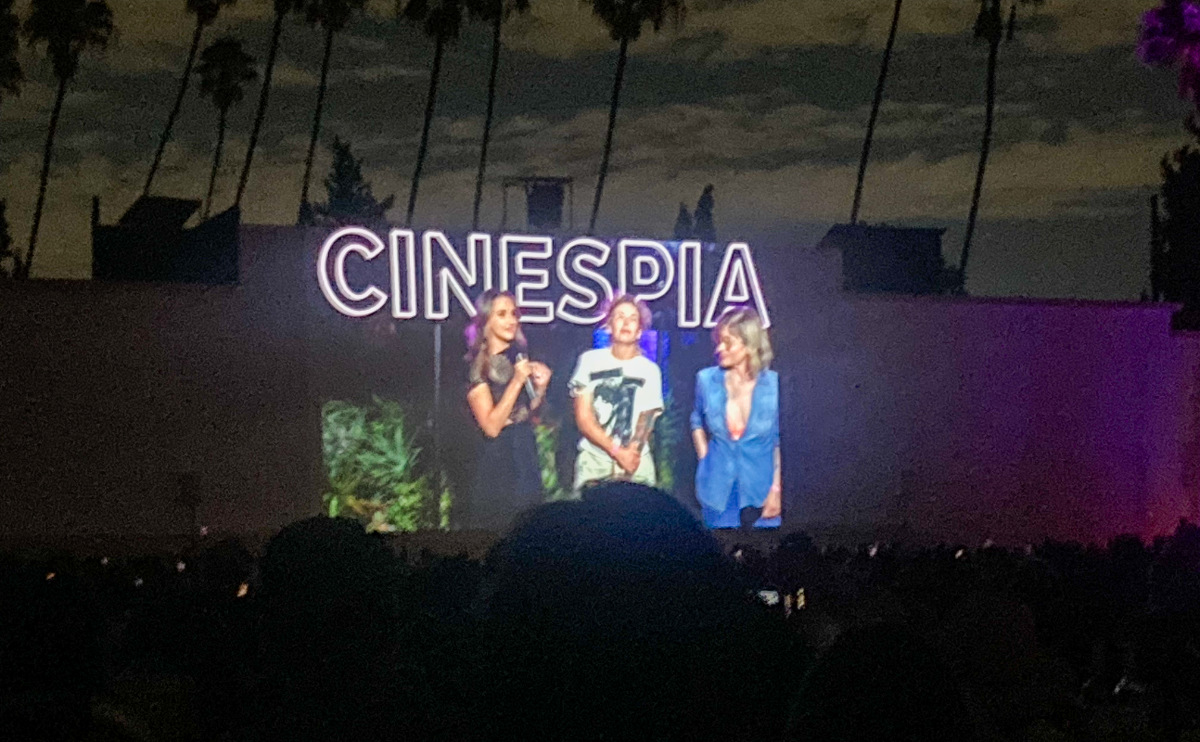
My phone is eight years old and I was far away so this picture is very low-quality
At Cinespia, an outdoor film screening that takes place in the Hollywood Forever Cemetery, there was a screening of one of my all-time favorites, Josie and The Pussycats. Four thousand people were in attendance, and when writer-director pair Deborah Kaplan and Harry Elfont were introduced (whom I also saw a couple weeks ago after a screening of their first cult classic, Can’t Hardly Wait), they said it was more people who saw the movie in its original theatrical run.
Also in attendance? Star Rachel Leigh Cook and Letters to Cleo vocalist Kay Hanley, who provided the vocals for the music in the film.
These aren’t always things that add too much substance to an experience, although there are guests that really provide some insight into process or creativity, but it is just kind of cool and the type of thing that doesn’t happen anywhere else. Stars might show up to a new film to promote it in New York, but Werner Herzog doing an extensive interview after a fifty-year-old film in Heart of Glass is not something that happens often outside of LA.
Though plenty of people who attend these things work in the industry, some of us just fucking love going to the movies and getting a little peek behind the curtain as an added bonus makes the experience just somehow more—as well as feeling more a part of the fabric of what makes this city unique.