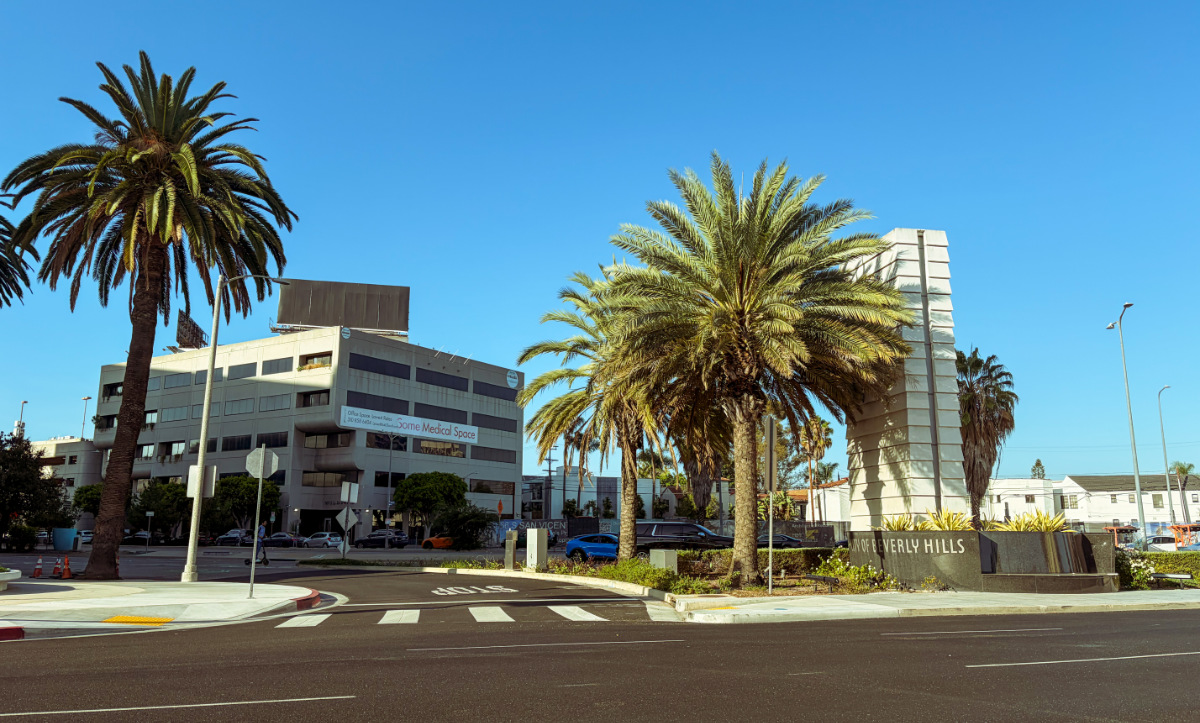
Wilshire and San Vicente
Wilshire and San Vicente
I had to get a new phone today. After years and years with my old iPhone SE, the screen cracked for the first time after I dropped it on Tuesday. The phone is so old that the repair shop didn’t have any screens in stock that would fit it. For some time now, it’s been slowly dying due to the increasing size of iOS and mobile apps, and so I took this as the final sign it was time to finally upgrade.
So I bought a new phone this afternoon. Afterward I had to go to Beverly Hills for a medical appointment, and I found myself sitting in the waiting room with some time to kill. Fiddling with this new iPhone, trying to figure out why Apple has made iOS so ugly over the past few years, I was struggling. Holding the phone along the base as I am used to, my thumb couldn’t reach the navigation buttons at the top of the screen—an action that was pretty simple on the SE. This seems like a flaw in basic functionality from a product design point of view, as my hands are a pretty decent size and should have no trouble reaching across a screen.
It felt really appropriate I was discovering this new inconvenience in Beverly Hills.
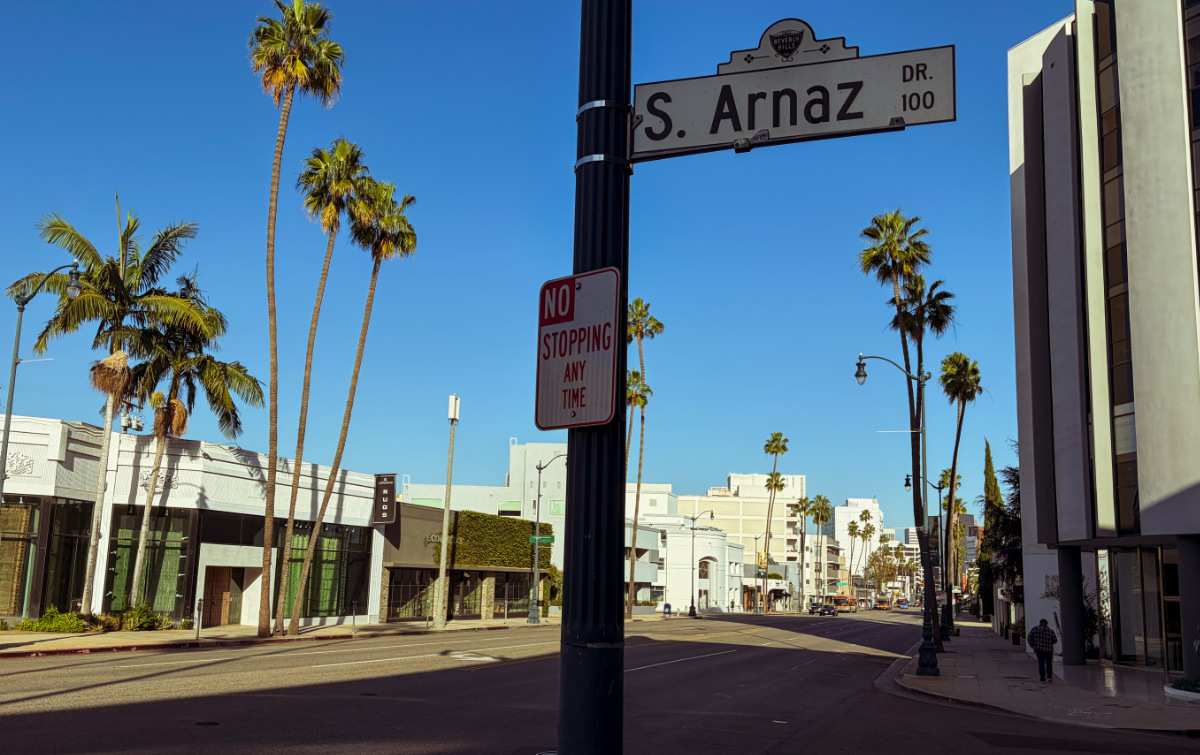
South Arnaz and Wilshire
Ten years ago, the iPhone was a perfectly fine device that was well-designed and comfortable. Somewhere along the line, though, that American idea of Bigger is Better seemed to take hold and the phones became more like mini-tablets. (I held on to my old phone for so long because it was the same size as an iPhone 6, which was nearly perfect.)
But in America, we take what we can get even—and especially—when we don’t need it. Beverly Hills is the type of city that exemplifies this idea. The palm trees, taller than most in the rest of LA, soar above Wilshire Boulevard. The showrooms for supercars that couldn’t be driven on a majority of the pothole-laden streets of Los Angeles appear sandwiched between realty estate agencies and hot yoga studios. The ostentatious houses that could reasonably house six families have two luxury cars in the driveway.
This sickening need for excess factors in at scale, from the obscene lifestyle indulgences of Beverly Hills down to the fact the smallest phones on the market are too big to fit comfortably in the hands of a grown man. The fundamentals of design are based around function, and we’ve warped that under capitalism to prioritize form, often to the detriment of everything else. Be they systems of urban infrastructure and city planning to products being of lower quality while getting more expensive, the language of constructing our physical reality has been upended by the profit motive.
God I hate going to Beverly Hills.
As a follow-up on some of my hospital thoughts, another part of my experience was actually leaving the place. I arrived around 10:00 pm on a Tuesday and left about 40 hours later. All things considered, that’s not an overly-long stay. However, as I left the parking lot and drove toward the 110—as merging on to a freeway is the most LA way to be reminded you’re back in the real world—I felt incredibly disoriented.
It’s not just that time seems to stand still, but because of the sterile and ubiquitous nature of hospital rooms, I could have been anywhere. Returning to Los Angeles felt like I’d warped into another world after spending nearly two days staring at the same off-white walls, watching repeats of Law and Order: SVU and listening to my roommate repeat the same Christian affirmations on his phone for hours on end.
There have certainly been two-day stretches where I haven’t left my apartment before, but I’m always reminded of where I am by the helicopters overhead, the cars honking from the intersection, the customers of the plumbing store loading materials into trucks in the parking lot outside my window. I can haul my laundry upstairs and have a pretty decent vantage point of Koreatown from the top. I could lie in bed for days on end and still know I’m in LA.
In the hospital, it’s different. All I hear are asynchronous beeps, all I can see out the window—if there is one—is a concrete parking garage. The news on TV reminds me that LA is out there, somewhere, having car chases and traffic jams, but from my vantage point it might as well be Mars. I didn’t realize it until I left, but I was slowly going crazy while I was stuck there.
It makes me think of everyone who has extended stays in these places, or the elderly living out their terms in the death-care equivalent. People who have no connection to the world outside of four, unchanging walls, stuck in the places the rest of us don’t have to be reminded they exist in. We have such a deformed view of what care entails in this country, and I doubt it’s going to get any better anytime soon.
I had to spend a couple days in the hospital. It is what it is, I feel like the people around me were way more stressed out about it than I was. For whatever reason, this sort of thing just doesn’t phase me. (I have heard that alcoholics specifically are exceedingly good in high-stress situations, which is part of the reason they’re so insane when life is just kind of boring.) But anyway.
A few observations I had during my stay in Pasadena about the experience and/or the state of the US healthcare system:
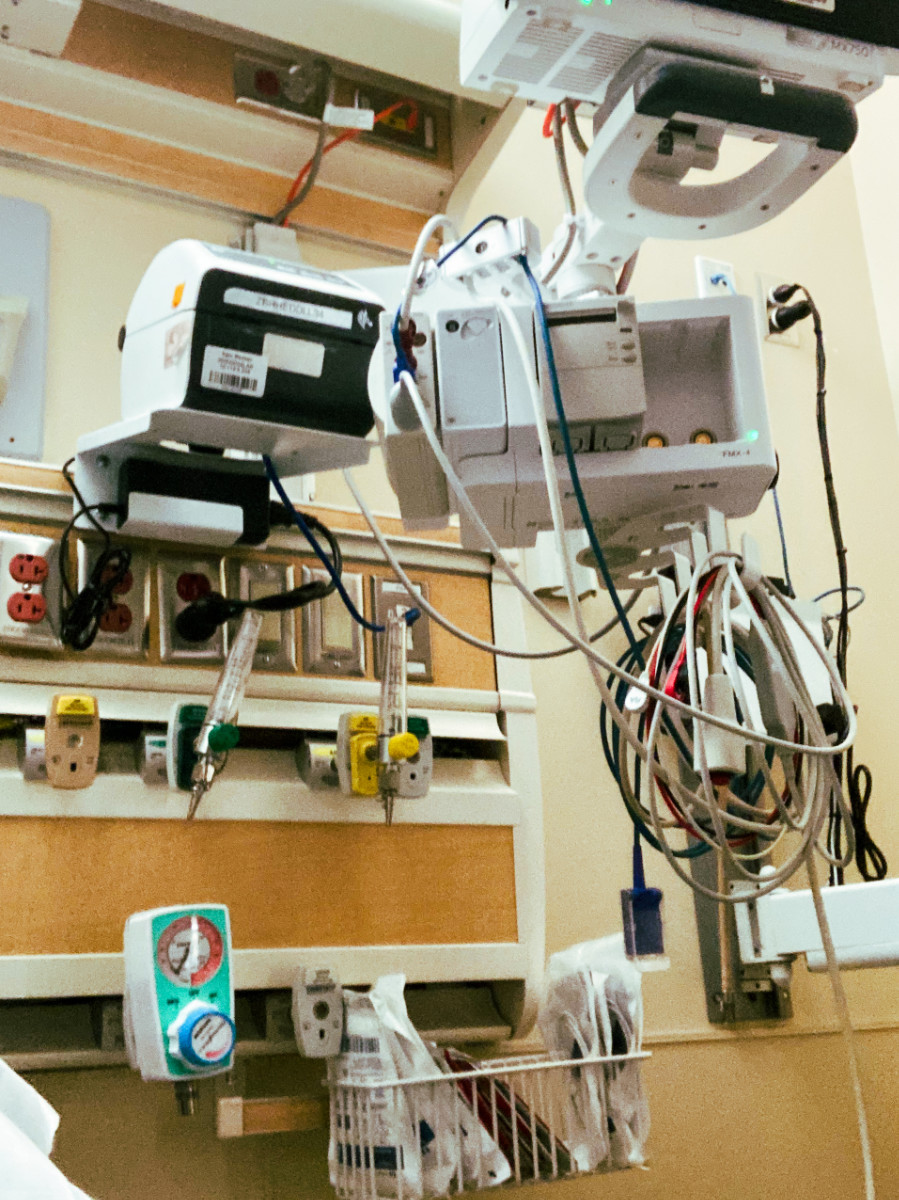
My view for a couple days
One: Repeating yourself becomes craze-inducing.
I had to answer the same set of questions about 17 or 18 times. Most of them were covered by my initial referral from my primary care physician. I couldn’t tell if doctors just never talk to one another (more on that later) or if the notes they take are just so brief that, even if the next one down the line reads it, so many details get left out that they have to ask again. Nobody seems on the same page and it creates a real sense of doubt.
Two: The profiteering is grotesque.
I take two daily psych meds and brought them both with me. Upon being admitted, the hospital confiscated these and said they will bring me their meds from their pharmacy each day I needed them. Of course, when they were brought up to me, the little individual packets were scanned into their system for an inevitable charge. (My 200mg dose pill was also broken up into two, 100mg doses for that extra charge.) On top of healthcare already being overpriced, this felt like outright theft.
Three: Conclusions are not really that conclusive.
After two-and-one-half days of procedures, tests, questions, and lying around waiting for the next set of procedures, tests, or questions, I had about four wrap-up visits with relatively high-up specialists or department heads. Each one gave me a generally different answer as to what their belief was as to why I ended up at the hospital to begin with. (To be fair, the initial issue was kind of wild.) But, like having to constantly repeat myself answering questions to begin with, leaving without actually having any confidence as to what was—and possibly still could be—wrong feels pretty disorienting.
Honestly, I had what was overall a good experience. My initial wait in the ER was just a few hours (granted I went at 10:00 pm). The hurry-up-and-wait parts of my visit were not out of hand. Everyone was nice. And still the only thought I had at the end was, Don’t get sick in America. The healthcare situation is so dismal here, I cannot understand why people defend it against the idea of a universal, public system.