meeting in ‘the middle’

When it was announced that Saturday Night Live would be expanding to the UK, my immediate thought was, Aren’t we suffering enough? I can’t remember the last time I watched an episode of the American version and laughed even once. Possibly not since the Gosling UFO bit. Generally speaking, SNL is unfunny because it is mostly toothless, safe comedy that tries to walk a ‘bi-partisan’ line.

Yet the UK version is proving to be everything that the American original has lost. Weekend Update is biting and smart—the recent mockery of Ed Sheeran and Robert Kraft is better than any of the Colin Jost and Michael Che reviews in some time. It wasn’t overly aggressive; it just wasn’t scared of offending a conservative audience.

The thing about the liberal idea of ‘playing it safe’ in entertainment as to not offend anyone in a right-wing country is that the moderate position on speech—and, well, everything else—increasingly moves toward conservatism if it isn’t pushed back against. American values have always leaned into white supremacy, but waving Nazi flags at public events doesn’t even make the news—though it would have been nationally admonished not 20 years ago.

The result is self-described independents running for office who largely represent conservative values, but from an earlier, 20th century vision. Less obvious racism, but no ambition for social policy that would help the underclass—and certainly no criticism of modern American foreign policy and the nature of being a superpower.

Shows like SNL are reflective of where the United States is at, because like liberal politicians, it still attempts to attract a large swath of the country, no matter how disgusting their values might be. So it should not be a surprise when there is a barbarically stupid monologue by a talentless oaf kicking off the show, because they’re trying to appeal to the demographic that defends the Cornell rapists.

Some might argue that the content of a 50-year-old comedy show and the current state of extremist right-wing politics are disproportionate in importance, and I agree there—but that doesn’t mean they aren’t connected. The way we represent ourselves, the dialogue that occurs within the context of media that can stir a national conversation, can absolutely steer public opinion.

Governance, like comedy, is trending toward punching down, focusing hatred on women and minorities, appealing to the worst stains of ideas within the greater social fabric, and represents a national embarrasment as representative of a dying empire and its influence both politically and culturally remains steep in decline.
the sound of the moment

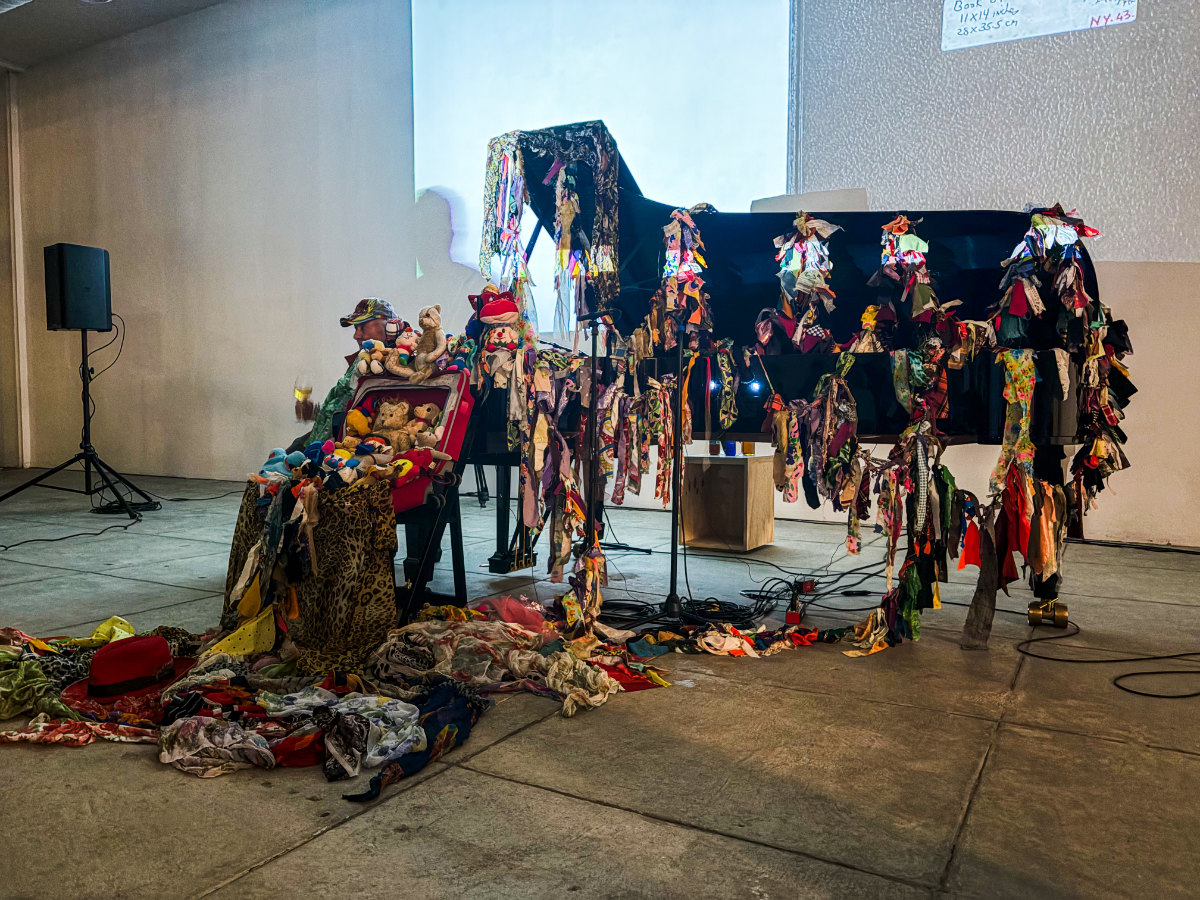
Charlamagne Palestine

Charlamagne Palestine at The Brick Annex

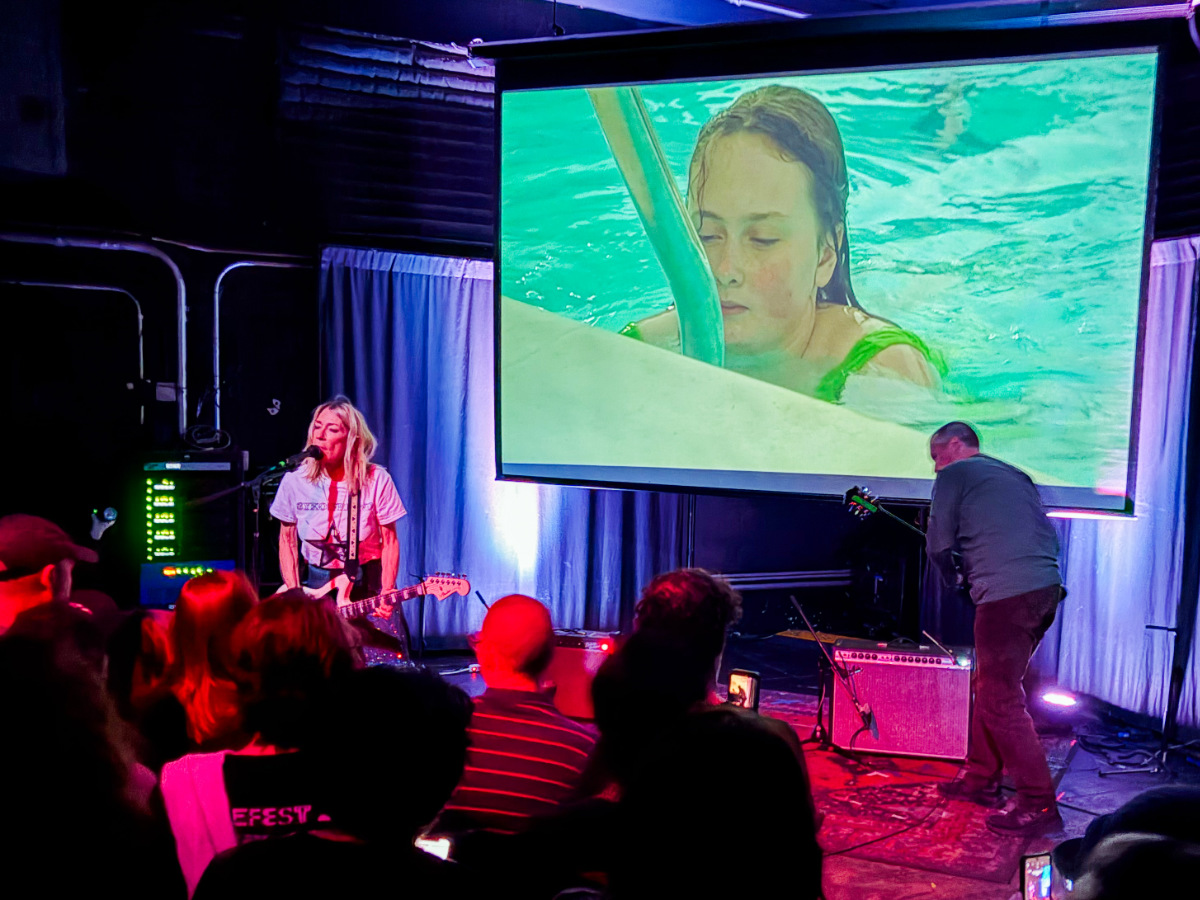
Body Head

Body/Head at Zebulon

I’ve seen a couple avant-garde musical acts in the past couple days that, while sonically couldn’t be more different, seemed keyed in to the same door of utilizing sound to connect to something greater in the universe. Charlamagne Palestine used intense repetition and tonal improvisation on the piano while Body/Head was a nonstop barrage of distorted guitar with various effects layering a collage of pummeling sound.

The similarities between the two acts was striking, however. They both used long-form, anti-format performances to keep the music in the moment. Seeing your regular band at a show becomes predictable if you’re familiar with their songs—you know what parts are coming up, and they might have a slight variation, but for the most part, you’re getting a louder version of an album cut. These works were very much like, This is how the room feels right now, and there’s something inherently special about that.

It seemed very telling that the two were also helmed by musicians in their 70s. Charlamagne couldn’t even remember the year he was born when giving a brief introduction to his work. Kim Gordon is 73, although you wouldn’t know it from the noise she makes (as well as how generally youthful she appeared on stage). They are both obvious masters of their craft and respective instruments and, while giving into the moment, always seemed to have almost complete control over what was happening with the sound in the room.

Being able to walk that kind of tightrope in the arts is the type of great mastery we can all only aspire to. It’s also why, when AI executives claim making music is not enjoyable or some other bullshit, they obviously have no clue what they are talking about. These sounds were extensions of the human experience, reaching beyond what our physical bodies can feel and sense, into a place that requires a guide to go. That’s what great art is, and what the best technology will never be able to replicate.

hollywood forever

Hollywood Forever

Hollywood Forever Cemetery

There are a variety of things to do in Los Angeles that feel just very unique to the city. Going to a show at the Hollywood Bowl might be one. Sitting next to Bob Odenkirk at a lunch in Larchmont might be another. Watching Dudamel conduct at the Walt Disney Hall or going to any number of the world-class, completely-free art museums downtown is up there. (Ironically, leaving the city to go out and camp at Joshua Tree would be another.) And this is just the shit that like, the average person can afford and experience. I’m sure spending some time at the Chateau Marmont would be the first on my list if I ever won the lottery.

Then, of course, there’s the movies. There are a ton of art-house, independent theaters showing films from all eras of Hollywood history, often with special guests including actors, writers, directors, and producers. A couple highlights for me—just in the past six months—have been Elliott Gould after The Long Goodbye, Paul Thomas Anderson before One Battle After Another, Isabelle Huppert after The Piano Teacher, and Gus Van Sant before Good Will Hunting.

Last night added chalked up a couple of these experiences in to one.

Cinespia

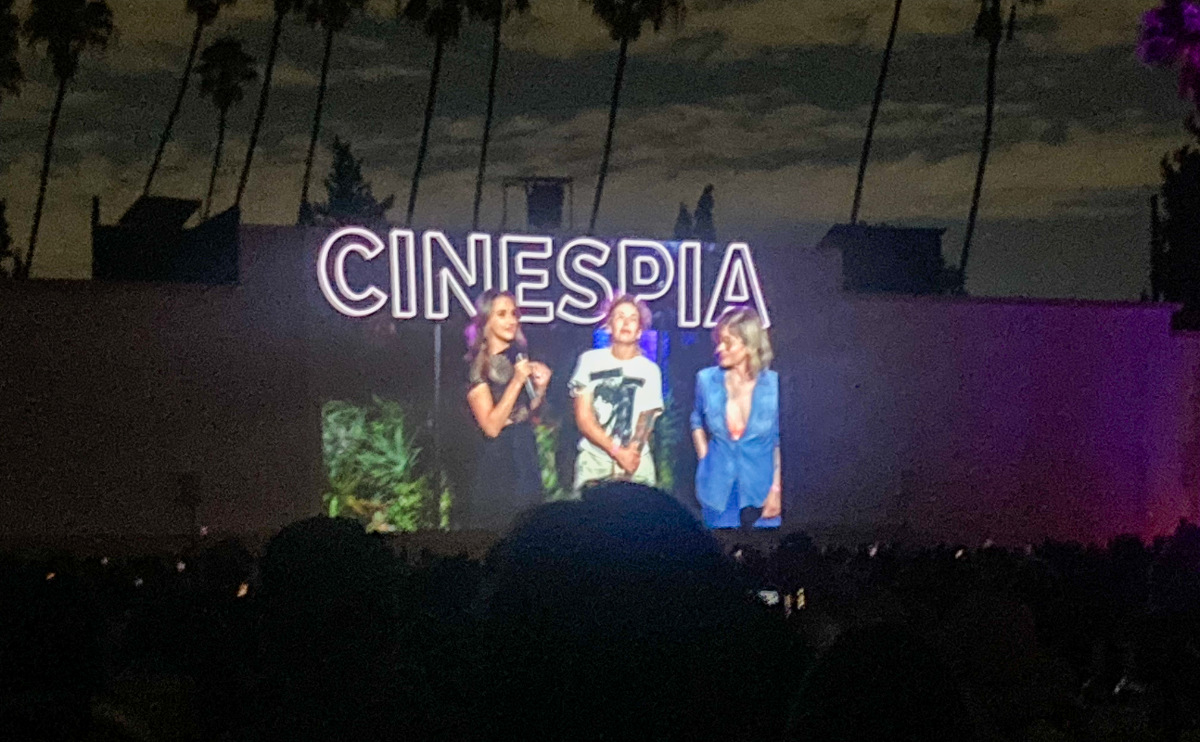
My phone is eight years old and I was far away so this picture is very low-quality

At Cinespia, an outdoor film screening that takes place in the Hollywood Forever Cemetery, there was a screening of one of my all-time favorites, Josie and The Pussycats. Four thousand people were in attendance, and when writer-director pair Deborah Kaplan and Harry Elfont were introduced (whom I also saw a couple weeks ago after a screening of their first cult classic, Can’t Hardly Wait), they said it was more people who saw the movie in its original theatrical run.

Also in attendance? Star Rachel Leigh Cook and Letters to Cleo vocalist Kay Hanley, who provided the vocals for the music in the film.

These aren’t always things that add too much substance to an experience, although there are guests that really provide some insight into process or creativity, but it is just kind of cool and the type of thing that doesn’t happen anywhere else. Stars might show up to a new film to promote it in New York, but Werner Herzog doing an extensive interview after a fifty-year-old film in Heart of Glass is not something that happens often outside of LA.

Though plenty of people who attend these things work in the industry, some of us just fucking love going to the movies and getting a little peek behind the curtain as an added bonus makes the experience just somehow more—as well as feeling more a part of the fabric of what makes this city unique.

america’s dream

There’s a pretty decent interview with Jordan Harper where he talks all things Los Angeles and he’s got some great one-liners (“This city is such a ball of contradictions—I love that we aren’t hidden from the violence of the world, but we also aren’t hidden from the beauty of it.”)

I think my favorite though comes toward the end when he’s asked about the nature of LA—

I just think that Los Angeles is the most American city. It is kind of the culmination of everything we think about ourselves and the truth about ourselves … New York, that’s a European city, they just happened to land here. People in the Midwest want to think that they’re different than us, but they’re captured by the same things: it’s real estate and money and guns and cops and sex and violence and dreams. This is the place where American dreams come from. Nobody talks about the American Real, they talk about the American Dream … This is America dreaming itself, right?

I wholeheartedly agree and I think that’s why I’ve always gravitated towards LA—even before I moved here I’d visit often and enjoy every moment. Even though most of my personal views are antithetical to much of what the city represents, underneath the Hollywood sheen does lie the foundations of what the United States is, for better and worse, and that’s a fascinating thing to observe while the empire is in a rapid state of decay.

If nothing else, Los Angeles is the cultural hub of America. While New York might represent the ‘Art World’ more, artists in LA have always had to clash and compromise with the world of entertainment—which is just art with its neck under the boot of capitalism. So much of culture in LA is representative of the class war being experienced nationwide—corporate movie chains struggling while independent theaters flourish, taco trucks having lines as long as fine dining wait-lists, the homeless encampments underneath apartment complexes where a one-bedroom is $3800 a month, Oscar winners grabbing In-N-Out. The contrasts are on full display, everywhere, all of the time—here, you can’t ignore what America truly is, how the push and pull between the everyday people and the ones in control ebb and flow, the way you can in a suburb where the center of town consists of an Outback steakhouse and a Whole Foods.

That, and the weather is perfect like seven months out of the year.