organizing the youth

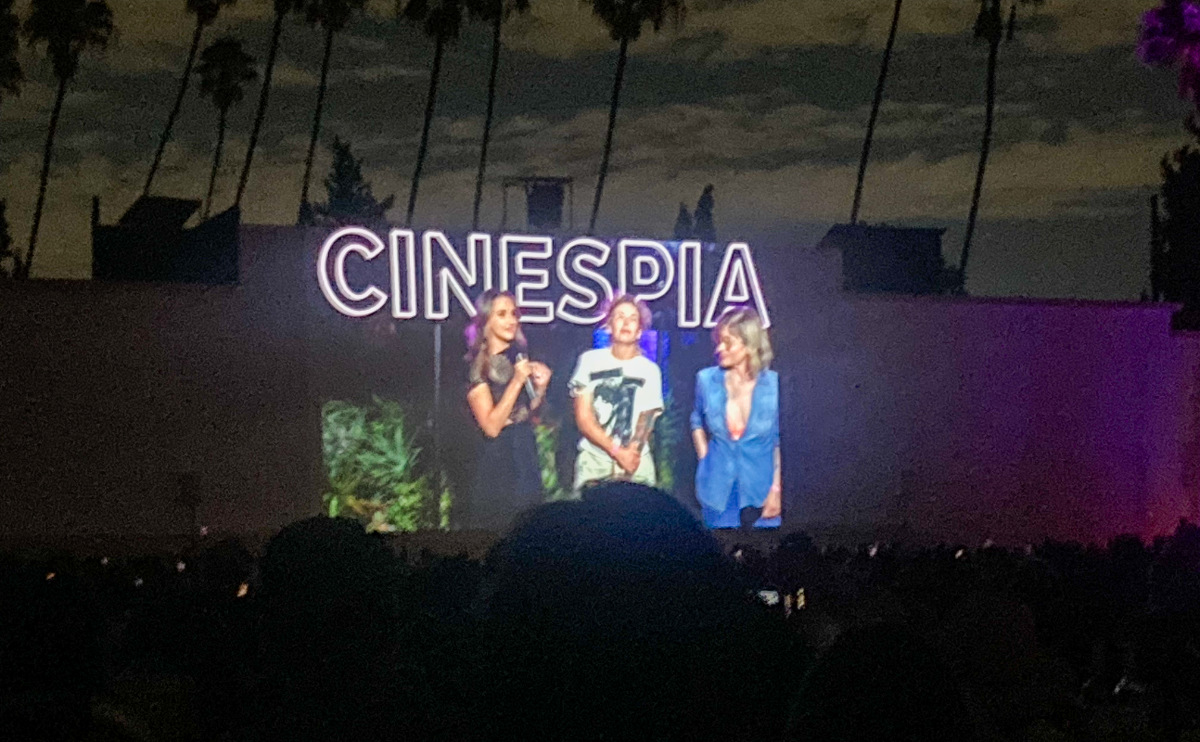
There’s certainly a cynic in me that doubts most ‘philanthropic’ ventures by the wealthy as a dangling set of shiny keys to distract the public from ideas like hiking tax rates by 25%. And there’s even more of me that has a distaste for celebrity press releases about doing good in the world. But when it comes to the $10 million that Olivia Rodrigo’s festival donated to ten women’s-based non-profits—matched dollar-for-dollar by Melinda Gates—I have to set my cynicism aside for a moment.

I have no doubt that there’s an extensive team behind Rodrigo helping to maintain a very specific public image, but that doesn’t change the fact her audience is predominantly young women and girls—a demographic that is facing an increasingly precarious, if not outright dangerous, future. While $20 million isn’t going to realistically do much in the real world of social justice, what the entire festival represents—from being an all-female lineup to supporting organizations that exist to help women in one way or another—is that if you’re a part of a group the system is after, the best thing you can do is take care of each other.

The concert was a cool enough idea, and donations are a good thing, but to me, this was a chance to show an entire upcoming generation that the best weapon against institutional power is organizing and camaraderie. When I was younger, there were organizations like Rock The Vote, but stuff like that still had that undertone of, Believe in the System, believe in America. Rodrigo’s efforts voice a distinct split from that, as if to say, The entire political machine is after us right now. (Which, well, it is.)

I remember reading an interview with Mark of blink-182 when they were first getting big in the late 90s. He replied to a question about them being a ‘punk band’ by saying he thought of them as Fischer-Price Punk—a band that could be someone’s first punk band, an introduction to the genre. It’s not untrue. While for me it was Green Day, there’s always some mainstream influence that can lead people down a path into the subcultures where political activism really starts to take hold, and that’s what I kind of think of this. It won’t create an immediate wave of neo-Suffragettes, but it could be a step in that direction for a chunk of that audience, and in this day and age, that’s good enough.

a cup of ambition

I’m not gonna be one of those people who pretended to listen to Dolly Parton all along. She had plenty of fans of her music and I won’t pose as one of them. That being said, I was a huge fan of her.

She’s talked about her father’s illiteracy and in her fame started the Imagination Library as a result—an institution which has given kids worldwide over three hundred million books for free. It’s just a part of her extensive philanthropy—giving away so much money that, though she could have been a billionaire, she never reached that mark.

It’s rare to have a public figure in America almost always walk the walk without talking too much talk—but when she did speak about issues, it was always in a way that expressed a kind of belief in the human spirit and the understanding that we’re all just equal as human beings. Though her works that help people will be recognized and missed, to me it’s that she represented a quality of understanding and respect for all that is largely lost on those with power and influence in media and culture.

In an era of Kardashians, where amassing wealth and dismissing others and focusing on the self is paramount—embracing individualism and greed—Parton represented the polar opposite. She was an example that one could be both accomplished, loved, and rich without holding on to ideas that were exclusionary or discriminatory. If celebrity is an inescapable consequence of the collision of art and commerce, Dolly was an example that the role could be a path to mutual benefit (as much as something like that can be).

I think that’s the reason so many people are fucked up over her death. In a time when nobody agrees on anything, everyone knows that Dolly Parton was an amazing person. A representation of goodness, of what people could be. There’s something in the air now where we can all tell society has sunk so far into greed, selfishness, and sometimes outright evil, that we’re collectively losing the plot—that there aren’t really many people left to consider a role model for the next generation.

She will be missed, and perhaps her legacy will inspire the youth of today to see that society does recognize the good in people, and collectively lifts them up, giving them deserved recognition for being a beacon of what the human heart is capable of. The world will be a worse place without Dolly, but maybe because of her, people will end up a little better.

spending some time in mid-city

Alone On Wilshire

What living in LA is actually like most of the time

Today at LACMA I stood next to Jeff Goldblum in front of a giant Matisse for a few minutes. I didn’t want to bother him (plus he had a couple people with him that looked like they were there to protect him from public nuisance), but it is sort of just a thing that happens here and is always funny when it does.