seasonal changes

I was driving home from Silver Lake tonight around 7:00 pm and I didn’t need my sunglasses as usual at the intersection of Rowena and Hyperion. All summer I’ve been staring into the sun at that intersection, but not tonight. Tonight it was dark, like, what seemed out of nowhere.

Until about three days ago, the entirety of the past month has been between 90 and 100 degrees in Los Angeles, depending on what part of the city you live in. It’s been unbearable. Nobody talked about anything other than the heat because it was so overwhelming.

The thing about the heat was, though, it distracted from the normal changes that happen this time of year, like it getting darker earlier. It was 85 degrees every night and so it didn’t really matter if it was light or dark out because it was so fucking hot.

Now it’s twenty degrees cooler at night, you can wear long sleeves during the day, and suddenly it’s pitch black out by 8:00 pm. All of these crazy indicators for fall just kind of hit all at once, like the heat has been masking the change of seasons and now it’s already happened. It’s kind of a bummer, makes me miss growing up in New England a bit where the transition to fall would be marked by mornings that one day were just crisper than usual and the leaves on the tree would start to change color.

Then again this could be all due to the climate crisis and within five years southern California will be completely unlivable.

industrial revolutions

I’ve been thinking a lot about industrialization and how some of the modern arguments regarding AI and our current generation of change in technology amount to, Humanity has always adjusted to change. I feel like that’s a really stupid line to draw in the sand.

Yes, we’ve always ‘adapted’ and not all change is bad. The development of sewage systems, improvements in architectural engineering, the moon landing. There are so many examples in history of how innovation has spurred the next phase of civilization. But not all of it is great, and our adaptations can also distort our relationships to ourselves, to others, and to the earth.

Sometimes it’s about what we do with invention—and in the United States this is broadly affected by capitalism. Was the invention of the motor vehicle a bad thing? Absolutely not. But the national push for car culture, through the suburban sprawl and dismantling of public transit, sells more automobiles and is not publicly funded (yet it can be publicly bailed out). Cars put us in our own world while a subway brings people together, even if they’re all just reading. Car culture divides people, but it can sell a lot of units.

(This doesn’t even cover the power of the fossil fuel industries and how we’re actively destroying the planet for their economic benefit alone, and how completely fucking insane that is at a fundamental level.)

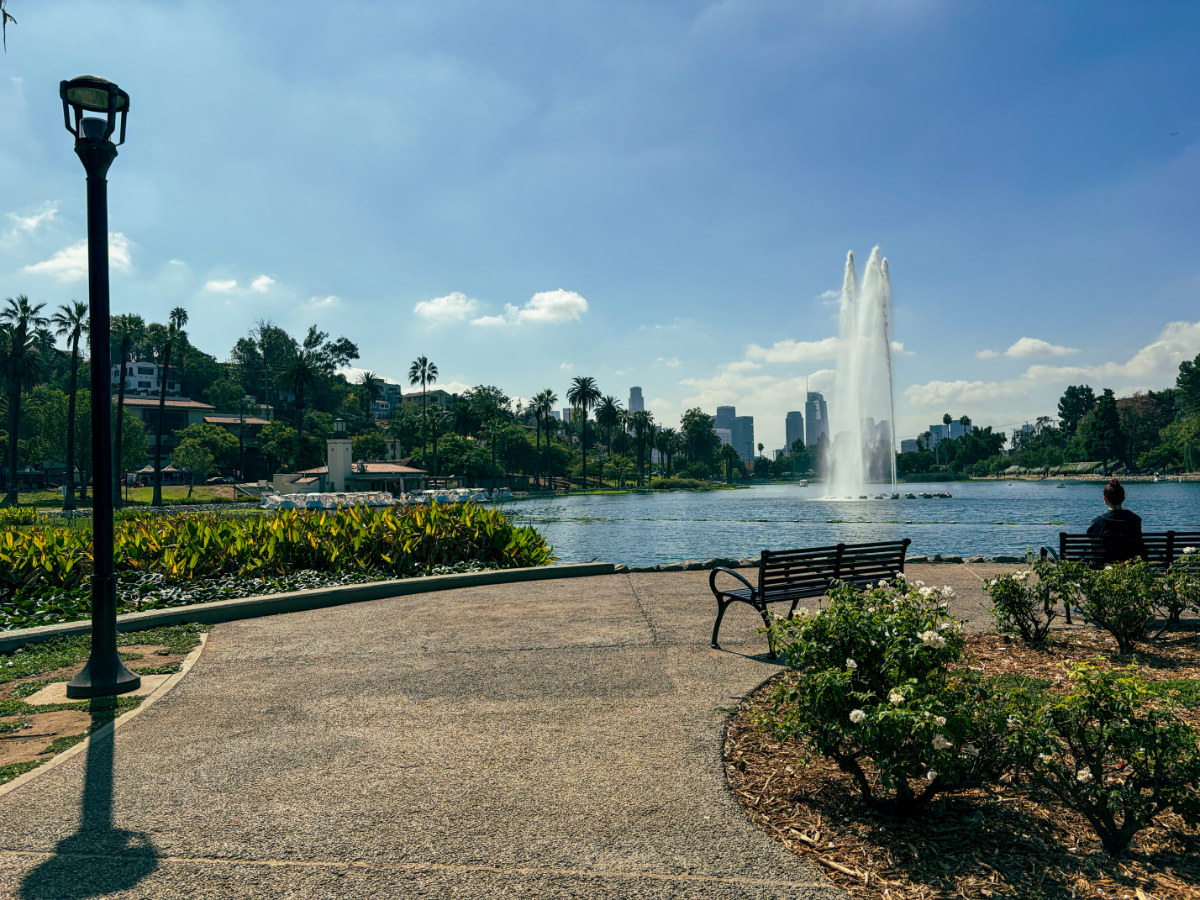
Echo Park

Thinking at Echo Park

Then there’s the sensory side of things. Take the evolution of how we listen to music—from vinyl records to cassette tapes to CDs to MP3s to streaming services. We lose something with each change. When cassettes hit the market, people could fast-forward through songs, although it was a bit of a pain in the ass. The arrival of the CD made it simple. Once music hit the computer, the idea of collecting albums faded. With streaming services, the idea of listening to music has completely changed since its analog beginnings.

That same ‘progress’ can be traced back with most mediums that now exist mostly on a screen, and with each we’re losing connection to the worlds of creativity, sentiment, and inspiration—and, to a degree, individual thought. Our experiences with the world are predominantly visual now—with people, places, and things. Our fundamental sensory experiences are imbalanced and so our relationship with the world is skewed. You hear it every time a friend gets back from a trip and says something like, You have to go, it’s not what you’d expect at all. Yeah, because just seeing a photograph of something tells you barely anything about it.

I really like writing letters to friends, and it’s such a meaningful act to both send and receive something made by hand. The experience is an understanding that someone took time to do something, and that creates meaning. These digital interactions have no correlation with time, and therefore we lose the sentimental relationship that underlies how people connect to one another through acts of making something.

Innovation and development are part of how we grow as a species. Humanity separated itself from the rest of the natural world with its ability to build tools. Yet for every invention we’ve used for good, there are like ten examples of profiteers pushing a harmful agenda for the sake of their bank accounts. A gun is useful if you’re hunting for food, but what have we brought upon ourselves because of it otherwise? How much have firearms been used to ruin or end lives throughout history just so a couple people could be rich?

This is why I don’t trust anyone who supports AI in the least. Could it help us cure diseases faster? Maybe. But the internet had potential to revolutionize how we run the world and instead a few psychotic narcissistic capitalists turned it into a mall of hate for their individual benefit. All of these Silicon Valley types are the same, and there’s absolutely no reason to believe that this level of development won’t be used against the people more than for them.
the end of the tour

Watching Ed Sheeran’s career implode this week has been a delight. He dropped Macklemore from his tour due to pressure from known associate of Jeffery Epstein Robert Kraft regarding voicing support for Palestine on stage. The fallout from Sheeran’s spineless bending of the knee to billionaire Zionists has been wonderful. Everyone else performing (including his backing band) left the tour while Macklemore pledged $1 million of his earnings from the tour to Palestine Aid.

It’s unfortunate but the only way to really change things under capitalism is to fuck with Big Money. Though some some celebrity entertainers who remain ‘apolitical’ (Taylor Swift and Jay-Z come to mind) for the sake of their ticket sales are still kind of untouchable from public criticism, this fall-off for Sheeran suggests the protests against Israel have reached a new level in American discourse. The general public cares more about celebrities than most things, and this kind of attention will hopefully provoke those at the top to understand standing with Israel—or deciding to not comment on the matter and thus side with the genocide—could potentially lead to major losses in both income and legacy.

With the Trump administration agreeing to sell $2.8 billion in arms to Israel, Sheeran’s disaster is helping to increase the scope of debate about the United States’ position in funding genocide and protecting an apartheid state—and what it means to say, No Comment.

At this point I will not even speak to someone who supports Israel (except maybe to tell them to get fucked). There is no excuse for ‘not picking a side’ regarding (much less openly supporting) a genocidal apocalypse state that protects pedophiles while targeting children in Gaza. Over fifty percent of the population supports killing every Palestinian, while eighty-two percent support expelling them from Gaza using force. It is a depraved horror show of a country that should be dissolved immediately and left to the history books in a chapter titled Great Mistakes of International Governance.

I hope Ed Sheeran learns some kind of lesson from this and I hope every PR agency is in a state of panic as to how to handle their clients with this increasing public discontent for the wealthy supporting mass murder. Mostly, I hope this becomes the type of protest that begins to really interfere with the finances of people who only care about money and are OK with disregarding human life. They are the rot of humankind and the only reason I hope there’s a heaven is because that means there is a hell that they will all burn in for eternity.

at the movies

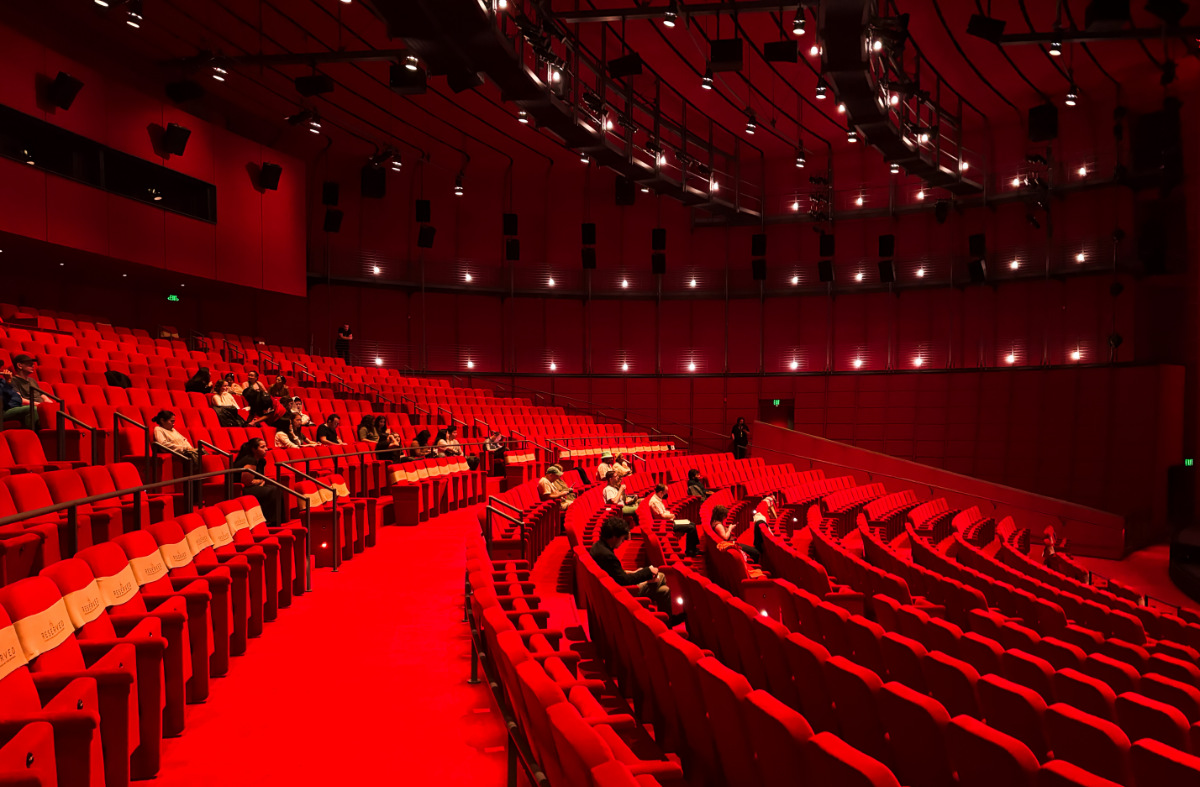
I finally saw Portrait of a Lady on Fire—one of my favorites—on the big screen tonight at the Academy Museum’s remarkable David Geffen Theater. It’s incredible how much the theatrical experience made a difference in a film I already loved. The low-light scenes felt intimate and the French coastline was glorious. What changed the most was the sound; I was actually pissed during the first scene because I thought someone nearby was talking, when it was actually from the film itself, a voice passing by in a hallway off-screen. There was the subtle crackle of the bonfire and the brilliant a cappella singing that brought many to tears. Then, of course, there’s the famous Vivaldi scene at the end that hit like ten tons of brick.

Though I’m not there as often as you’d catch me at an American Cinematheque screening at the Los Feliz 3 or Egyptian, I do love going because it’s one of the best theaters in Los Angeles from a purely technical perspective. The sound is impeccable and the red-carpet maximalism really works for it aesthetically. I can even forgive the fact they don’t allow food. What matters most, obviously, is the programming.

Geffen Theater

Entering the Geffen Theater

Until I moved to Los Angeles, I never really lived anywhere that featured repertory cinema. There were certainly independent theaters, but they’d be showing current films with limited distribution or were festival-circuit type movies. In LA there’s a handful of theaters dedicated to screening films from yesteryear that maybe people haven’t had the chance to see on the big screen or just want to see again. There’s an entire website here dedicated to keeping track of all the films showing across the city. It’s how I watch about 80% of the movies I see these days.

It’s a wonderful thing for many reasons. A few weeks ago I went to a screening of Out of Sight. It was the first time I’d seen it since my dad took me to see it during its initial theatrical run in the summer of 1998. Being able to associate with those memories again, something I otherwise probably wouldn’t think of, is a great thing.

Other times it’s really nice to be in an audience of people who are intentionally seeing a specific movie and are dedicated to a good experience (such as not taking out your phone or talking during a film). People laugh together (or, such as tonight, they cry together). Film is a special form of art that allows for these collective experiences while still being a very individual activity. I love going to the movies alone, because it’s the film that is bonding everyone in the cinema together.

So tonight I got to check another film off a list of something I’ve waited for a long time to see on a giant screen, and it was 100% worth it. There are many things I enjoy about living in LA, and shit like this has to be near the top.

organs and harmonies

Tonight I got to see the Los Angeles premiere of Sarah Davachi playing The Will of Tongues in full at the First Congregational Church. It was mesmerizing, breathtaking, everything. It would lull me into a trance and then shock me out of it as the organ would go from a harmonized hum to an oscillating assault in a way that was a slow build but felt sudden. Really great stuff.

What I love about a show like this—beyond just the music—is that it’s an opportunity to enjoy something I otherwise probably wouldn’t in its purest form. There are any number of reasons I probably won’t sit down in my apartment and listen to a 90-minute organ work. For one, organs are best experienced in a hall (or church), not through shitty Bluetooth speakers. For two, the experience just feels right when you’re sitting in a silent pew and not a ratty couch as cars drive by.

But really, it’s just that organ music isn’t my thing most of the time. I would never find myself as invested as this work deserves outside of this experience seeing it live.

Organ

The rear organ at First Congregational

The dichotomy of live music against recorded music has been an ongoing conversation in my head for some time now. Live music feels like it should always be of the moment. Even if an act is playing composed works, it’s nice to experience deviations that might fit the mood of the room or night—yet I’ve really been a fan of the idea lately that all live music should be borderline improvised, while all recorded music should be meticulously composed and edited.

In a live setting, it feels conceptually appropriate to play something that only exists in that moment, for the people who are there to hear it. It transcends sound and becomes a component of connecting humans through place and time. Yet on record, music should be timeless and therefore crafted and refined diligently until something that can be listened to over and over is produced.

Tonight, I couldn’t tell you one way or another what was unique to the evening. While the pieces were composed, the organ was unique to the church and who knows how that might affect things. She certainly played with a ton of heart and some of the sounds that were produced had me paralyzed in awe. Throughout it I kept returning to some of these ideas about music, stuff that’s been on my mind throughout the making of the new ad lucem releases as well as a new solo album I’m working on now. It’s always welcome to experience something new and have it really charge how I think about something that’s been on my mind for a while.