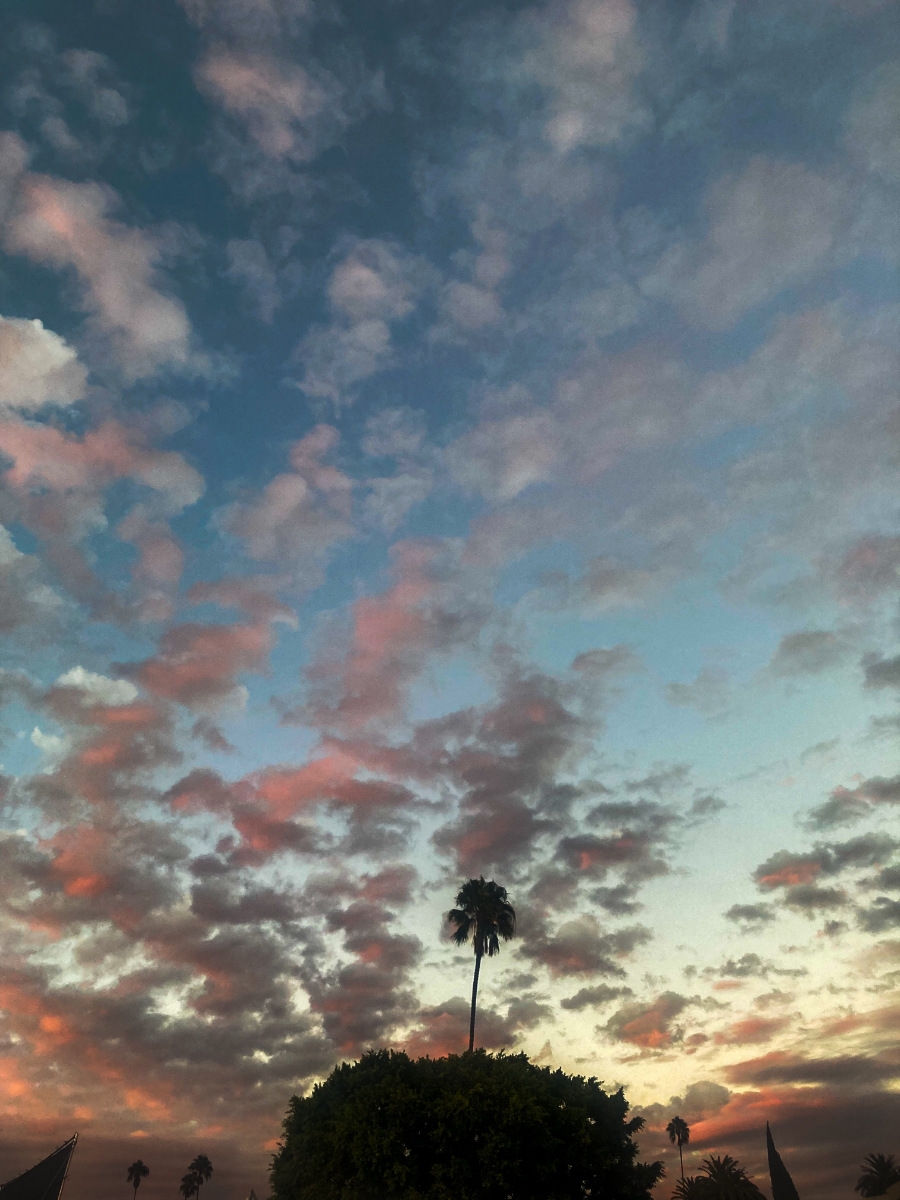
Hollywood Forever Cemetery
Hollywood Forever Cemetery
There are a variety of things to do in Los Angeles that feel just very unique to the city. Going to a show at the Hollywood Bowl might be one. Sitting next to Bob Odenkirk at a lunch in Larchmont might be another. Watching Dudamel conduct at the Walt Disney Hall or going to any number of the world-class, completely-free art museums downtown is up there. (Ironically, leaving the city to go out and camp at Joshua Tree would be another.) And this is just the shit that like, the average person can afford and experience. I’m sure spending some time at the Chateau Marmont would be the first on my list if I ever won the lottery.
Then, of course, there’s the movies. There are a ton of art-house, independent theaters showing films from all eras of Hollywood history, often with special guests including actors, writers, directors, and producers. A couple highlights for me—just in the past six months—have been Elliott Gould after The Long Goodbye, Paul Thomas Anderson before One Battle After Another, Isabelle Huppert after The Piano Teacher, and Gus Van Sant before Good Will Hunting.
Last night added chalked up a couple of these experiences in to one.
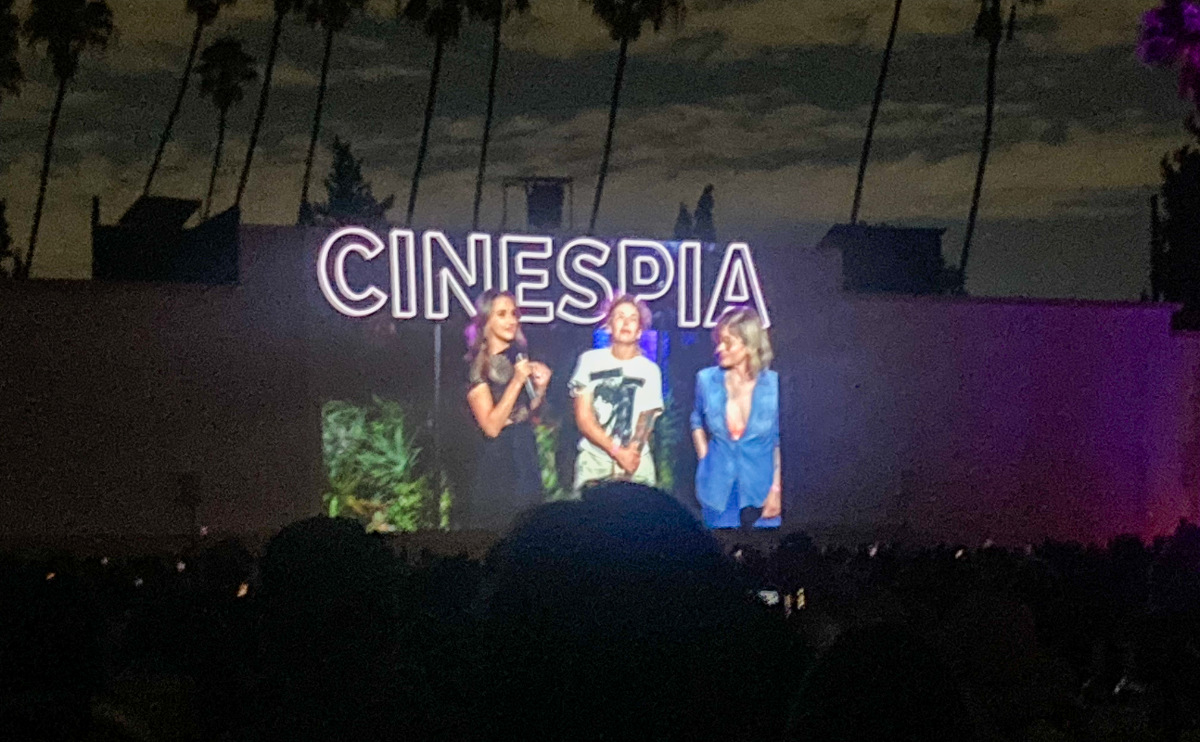
My phone is eight years old and I was far away so this picture is very low-quality
At Cinespia, an outdoor film screening that takes place in the Hollywood Forever Cemetery, there was a screening of one of my all-time favorites, Josie and The Pussycats. Four thousand people were in attendance, and when writer-director pair Deborah Kaplan and Harry Elfont were introduced (whom I also saw a couple weeks ago after a screening of their first cult classic, Can’t Hardly Wait), they said it was more people who saw the movie in its original theatrical run.
Also in attendance? Star Rachel Leigh Cook and Letters to Cleo vocalist Kay Hanley, who provided the vocals for the music in the film.
These aren’t always things that add too much substance to an experience, although there are guests that really provide some insight into process or creativity, but it is just kind of cool and the type of thing that doesn’t happen anywhere else. Stars might show up to a new film to promote it in New York, but Werner Herzog doing an extensive interview after a fifty-year-old film in Heart of Glass is not something that happens often outside of LA.
Though plenty of people who attend these things work in the industry, some of us just fucking love going to the movies and getting a little peek behind the curtain as an added bonus makes the experience just somehow more—as well as feeling more a part of the fabric of what makes this city unique.
There’s all this talk about AI and Google Zero effectively ending the internet as it has been known—creating a sole point-of-contact online to be an all-encompassing AI bot. The people who will profit from this are, of course, touting the possible ‘benefits’ from such a thing, and there are plenty of users out there who can’t live without something like ChatGPT telling them how to raise their children. I am against all of this, but as an example I will use something from internet history I personally detested—the Mommy Blogger.
Mommy Bloggers consisted of predominantly affluent, lonely housewives who shared every minute of their existence on personal journals which revolved around motherhood, housekeeping, and marriage. It was the kind of societal trend that rose to enough prominence to merit its own plotline on House by 2010. I didn’t give it much attention because I was basically the opposite of its target audience.
Now this demographic has moved on to social media or podcasts, but I can’t help but feel something was lost when that happened. The format of the blogs they were writing inherently required a sense of creativity and a forthrightness that, while possibly creating controversy, garnered camaraderie among other mothers. While the results can be similar in the world of podcasts, the off-the-cuff nature of just chatting feels far less heartfelt and more gossip-oriented. The inherent nature of what is being communicated gets reduced from meaningfully inquisitive from an individual perspective to a bland riff.
That’s what the ‘new internet’ and AI truly deliver: less creativity, less meaning, less potential for individuals to discover relationships with themselves and others alike through actually thinking about things. Considering yourself and others can be paths to empathy, social bonds, and overall feeling less lonely in the world. Silicon Valley tech has not only frayed those ends but is promising a world with even less possibility for those things (at least online). The internet will be reduced from a once-mecca of individual expression to a recursive loop of slop. Getting rid of search functions where people can actually discover the independent side of the internet only accelerates all of this.
There are still Mom Blogs out there, and a search over at DuckDuckGo will show as much. Yet it’s only a matter of time before people become unaware that this, or any type of personal expression, ever existed online to begin with. (The great irony being all of this is what fueled the ‘knowledge’ of AI bots to begin with.) There are many, far greater, crimes that AI and its proponents commit, but these sort of existential losses of potential creative outlets feel particularly damning of the road humanity is headed down from a purely meaningful perspective.
Though most of my thoughts on my recent hospital stay are in the previous post, I had once incident that was very bizarre and completely outside of the healthcare system: I posted a single selfie to Instagram—a photo of me lying in my bed once I was admitted—and it received more views than anything I’d posted in years. People who never, ever view my stories saw it. The total view count was triple what I average for a story. It made no sense, so naturally I was thinking of why this was happening.
The most logical conclusion I could come to was that the algorithm took notice of my environment and prioritized the story in people’s individual feeds, so those who were just scrolling through ‘new’ but followed hundreds or thousands of accounts would see it. (Even this feels a little inaccurate, as I’m pretty sure I had views from people who don’t follow me anymore, but at one point did.) If this were to be the case, it provokes a few interesting questions.
One is from their vantage point: why was my account suddenly promoted on their feeds? Was it to provoke concern? I’ve posted other pictures of myself before that don’t get nearly the interaction. What about being in a hospital, specifically, created this kind of boost, and why?
The second is for my side of the coin: what is this supposed to communicate to me? If I was, say, a teenager who was living for view counts (possibly one of the addicted teens who Meta just had to pay out $17 billion for exploiting), this would tell me the more I ended up in the hospital, the more people would see my story. That doesn’t sound like a recipe for anything good, especially if I’m 15 and prioritize my social network above myself.
Whatever the truth may be, due to the despicable nature of Meta and the complete disregard for the mental well-being of its users, something about this feels outright evil. There’s no way to really prove any nefarious intent, but for the 24 hours my story was online, it certainly felt like something was amiss.
I had to spend a couple days in the hospital. It is what it is, I feel like the people around me were way more stressed out about it than I was. For whatever reason, this sort of thing just doesn’t phase me. (I have heard that alcoholics specifically are exceedingly good in high-stress situations, which is part of the reason they’re so insane when life is just kind of boring.) But anyway.
A few observations I had during my stay in Pasadena about the experience and/or the state of the US healthcare system:
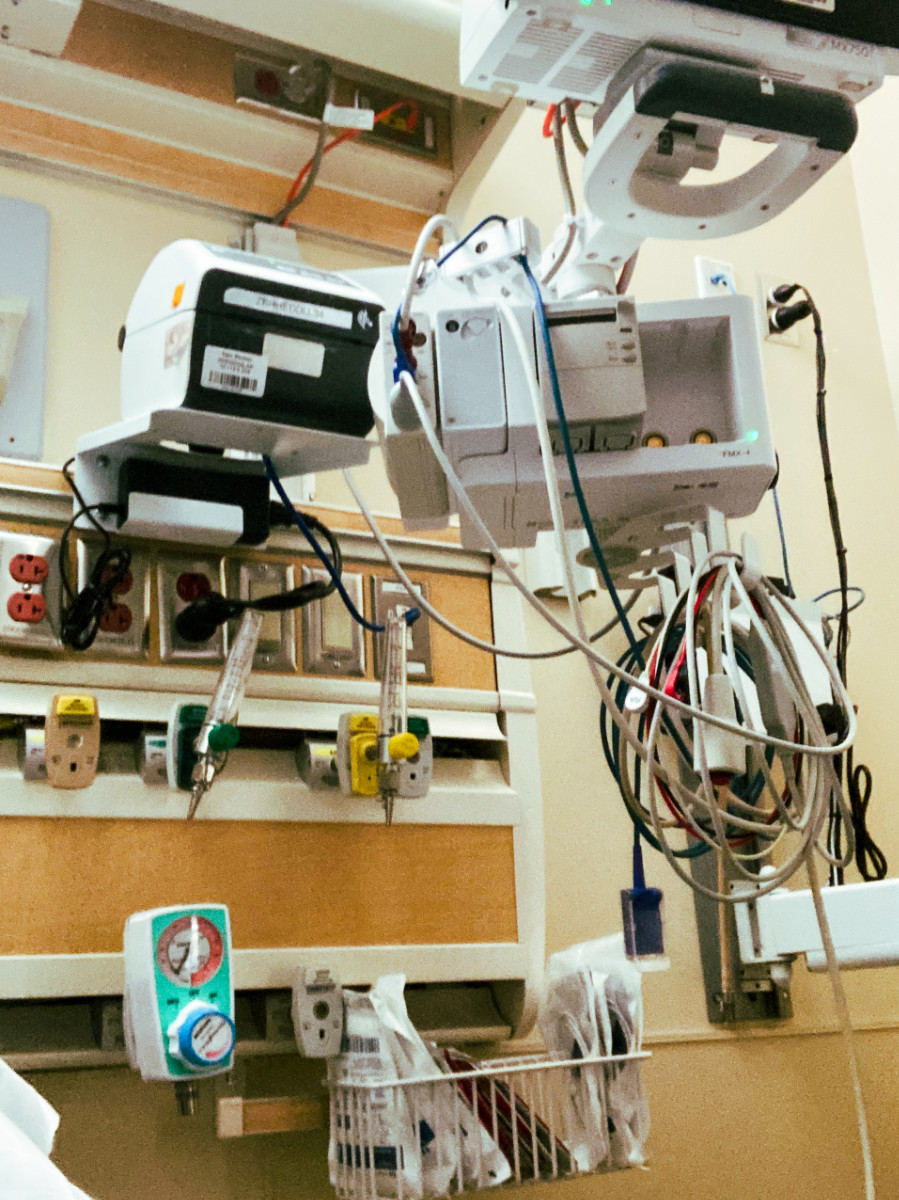
My view for a couple days
One: Repeating yourself becomes craze-inducing.
I had to answer the same set of questions about 17 or 18 times. Most of them were covered by my initial referral from my primary care physician. I couldn’t tell if doctors just never talk to one another (more on that later) or if the notes they take are just so brief that, even if the next one down the line reads it, so many details get left out that they have to ask again. Nobody seems on the same page and it creates a real sense of doubt.
Two: The profiteering is grotesque.
I take two daily psych meds and brought them both with me. Upon being admitted, the hospital confiscated these and said they will bring me their meds from their pharmacy each day I needed them. Of course, when they were brought up to me, the little individual packets were scanned into their system for an inevitable charge. (My 200mg dose pill was also broken up into two, 100mg doses for that extra charge.) On top of healthcare already being overpriced, this felt like outright theft.
Three: Conclusions are not really that conclusive.
After two-and-one-half days of procedures, tests, questions, and lying around waiting for the next set of procedures, tests, or questions, I had about four wrap-up visits with relatively high-up specialists or department heads. Each one gave me a generally different answer as to what their belief was as to why I ended up at the hospital to begin with. (To be fair, the initial issue was kind of wild.) But, like having to constantly repeat myself answering questions to begin with, leaving without actually having any confidence as to what was—and possibly still could be—wrong feels pretty disorienting.
Honestly, I had what was overall a good experience. My initial wait in the ER was just a few hours (granted I went at 10:00 pm). The hurry-up-and-wait parts of my visit were not out of hand. Everyone was nice. And still the only thought I had at the end was, Don’t get sick in America. The healthcare situation is so dismal here, I cannot understand why people defend it against the idea of a universal, public system.
Robot crossers
Human walkers